Disclosure: This post may contain affiliate links, which means I may earn a small commission at no extra cost to you.
You know that moment when you walk through the front door…
…and the first thing you feel is mental clutter?
Shoes near the wall.
Jackets without a real place to land.
Keys disappearing every morning.
A chair slowly turning into a temporary storage zone.
Nothing is technically “that messy.”
But the space still feels heavy.
A small entryway rarely feels stressful because it is small.
It usually feels stressful because too many things compete for attention at once.
The good news is that the solution is rarely more decor.
It is usually a quieter system.
One that reduces visual noise, removes friction from daily routines, and helps the room breathe again.
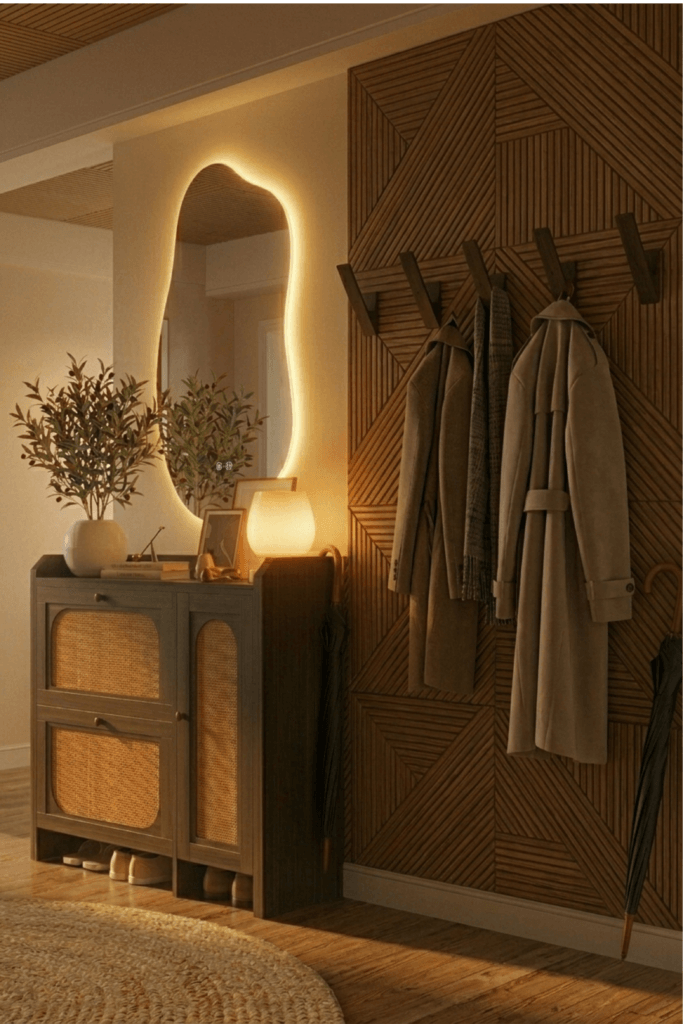
These small entryway ideas focus on hidden storage, softer lighting, and calm structure — so the space feels easier to use the second you walk in.
Why Small Entryways Feel Chaotic So Fast
Entryways collect transition.
Work bags.
Shoes.
Packages.
Jackets.
Umbrellas.
Keys.
And because this is the very first space your brain processes when you come home, even small amounts of clutter feel amplified.
The problem is not only physical clutter.
It is visual processing overload.
Open storage, too many visible categories, and scattered objects force your eyes to constantly scan the room.
That creates friction before the day has even properly ended.
A calmer entryway removes that pressure.
Not by hiding your life completely.
But by giving everyday objects a quieter place to exist.
Entryway Storage Ideas That Hide Everyday Clutter
One of the fastest ways to create visual silence is reducing what stays visible at floor level.
Shoes are usually the biggest problem.
Even a few pairs left near the entrance instantly make the room feel smaller and more crowded.
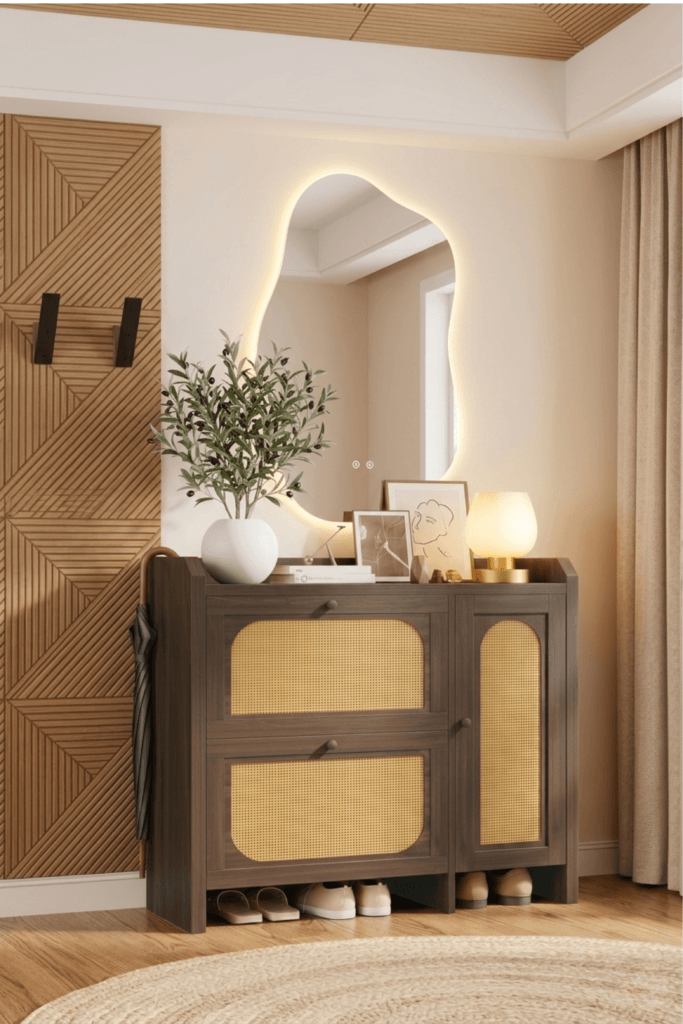
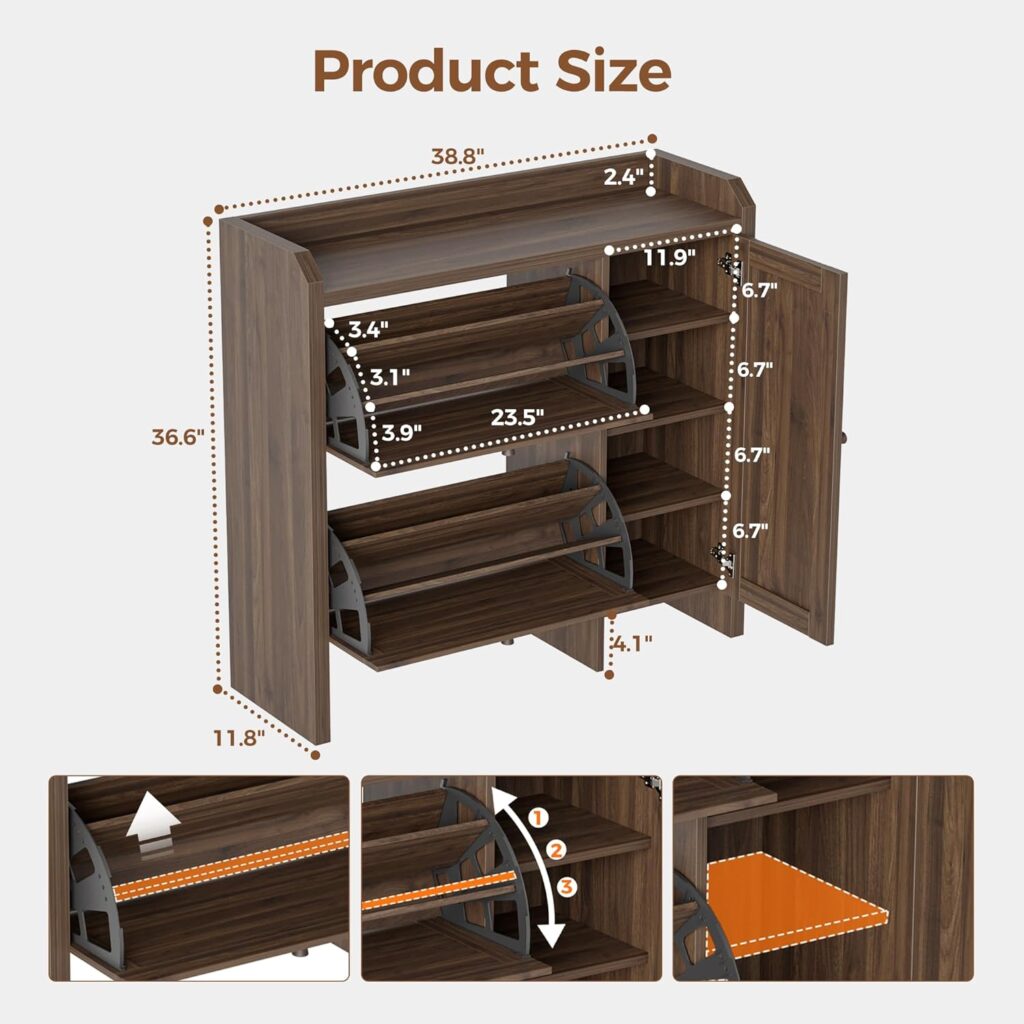
That is why slim, vertical shoe cabinets work so well in small apartments.
They hide the visual clutter while keeping everything easy to access during busy mornings.
A narrow cabinet also protects the walkway itself.
The room immediately feels lighter because there is less to move around, step over, or mentally process.
This style works especially well in Japandi-inspired spaces because woven textures soften the heavier wood tones.
Instead of feeling like a bulky storage unit, the cabinet becomes part of the room’s warmth and texture.
A slim, rattan-front shoe cabinet like this minimalist option keeps the storage functional without visually overpowering the entryway.
Quick application
- Keep only everyday shoes near the entrance
- Store seasonal shoes elsewhere
- Leave one section partially empty so the cabinet can visually breathe
- Avoid stacking shoes directly on the floor whenever possible
The 3-Step Drop Zone That Makes Entryways Feel Easier to Use
Most entryways become chaotic because nothing has a defined landing zone.
The goal is not perfection.
The goal is reducing micro-friction.
A quiet system works best when every category has a simple destination.
1. The Immediate Drop
This is where keys, sunglasses, and small daily objects land.
Without this zone, surfaces slowly collect random clutter.
A shallow tray, hidden drawer, or recessed cabinet top creates a controlled place for those small objects to disappear into the background instead of scattering visually across the room.
2. The Visual Anchor
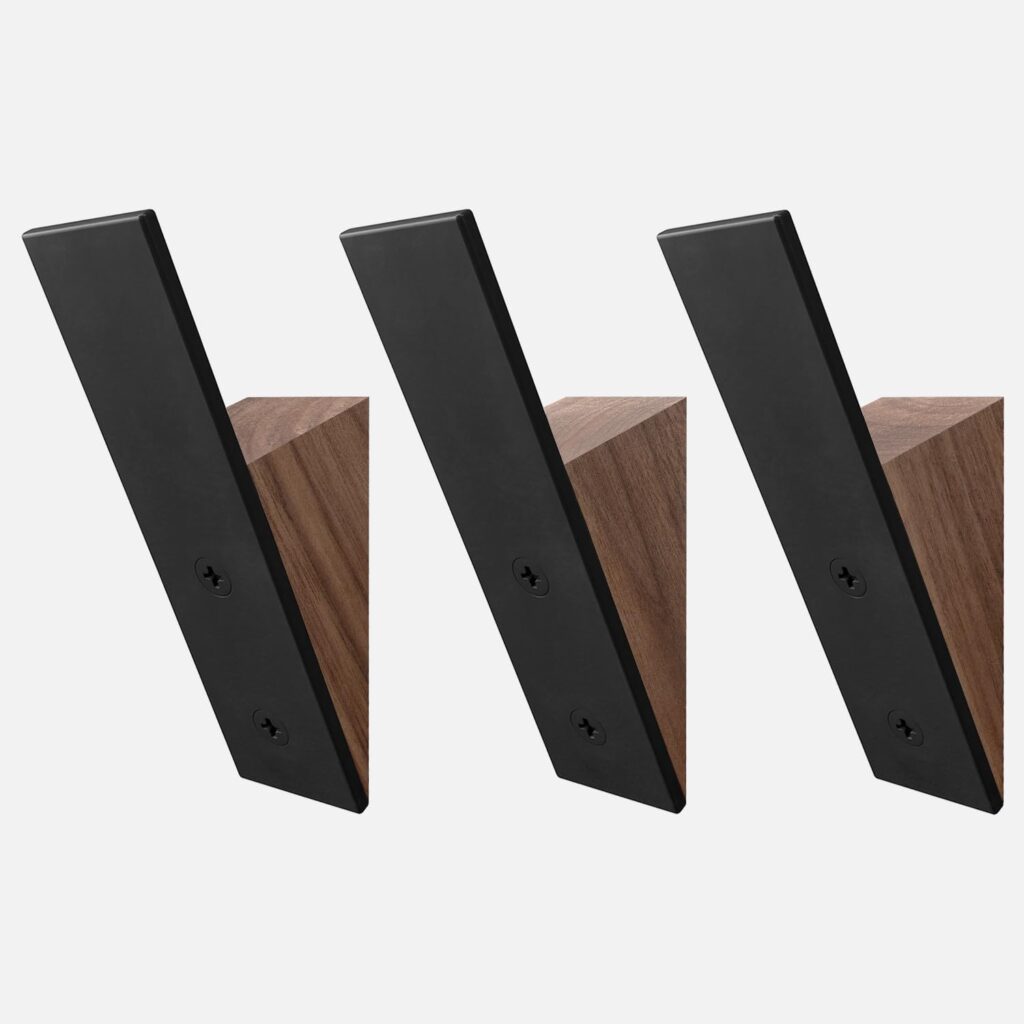
Hooks work best when they are intentional.
Instead of overcrowding the wall with jackets, keep only current-use outerwear visible.
Think of it as a small “workday shutdown ritual.”
The entryway becomes the transition point between outside stress and home calm.
Minimal dark hooks visually disappear more than oversized decorative options, helping the wall feel cleaner even when coats are hanging there.
See similar versions here.
3. The Vertical Vanish
The fastest way to destroy visual calm is letting shoes spread horizontally across the floor.
Vertical hidden storage keeps the room feeling open because the eye can still read the flooring clearly.
That uninterrupted floor space creates immediate visual relief in tiny entryways.
Small Entryway Ideas That Feel Warm Instead of Busy
A lot of entryways technically have enough storage.
What they lack is softness.
Harsh overhead lighting exposes every object equally.
Nothing has depth.
Nothing feels calm.
Warm ambient lighting changes how the room is experienced emotionally.
Instead of making the space feel clinical, it creates quiet contrast and softness.
This matters even more in small apartments where entryways often blend directly into the living area.
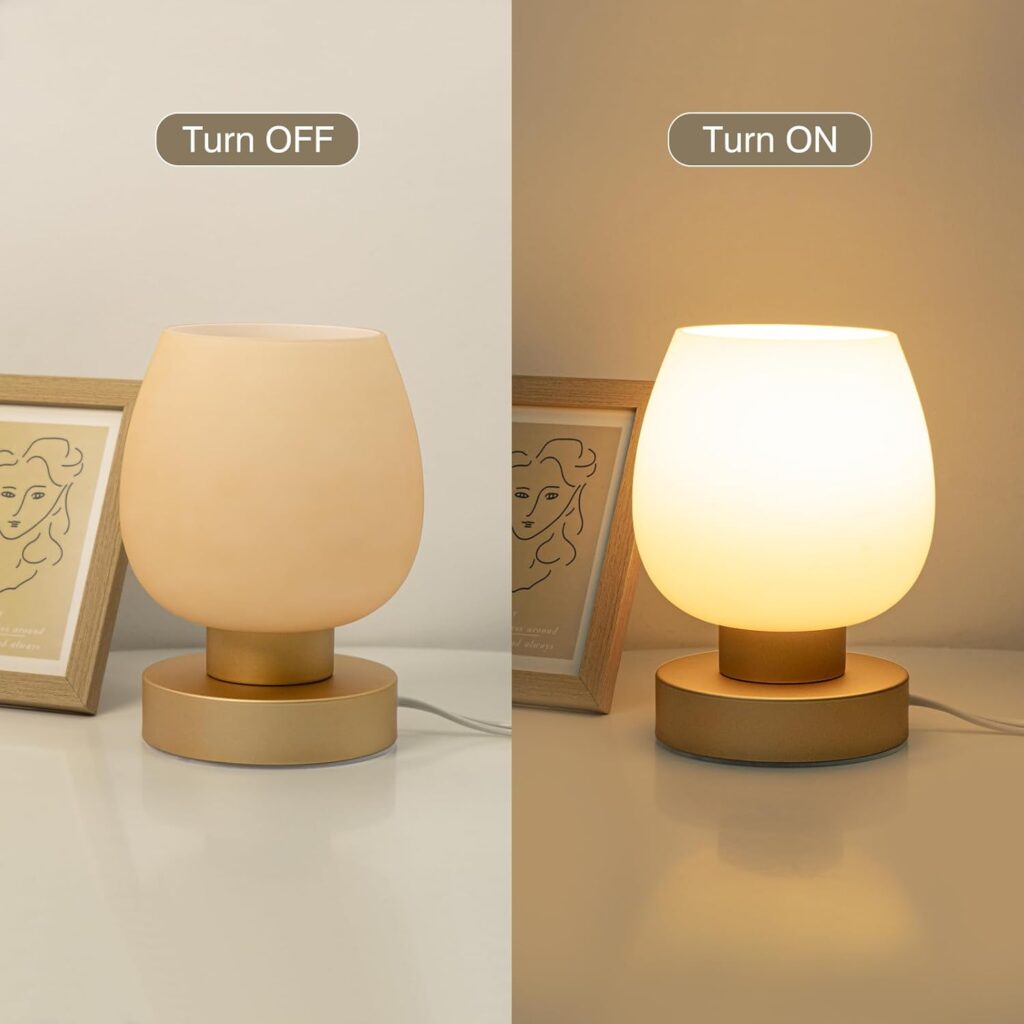
A small warm lamp instantly creates a slower atmosphere the moment you walk in.
The room feels intentional instead of temporary.
A soft-glow lamp like this minimalist version works especially well for creating that warm hotel-style lighting effect.
Pro tip for small spaces
If you do not have an outlet near the entryway, use a rechargeable LED lamp or a magnetic stick-on wall sconce behind a mirror.
It creates a soft backlit effect without visible wires or bulky lighting fixtures.
How to Make a Small Entryway Feel Bigger
Most people try to solve a tiny entryway by adding more storage.
But visually, openness matters just as much.
Large mirrors interrupt heavy visual blocks and reflect light deeper into the room.
That alone can make a narrow entryway feel calmer and more breathable.
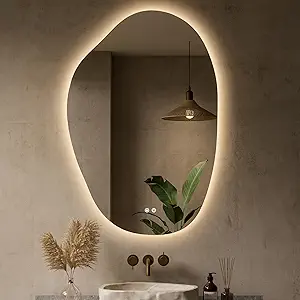
Organic-shaped mirrors work especially well because they soften all the rigid lines usually found near entrances:
Doors.
Corners.
Cabinets.
Hooks.
Too many hard lines make a small room feel tense.
Curved mirrors introduce movement and softness, which helps the space feel easier to process visually.
Backlit mirrors also create warmth without needing another visible decor layer.
A mirror like this one creates both optical space and softer evening lighting at the same time.
Entryway Wall Panel Ideas That Add Quiet Structure
Sometimes a room feels unfinished because everything visually blends together.
Wall panels help create subtle zoning without adding extra furniture.
That matters especially in small apartments where the entryway flows directly into the living room.
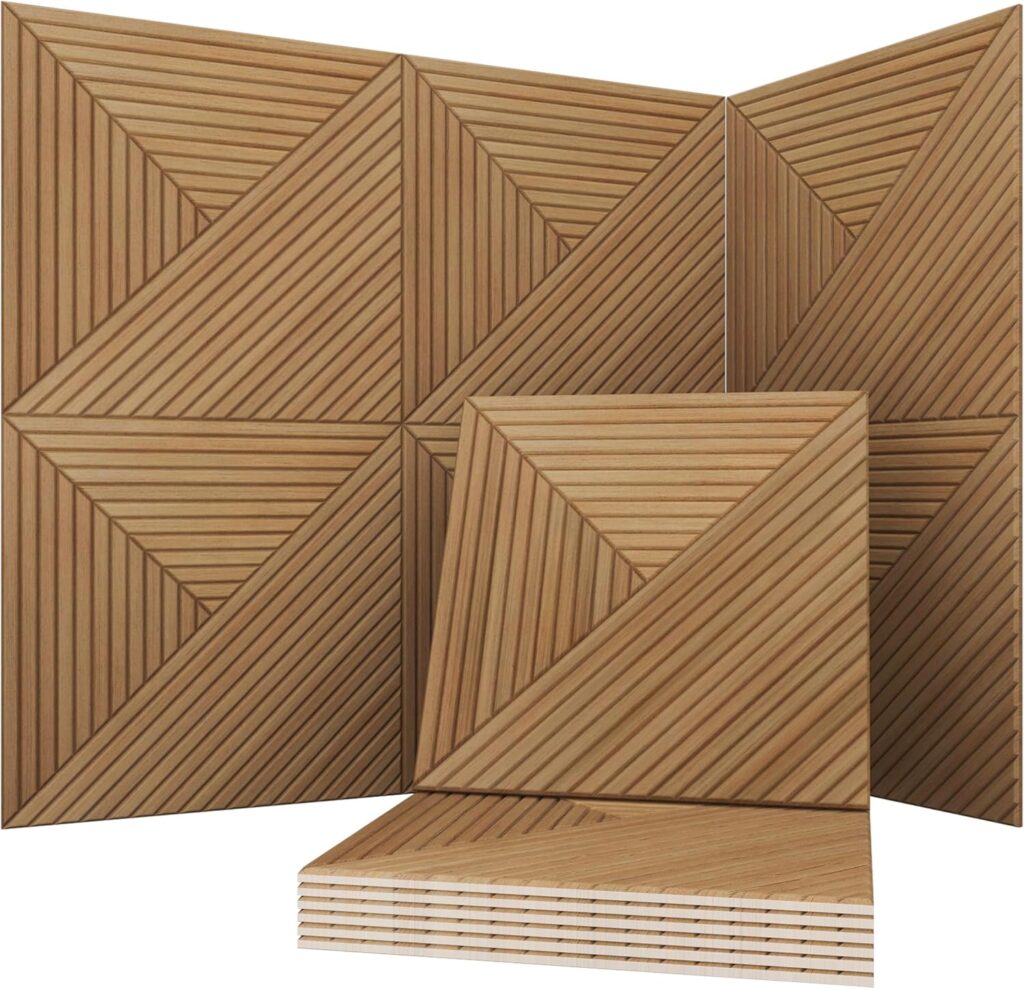
Wood slat panels quietly separate the transition area while still keeping the space visually open.
They also catch light beautifully throughout the day, adding texture and vertical rhythm without increasing visual noise.
Unlike gallery walls or busy decor layers, they create depth while keeping the room calm.
Natural wood textures also soften minimalist interiors.
Instead of feeling sterile, the room feels warmer and more grounded.
Panels like these wood slat styles work especially well behind hooks or shoe cabinets because they visually anchor the entire system.
Why Calm Entryways Feel More Expensive
Luxury spaces rarely feel luxurious because they contain more things.
They feel luxurious because they contain less visible stress.
Less searching.
Less visual interruption.
Less clutter competing for attention.
That is why calm entryways often feel more high-end even when the actual furniture is relatively simple.
The system works quietly in the background.
And because the room becomes easier to use, the entire home starts feeling calmer too.
Quick Win
If your entryway feels crowded, remove one visible category before buying anything new.
Usually that means:
- visible shoes
- extra jackets
- overflowing baskets
- random decor objects
- everyday items without a landing zone
Start with what your eyes notice first.
Not what the room technically contains.
Final Thoughts
A small entryway does not need to become minimalist perfection.
It just needs less friction.
A hidden shoe cabinet.
Softer lighting.
One calm landing zone.
Less visual competition.
Small systems create surprisingly large emotional shifts.
Especially in the first room you see every single day.
Sometimes the space does not need more decor.
It simply needs a quieter way to function.