A small bedroom should not feel like a compromise. Even if your space is limited, it can still feel calm, beautiful, and easy to live in. A tiny bedroom is still your place to rest, reset, and breathe at the end of the day, so it should feel comforting rather than cramped.
The good news is that making a small bedroom feel bigger usually has less to do with size and more to do with visual calm, smart layout choices, and better use of space. You do not need a full makeover or a huge budget. A few thoughtful changes can make the room feel lighter, more open, and much more inviting.
If your bedroom feels crowded, awkward, or harder to style than it should, these ideas will help you create a space that feels bigger without losing warmth or personality.
1. Keep the color palette soft and simple
One of the easiest ways to make a tiny bedroom feel bigger is to simplify the color palette. Soft whites, warm beige tones, light gray, muted taupe, and gentle greige shades reflect more light and create a quieter visual look.
Why it works: The calmer the palette, the more open the room tends to feel.
Quick tip: Use different shades of the same color to add depth without creating visual noise. This keeps the room interesting without making it feel busy.
- Best direction: warm neutrals, soft whites, pale gray-beige tones
- Avoid: too many strong accent colors competing in one small room
- Easy upgrade: match bedding, curtains, and walls within the same soft color family
2. Choose furniture with a lighter visual weight
In a tiny bedroom, heavy furniture can make the whole room feel boxed in. Instead of bulky bed frames, thick nightstands, and oversized dressers, choose pieces that feel lighter in shape.
Furniture with slimmer legs, open bases, or cleaner lines allows the eye to move more easily around the room. Even if the furniture is not physically much smaller, it can still make the space feel more breathable.
Why it works: When furniture looks lighter, the whole room feels less crowded.
Quick tip: If you need storage, choose pieces that do double duty, like a narrow nightstand with a drawer or a bench with hidden storage, instead of adding extra furniture later.
- Look for: raised furniture, open-frame nightstands, low-profile beds
- Avoid: thick boxy shapes that visually fill the room
3. Use vertical space instead of filling the floor
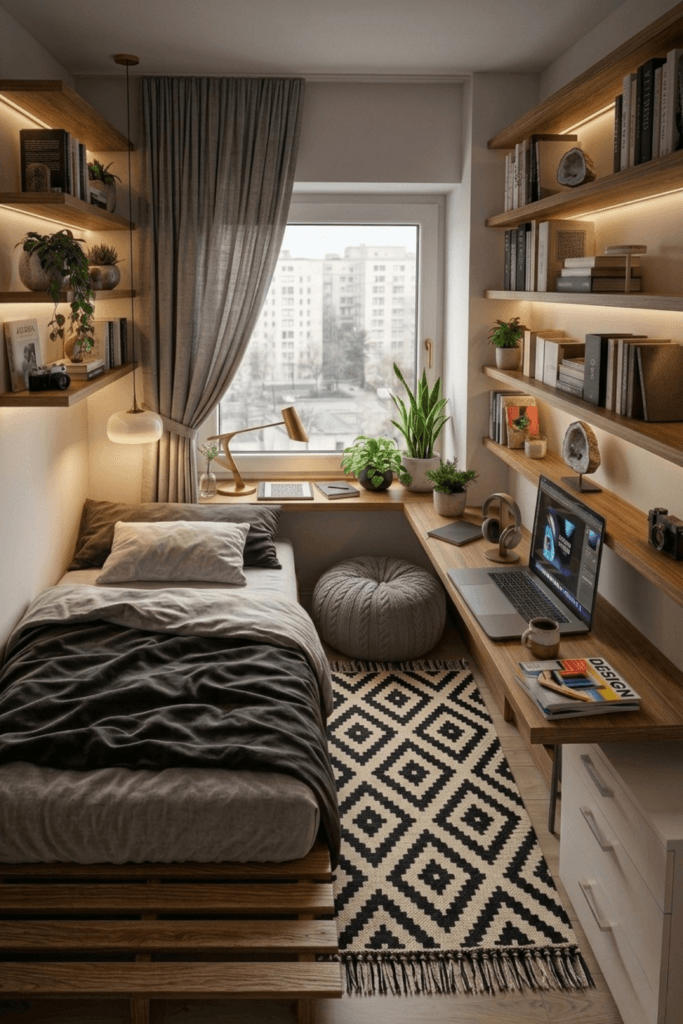
When floor space is limited, the walls become much more important. Vertical storage can free up room instantly and help the bedroom feel less cramped. Wall shelves, tall dressers, mounted reading lights, or hooks above a nightstand can reduce clutter near the ground and create a cleaner layout.
Why it works: Keeping more floor visible makes the room feel more open, while drawing the eye upward can make the ceiling seem higher.
Quick tip: Install shelves in the same color as your walls so they visually blend in instead of standing out. This makes them feel less heavy and less cluttered.
- Use walls for: books, decor, baskets, mounted lamps, hanging storage
- Best approach: keep vertical storage simple and not overloaded
- Extra trick: place storage higher up for things you do not need every day
4. Let natural light stay the focus
A dark room almost always feels smaller. If your bedroom has a window, treat natural light as one of the main design features. Avoid blocking it with bulky furniture or heavy, dark curtains that absorb brightness during the day.
Light-filtering curtains, sheer panels, or soft neutral drapes can make the room feel gentle and airy without closing it in.
Why it works: More natural light makes the room feel larger, fresher, and more open.
Quick tip: Hang curtains a little higher than the window frame to create the impression of taller walls.
- Best choice: sheer or light-filtering curtains
- Avoid: thick dark fabric that visually weighs the room down
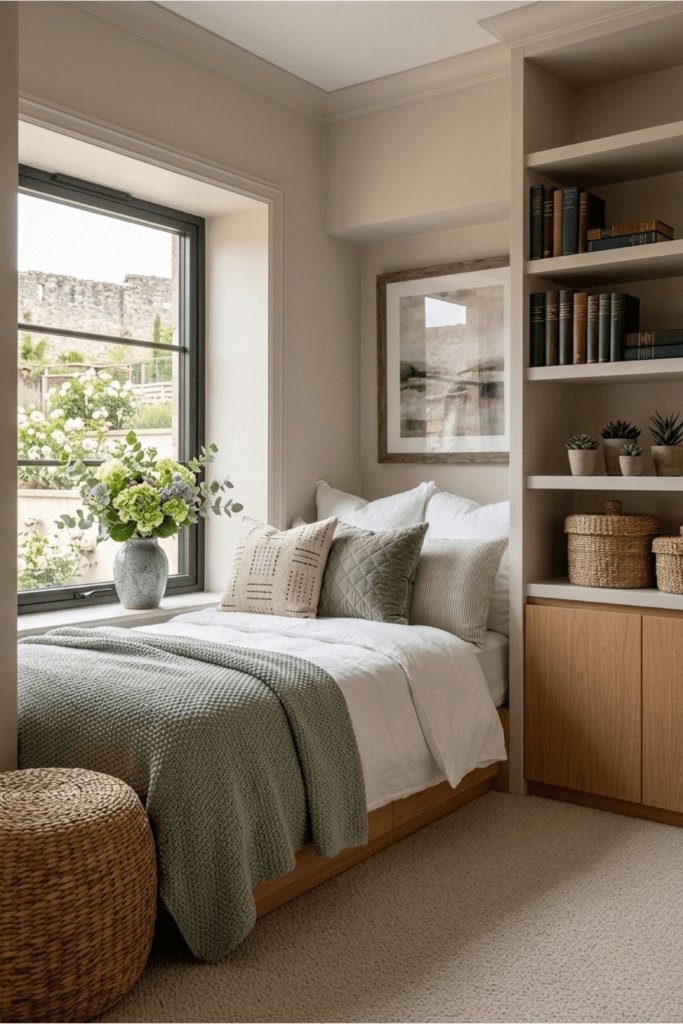
5. Place a mirror where it can reflect light
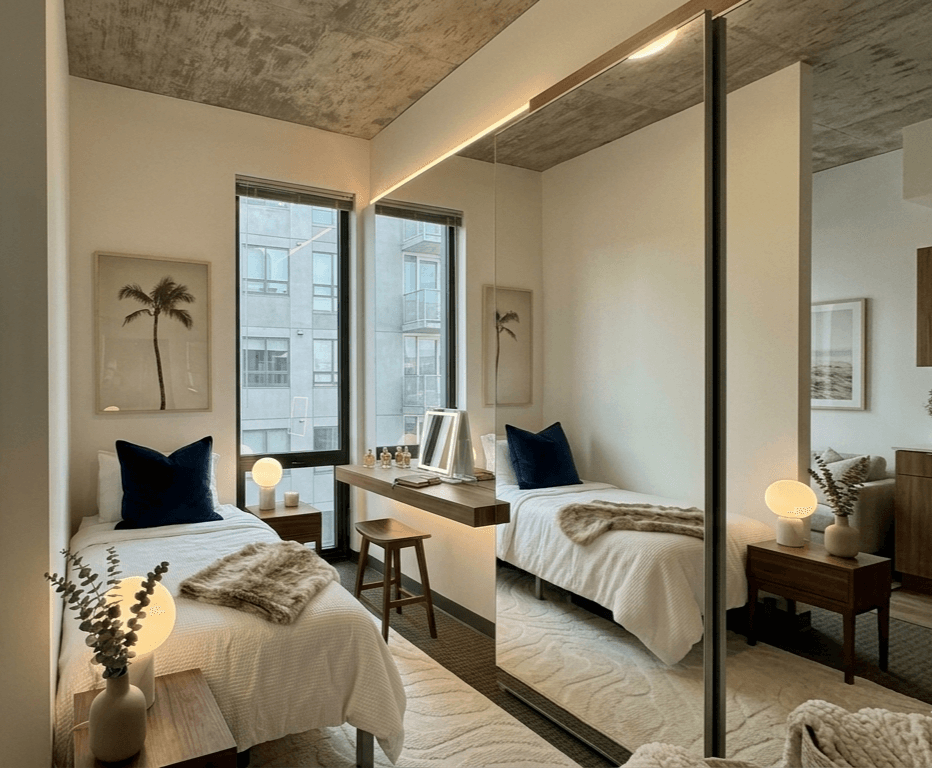
Mirrors are one of the simplest ways to add a sense of depth to a small bedroom. A full-length mirror, a round mirror above a dresser, or a slim wall mirror can help bounce light around the room and make it feel more open.
Why it works: A mirror reflects brightness and creates the feeling of more space without adding clutter.
Quick tip: Place the mirror where it can catch daylight or reflect the brightest part of the room, not the messiest corner.
- Best placements: across from a window, near a light source, above a small dresser
- Avoid: too many mirrors in one tiny room, which can feel visually restless
6. Keep the bedding full but not bulky
The bed is usually the largest object in the room, so bedding has a huge effect on how the entire space feels. In a tiny bedroom, thick layers, oversized comforters, and too many decorative pillows can make the room feel crowded very quickly.
Why it works: A more streamlined bed keeps the room soft and inviting without overwhelming it.
Quick tip: Use one textured layer, like a quilt or throw, instead of stacking several bulky pieces on top of each other.
- Best balance: crisp sheets, a soft quilt, a light throw, a few pillows
- Avoid: excessive layering that makes the bed feel too heavy for the room
7. Leave a little breathing room around furniture
It is tempting to use every corner of a small bedroom, but too much furniture usually makes the room feel tighter, not more useful. A small amount of empty space around the main pieces can completely change the mood of the room.
Why it works: Negative space helps the room feel calmer and visually larger.
Quick tip: Before adding another storage piece, ask whether reorganizing what you already have would create a better result.
- Try to keep: a clear path to the bed and window
- Remember: empty space is part of the design, not wasted space
8. Add texture for warmth instead of adding more decor
Small bedrooms can feel cluttered quickly when too many decorative objects compete for attention. Instead of filling every surface, build warmth through texture.
Linen curtains, woven baskets, soft cotton bedding, wood tones, boucle details, or ceramic pieces can all make the room feel layered without making it feel busy.
Why it works: Texture adds personality without creating visual overload.
Quick tip: If the room feels flat, add one new texture before adding another object.
- Easy texture ideas: woven rug, linen bedding, knit throw, wood side table
- Best rule: fewer pieces, better materials
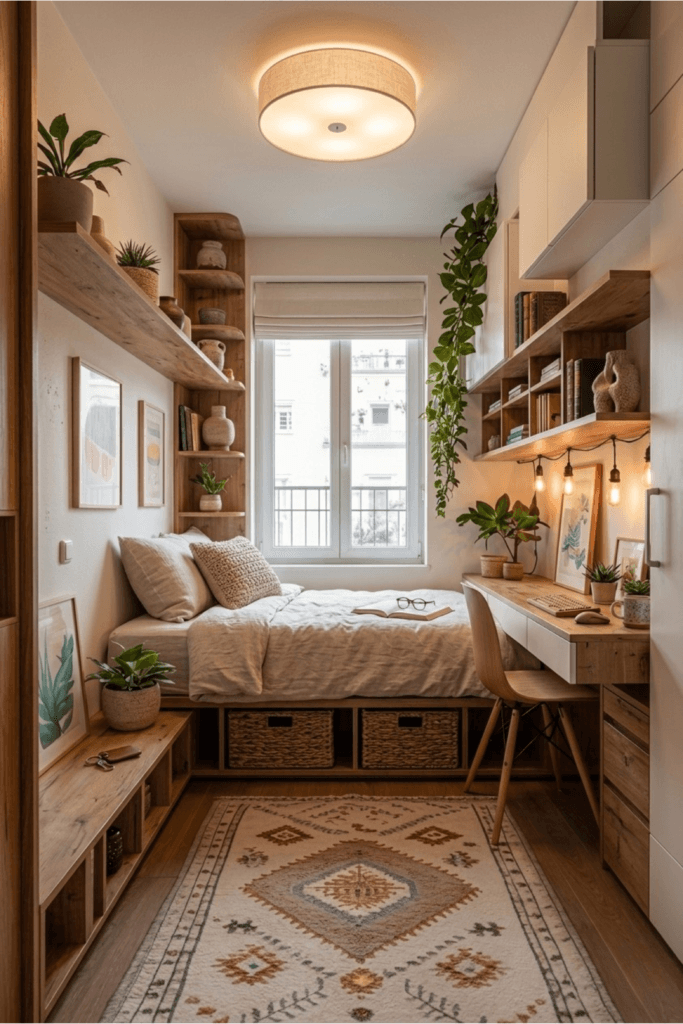
9. Use under-bed storage in a clean, intentional way
Under-bed storage can make a big difference in a tiny bedroom, especially when closet space is limited. The key is to keep it organized and hidden, rather than turning it into a catch-all for random items.
Why it works: Hidden storage reduces visible clutter and leaves the rest of the room easier to style.
Quick tip: Use matching low bins or storage bags so the space under the bed feels tidy instead of chaotic.
- Store here: off-season clothing, extra bedding, less-used items
- Avoid: stuffing in loose items that become difficult to manage later
10. Keep surfaces clear and styling minimal
In a small bedroom, clutter shows up fast. Even nice decor can start to feel messy when every visible surface is full. Keeping nightstands, dressers, and shelves mostly clear can instantly make the room feel more polished.
Why it works: Fewer visible items create a calmer, more spacious impression.
Quick tip: Style each surface with just one to three pieces, such as a lamp, a candle, or a small vase.
- Good styling formula: one practical item, one soft decorative item, one personal touch
- Avoid: many small scattered objects that make the room feel busy
11. Try a layout that gives the bed room to breathe
Sometimes the problem is not the size of the room but the placement of the furniture. In small bedrooms, layout matters more than people expect. If the bed blocks movement, crowds the window, or feels trapped against everything else, the room will always feel harder to use.
Why it works: Better flow makes the whole room feel more natural and less cramped.
Quick tip: If you can, try to avoid pushing the side of the bed tightly against the wall. Even a 10 to 15 cm gap can create the illusion of more space and make the room feel less boxed in.
- Try this first: center the bed on the strongest wall if the room allows it
- Keep clear: at least one comfortable walking path
- Check visually: stand in the doorway and see what feels blocked immediately
12. Make it feel calm, not just organized
The best small bedrooms do more than save space. They feel peaceful. That usually comes from editing the room carefully instead of trying to improve it by adding more things.
Why it works: A calm room feels better to be in, no matter the size.
Quick tip: If something makes the room feel crowded, distracting, or unnecessary, removing it may improve the space more than buying something new.
- Focus on: comfort, simplicity, ease of movement
- Remember: a small room does not need to be perfect to feel beautiful
Final thoughts
A tiny bedroom can still feel airy, comfortable, and stylish when the space is used with intention. You do not need expensive upgrades to make it work. Often, the biggest difference comes from softer colors, a better layout, less visual clutter, and a few thoughtful details.
Start small. Clear a surface. Shift the furniture. Simplify the palette. Let in more light. Those changes may seem minor, but together they can completely change how your bedroom feels every day.