A small bathroom does not feel cheap because of its size. It feels cheap when the space is visually broken, cluttered, or filled with low-impact details.
High-end bathrooms follow a different logic. They focus on optical space, material consistency, and intentional details. When those align, even a compact bathroom can feel elevated.
This guide breaks down not just what to do — but why it creates that expensive effect.
Part 1: Space Manipulation — Make the Room Feel Bigger Instantly
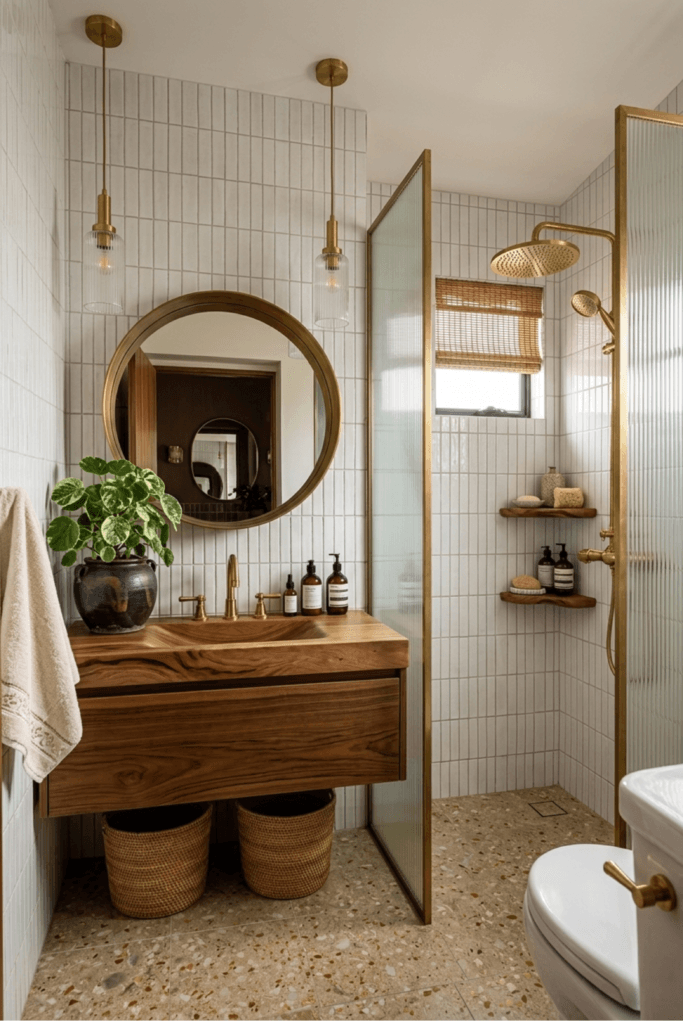
1. Overscale the Mirror (More Than Feels “Normal”)
A small mirror keeps the space contained. A large mirror expands it.
Why it works: the eye reads reflection as depth. Instead of stopping at the wall, the room appears to continue beyond it.
Designer move: extend the mirror higher than expected, even close to the ceiling. Vertical scale increases perceived height.
High-end look: frameless, softly curved, or ultra-slim metal-framed mirrors.
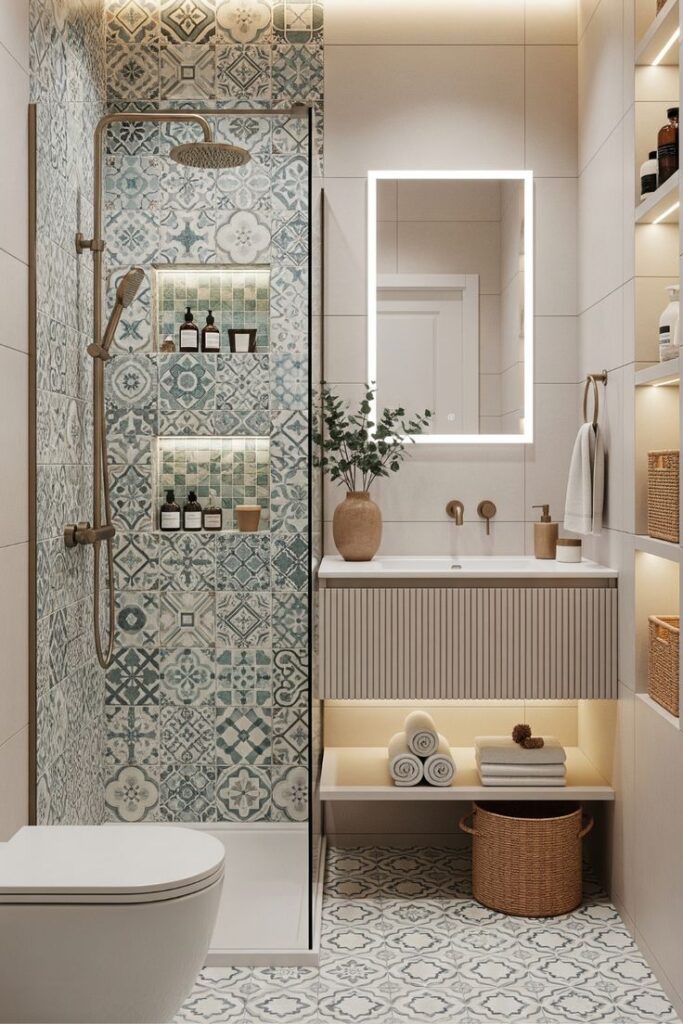
2. Floating Vanities Reduce Visual Weight
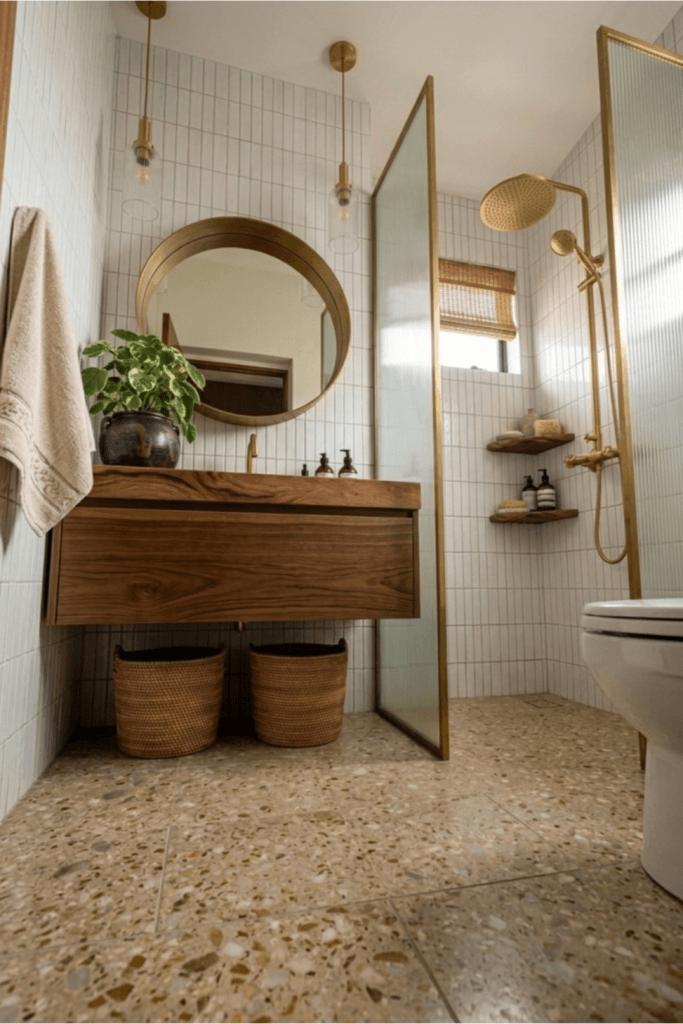
In design terms, heavy furniture sitting on the floor adds visual weight.
A floating vanity removes that weight and allows the floor to run continuously underneath.
Why it works: the eye follows uninterrupted surfaces. More visible floor = a larger perceived room.
This is one of the most effective upgrades that instantly shifts a bathroom away from a builder-grade look.
3. Replace Shower Curtains With Frameless Glass
A shower curtain acts like a visual wall.
A clear glass panel removes that boundary and gives the eye access to the full depth of the room.
Think of it this way: a curtain blocks space, glass “returns” it.
Best choice: frameless or minimal-profile glass panels for a seamless effect.
4. Use Vertical Lines to Elevate the Space
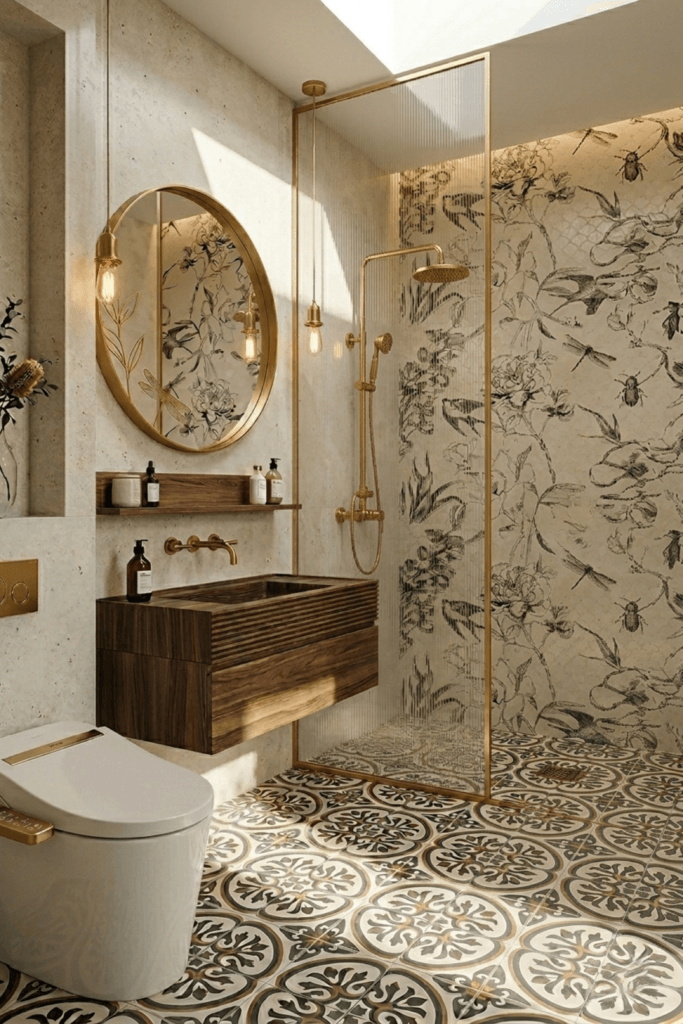
Small bathrooms benefit more from height illusion than width.
How to create it:
- full-height tiling
- tall mirrors
- vertical sconces
- fluted or ribbed textures
Why it works: vertical lines guide the eye upward, making ceilings feel higher and the space more architectural.
High-end material note: large-format porcelain slabs or vertically stacked Zellige tiles create a more continuous, custom look than small repetitive tiles.
Part 2: Eliminate Visual Noise — Create a Clean, Cohesive Base
5. Hide Clutter Behind Closed Storage
High-end bathrooms rarely display everyday items.
Why it works: visible clutter creates stress and lowers perceived value. Clean surfaces signal control and intention.
Best storage solutions:
- mirrored cabinets
- drawer organizers
- built-in storage
6. Create an Apothecary Vibe With Decanting
Bright packaging and mismatched bottles instantly break the luxury feel.
The solution: transfer products into apothecary-inspired jars or uniform dispensers.
Best choices:
- amber glass
- matte black pumps
- frosted containers with minimal labels
Why it works: removing brand noise creates a calm, curated environment instead of a retail shelf look.
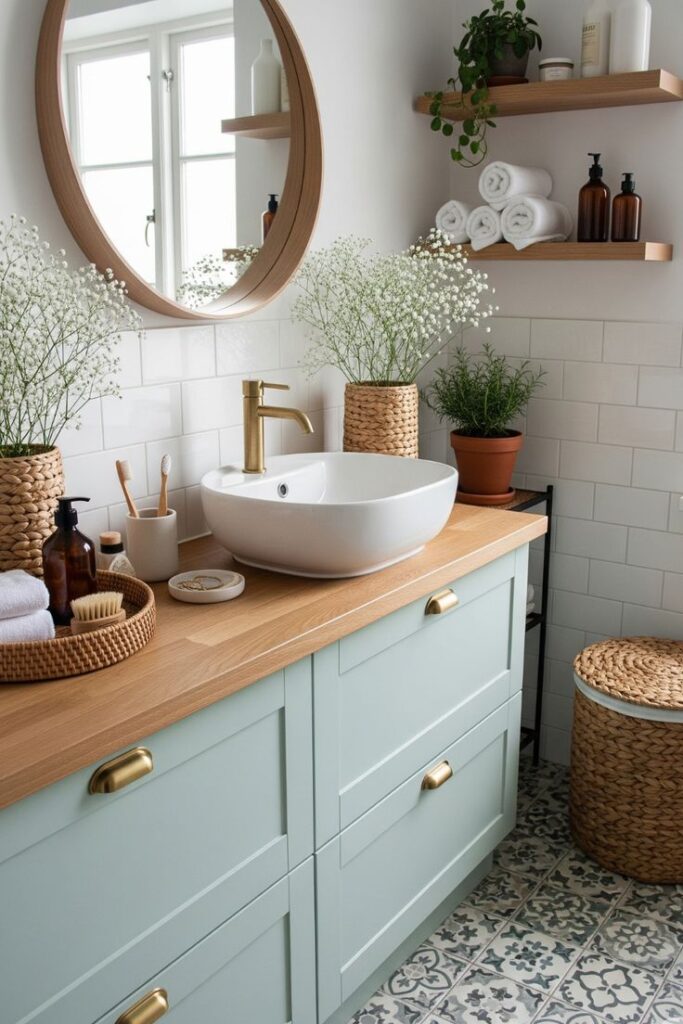
7. Use a Monochromatic Palette With Depth
A controlled palette feels more expensive than a colorful one.
Instead of flat white, use:
- greige
- mushroom tones
- warm taupe
- soft stone neutrals
Why it works: a monochromatic look removes visual breaks and creates a seamless, elevated feel.
8. Match Grout to Tile for a Seamless Finish
High-contrast grout outlines every tile and can make small spaces feel busy.
Matching grout blends tiles into one continuous surface.
Why it works: fewer visual interruptions = calmer, more expensive look.
This is especially effective with large-format porcelain or soft-toned tiles.
9. Use Built-In Niches Instead of Add-On Storage
Protruding shelves add clutter and break clean lines.
Built-in niches keep storage integrated into the wall.
Why it works: built-in elements always feel more custom and architectural.
Part 3: The Final 10% — Details That Signal Luxury
10. Upgrade Hardware — The Jewelry of the Room
In high-end design, fixtures and handles are considered the “jewelry” of the bathroom.
Many bathrooms feel basic because they rely on builder-grade hardware.
Swap them for:
- unlacquered brass (develops a natural patina over time)
- brushed nickel
- matte black finishes
Why it works: upgrading small metal details creates a disproportionate visual impact.
Rule: keep finishes consistent across faucets, handles, and accessories.
11. Elevate the Sensory Experience: Textiles and Scent
Luxury is not just visual — it is tactile and atmospheric.
Upgrade to:
- high-GSM Turkish cotton towels
- waffle-knit textures
- stone or woven bath mats
- a subtle spa-like candle or scent
Why it works: in high-end design, texture is a visual language. Weight, softness, and material quality communicate value instantly.
12. Use Negative Space Intentionally
One of the biggest differences between a basic and a high-end bathroom is restraint.
Expensive spaces are not full — they are edited.
Why it works: empty space gives the eye room to rest. That calmness reads as luxury.
Never Do This in a Small Bathroom
- Do not use overly busy, small-scale patterns
- Do not mix too many colors or finishes
- Do not overcrowd surfaces with products
- Do not rely on cold, harsh lighting
- Do not use visible packaging everywhere
- Do not keep builder-grade hardware if you want an elevated look
The “Expensive” Cheat Sheet
| Instead of This | Do This | Why It Looks Better |
|---|---|---|
| Small mirror | Oversized or wall-to-wall mirror | Expands visual space instantly |
| Shower curtain | Frameless glass panel | Removes visual barriers |
| Builder-grade hardware | Unlacquered brass or matte finishes | Adds “jewelry” detail |
| Mixed product bottles | Apothecary-style dispensers | Creates a curated look |
| Contrasting grout | Color-matched grout | Unifies surfaces |
| Too many colors | Monochromatic palette | Feels calm and cohesive |
| Thin towels | High-GSM Turkish cotton | Signals quality and comfort |
Quick Win: Where to Start
If you only have $50 and 30 minutes, focus on the changes that remove visual noise first.
- Start with Point 6 (Decanting): switch to apothecary-style dispensers
- Then apply Point 12 (Editing): clear and simplify every visible surface
These two steps alone create the fastest visible shift toward a more expensive-looking bathroom — without changing a single tile.
Final Thought
An expensive-looking bathroom is not about spending more. It is about removing what does not belong and upgrading what matters.
When the space feels cohesive, visually light, and intentional, even the smallest bathroom can feel elevated.