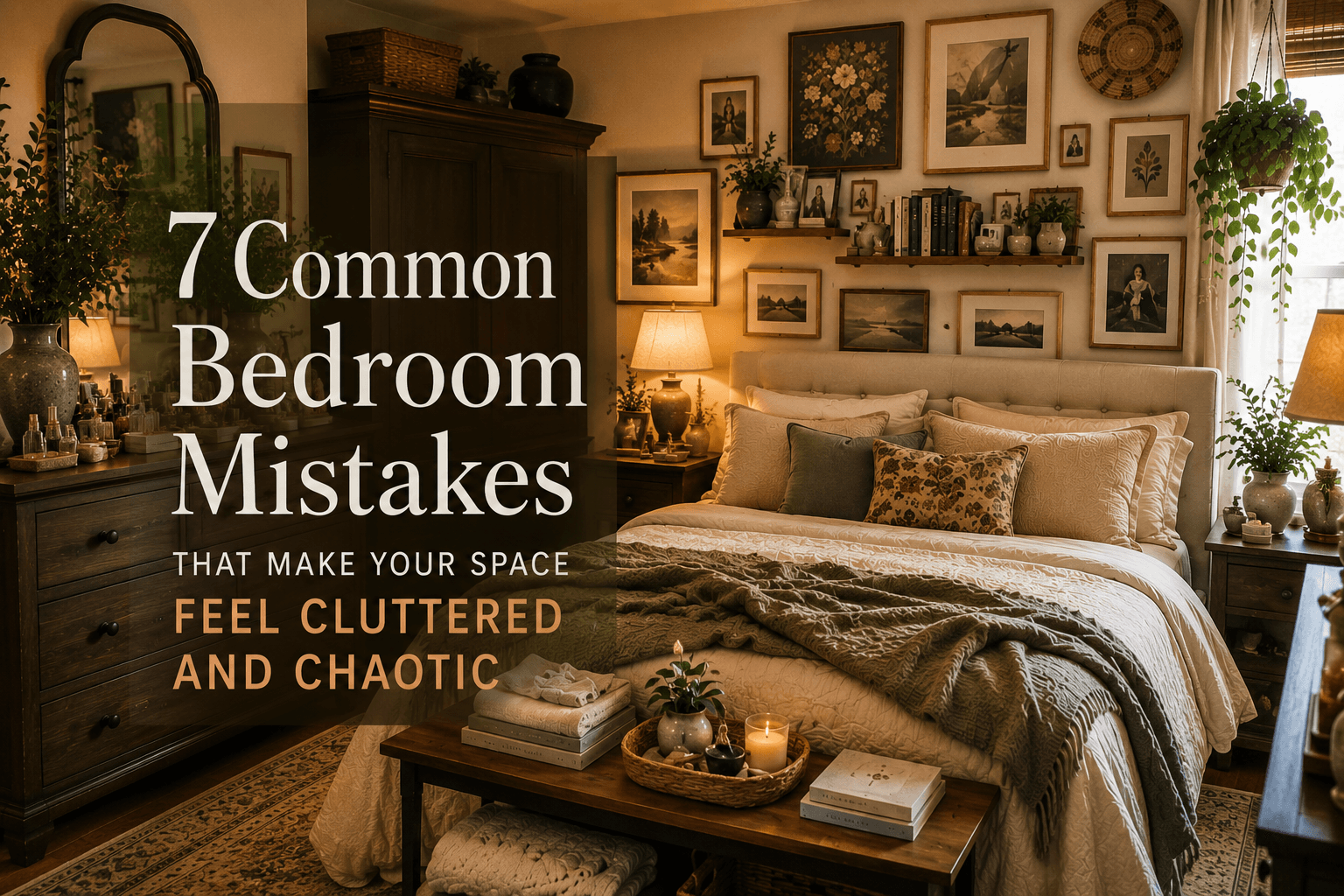
For a long time, I thought a cluttered bedroom simply meant there was too much stuff in it.
Too many clothes.
Too many books.
Too many things without a proper home.
But over time, I started noticing something interesting.
Some bedrooms felt calm, soft, and surprisingly spacious even when they were small.
Meanwhile, other bedrooms felt busy and slightly overwhelming even when they were completely clean.
The bed was made.
The laundry was put away.
The floor was clear.
And still, something felt off.
That was the moment I realized that clutter and visual clutter are not the same thing.
A bedroom can be tidy and still feel crowded.
A room can be clean and still feel stressful.
And sometimes, the problem is not how much you own. It is how much your eyes have to process the second you walk in.
The good news is that you do not need a bigger bedroom.
You do not need a full makeover.
You do not need to replace everything you own.
Most of the time, a few thoughtful changes can make the whole room feel calmer, lighter, and more intentional.
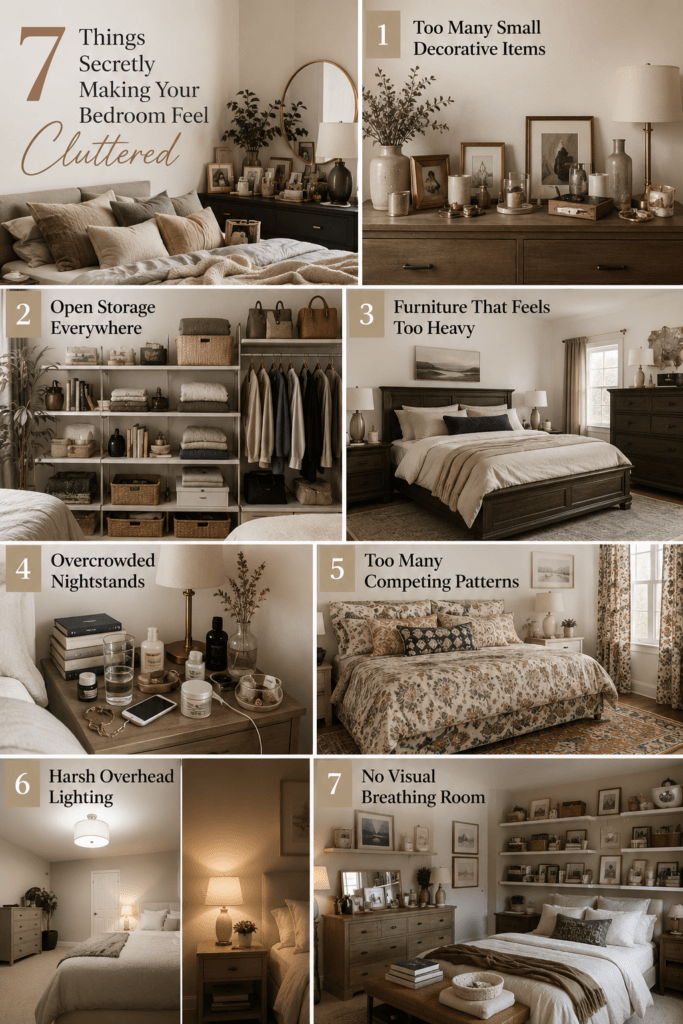
If your bedroom never feels as peaceful as you want it to feel, these seven things may be secretly creating visual clutter.
1. Too Many Small Decorative Items
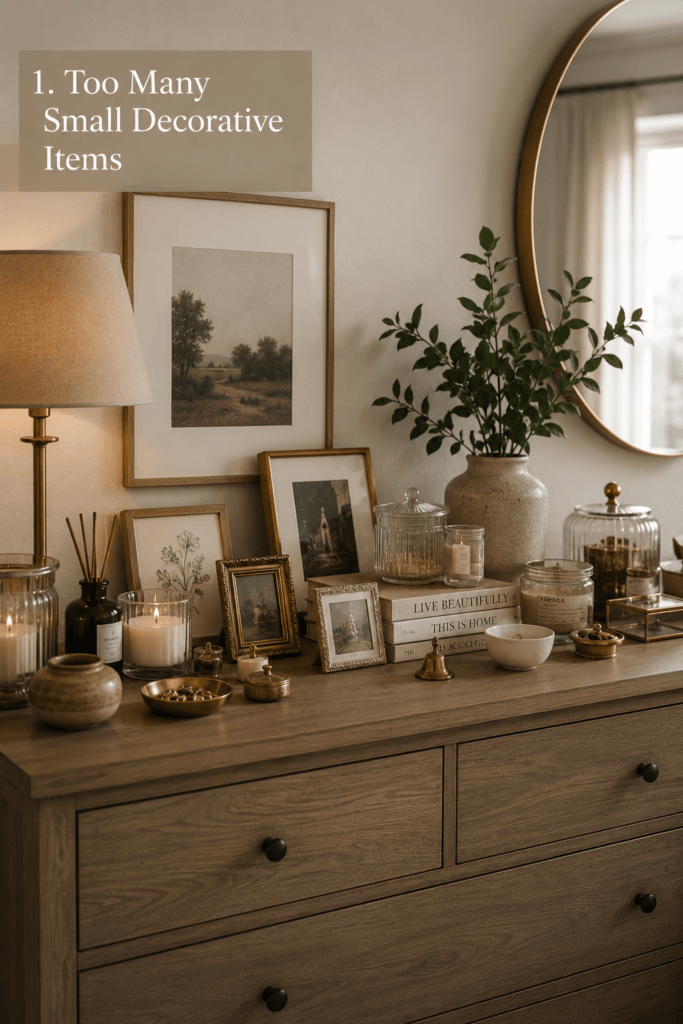
This is one of the easiest things to miss.
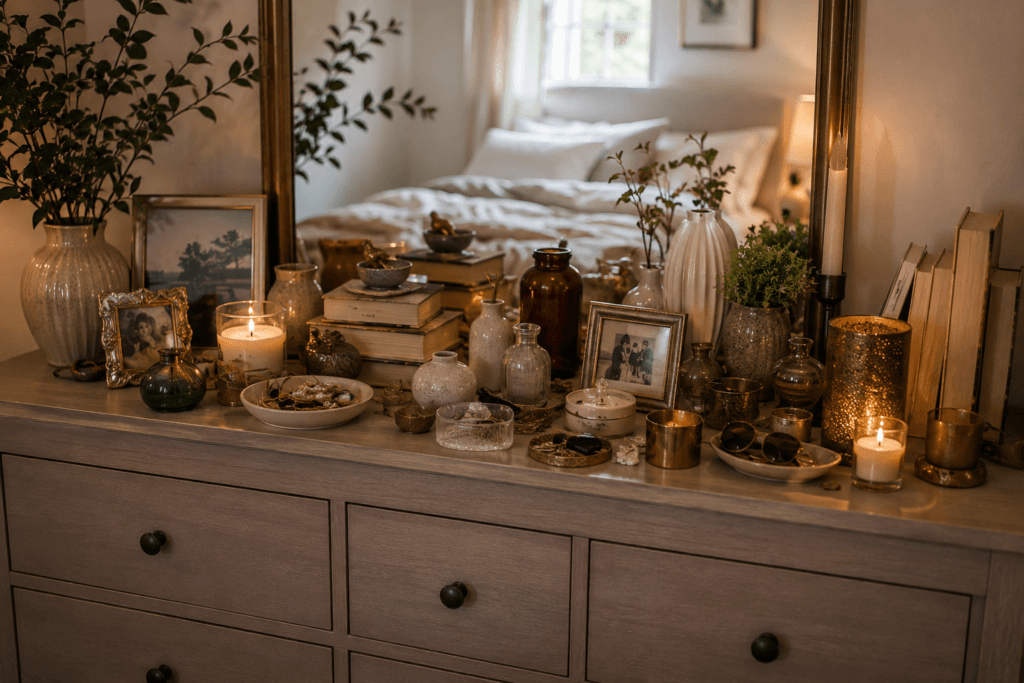
A candle on the dresser.
A little vase on the nightstand.
A framed print.
A jewelry dish.
A tiny plant.
A decorative box.
A small tray.
None of these pieces are bad on their own.
They may even be beautiful.
The problem starts when every surface becomes a home for several small objects.
I used to think more decor meant the room looked more finished. More styled. More personal.
But at some point, I realized I was just creating more little things to dust around, and I barely noticed most of them anymore.
That was the part that surprised me.
The pieces I added to make the room feel prettier were making it feel busier instead.
Imagine walking into your bedroom and your eyes immediately land on ten small objects before they even reach the bed.
A bottle here.
A frame there.
A candle next to a tray next to another small object.
Your eyes are constantly scanning.
Nothing is technically messy.
But the room still feels full.
Why this works against you:
Small decorative items create a lot of visual information. When there are too many of them, your eyes do not know where to rest. The room starts to feel louder than it actually is.
Try this:
Remove one small item from every surface.
Not everything.
Just one.
Then step back and look at the room again.
In my experience, a few larger, intentional pieces almost always feel calmer than lots of tiny ones. One beautiful vase can do more for a dresser than five small objects scattered across it.
The goal is not to strip the room bare.
The goal is to let your favorite pieces actually stand out.
2. Open Storage Everywhere

Open storage can look beautiful.
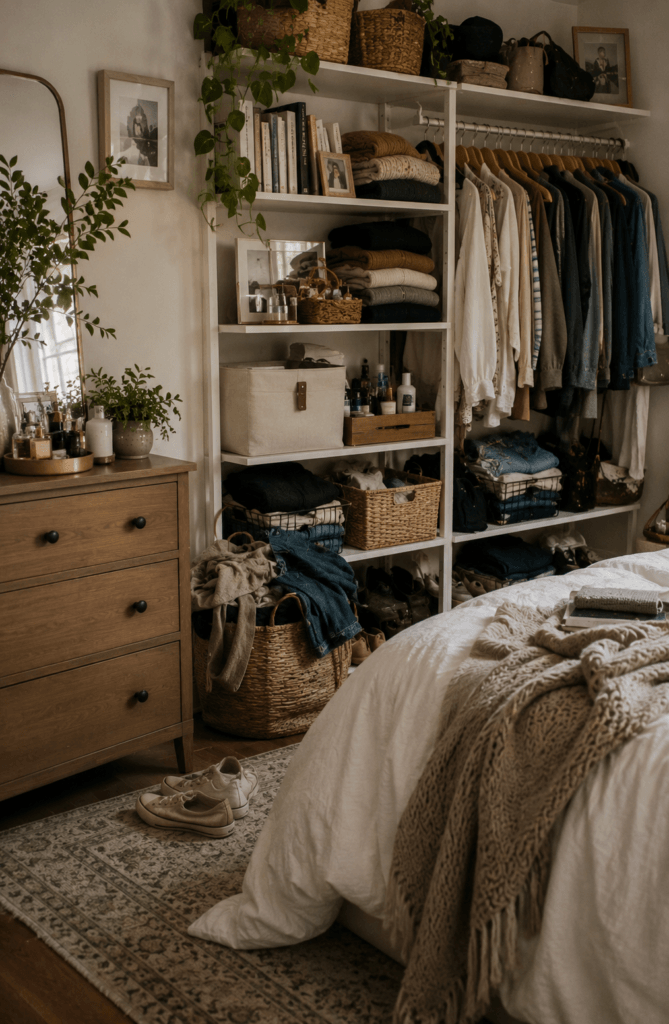
Open shelves, visible baskets, clothing rails, stacked books, and styled displays can all work really well in the right room.
But open storage has one problem:
Everything stays visible.
Every book.
Every basket.
Every folded blanket.
Every little container.
Even if everything is organized, your eyes are still reading it as information.
That is why some bedrooms feel cluttered even when nothing is technically out of place.
I used to think that if something was organized, it could stay visible.
But I have noticed that the calmest bedrooms usually do not show everything at once.
Some things are displayed.
Some things are hidden.
That balance makes the room feel softer.
Imagine standing in the doorway of your bedroom.
On one side, you see shelves full of folded clothes, small boxes, books, skincare, accessories, and extra bedding.
Now imagine that same wall with half of those items hidden behind drawers or doors.
The amount of stuff may be almost the same.
But the feeling is completely different.
Why this works against you:
Open storage forces your eyes to process every item. Closed storage gives the room visual quiet. It creates a pause.
Try this:
Pick one open area in your bedroom and simplify it.
Leave more empty space than feels natural at first.
If a shelf is full, remove a few things.
If a basket is overflowing, move some items somewhere hidden.
Empty space can feel strange at first, especially if you are used to filling every surface.
But after a while, it often starts to feel expensive.
Not because the room has more.
Because it finally has breathing room.
3. Furniture That Feels Too Heavy For The Room
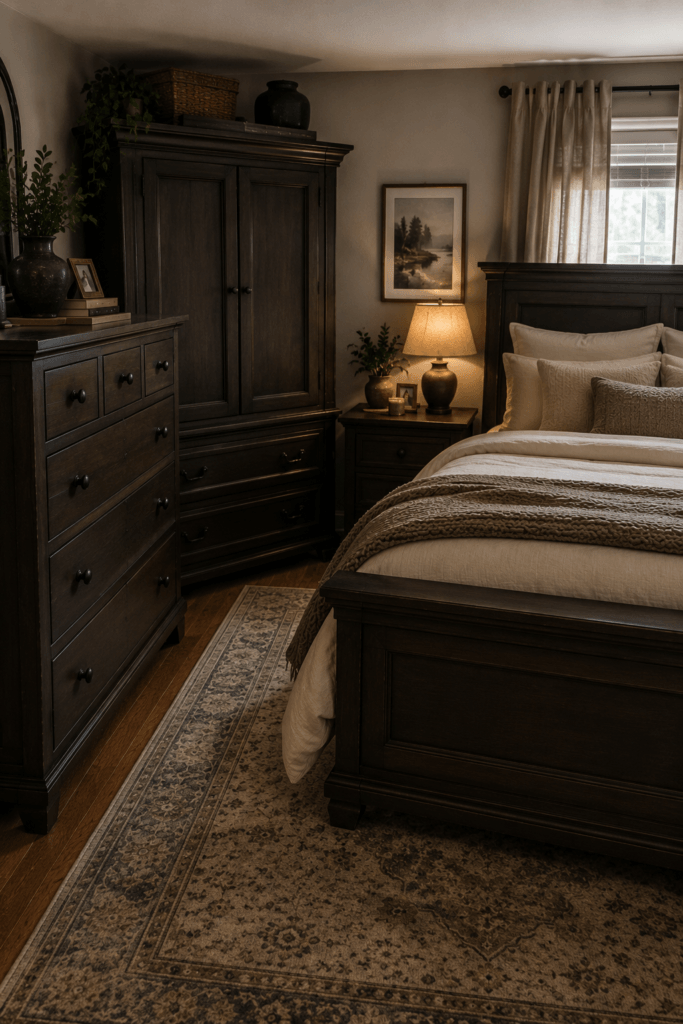
A bedroom can feel cluttered even without clutter if the furniture feels too heavy for the space.
A large bed.
Bulky nightstands.
A wide dresser.
A storage bench.
A chair in the corner.
Individually, every piece might make sense.
Together, they can make the room feel squeezed.
This is especially common in small bedrooms, but it can happen in larger rooms too.
I used to think that bigger pieces automatically made a room feel more grown-up or expensive.
Sometimes they do.
But only when the room has enough space to support them.
When furniture is too heavy for the room, the whole space starts to feel compressed.
Imagine walking around the bed and having to slightly turn your body every time you pass the dresser.
Imagine a nightstand that almost touches the wall, a chair that blocks the corner, and a bench that makes the foot of the bed feel crowded.
Nothing is messy.
But your body feels the tightness.
And your eyes feel it too.
Why this works against you:
When furniture fills too much of the visual field, the room feels smaller. Your brain reads the space as harder to move through, even if you are not consciously thinking about it.
Try this:
Look at your bedroom and ask:
Does every piece of furniture earn its space?
If one item is only there because you once thought it looked nice, but you do not actually use it, consider moving it out.
Sometimes removing one chair, bench, basket, or side table changes the whole room.
You do not always need smaller furniture.
You may simply need fewer pieces competing for space.
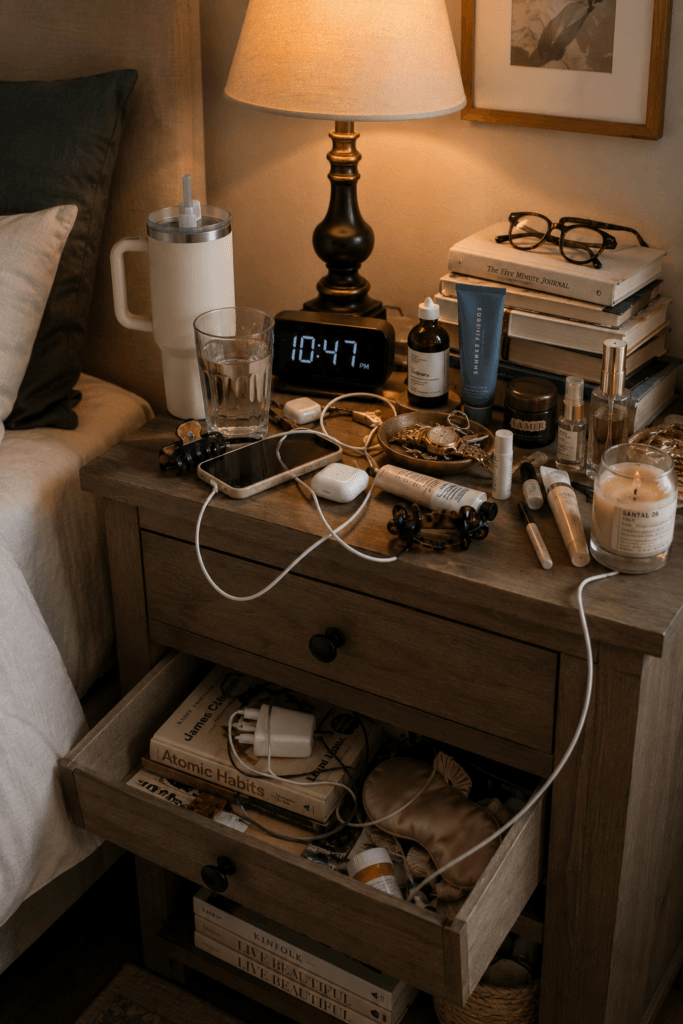
4. Overcrowded Nightstands
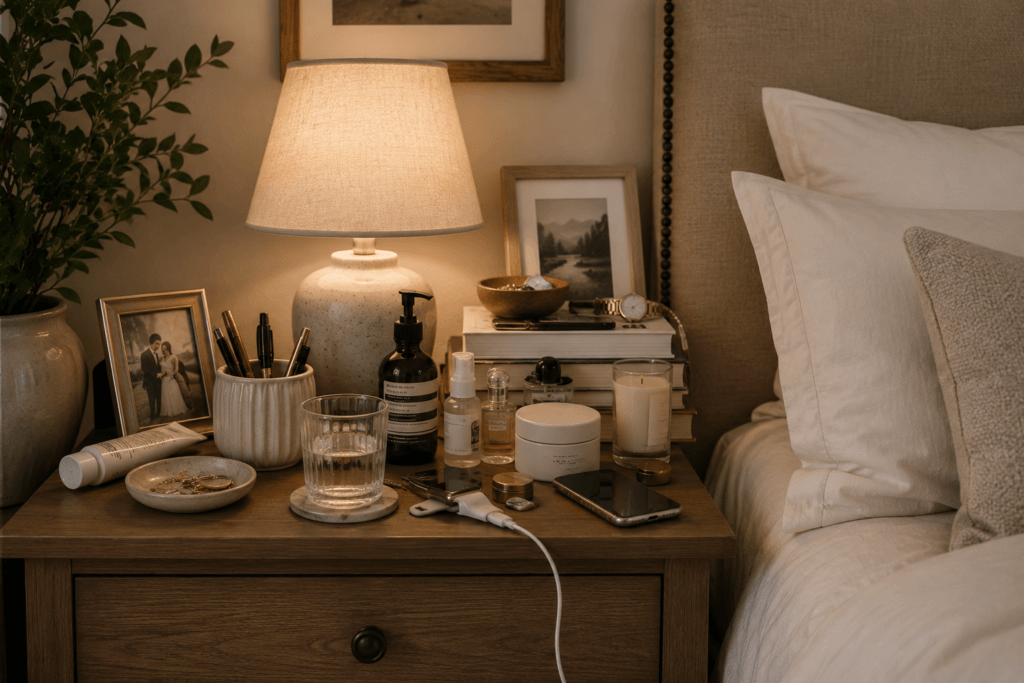
Nightstands are tiny surfaces with a huge impact.
They sit right next to the bed.
They are usually one of the first things you see in the morning.
And they are one of the last things you see at night.
So when they are crowded, the whole bedroom can feel less calm.
A lamp.
A charger.
A second charger.
Three books.
Lip balm.
Hand cream.
Jewelry.
A glass of water.
Receipts.
Hair ties.
Random things that somehow never leave.
I think nightstands become cluttered so easily because they are convenient.
You put something there “just for now.”
Then another thing.
Then another.
And suddenly the surface disappears.
Imagine waking up and the first thing your eyes land on is a pile of cables, half-read books, loose jewelry, and random items you meant to move yesterday.
Now imagine the same nightstand with one lamp, one book, and a small tray holding only the essentials.
Same room.
Same furniture.
Completely different feeling.
Why this works against you:
Your nightstand sets the tone for the room because it sits beside the most important piece of furniture: the bed. If that area feels chaotic, the whole room can feel less restful.
Try this:
Clear the entire nightstand.
Then only return what you genuinely use at night or first thing in the morning.
Not what could be useful.
Not what sometimes lands there.
Only what belongs there.
This simple reset often makes the bedroom feel calmer almost instantly.
5. Too Many Competing Patterns
Patterns can be beautiful.
They can make a room feel warm, layered, and personal.
The problem is not pattern itself.
The problem is when too many patterns are trying to be the main character.
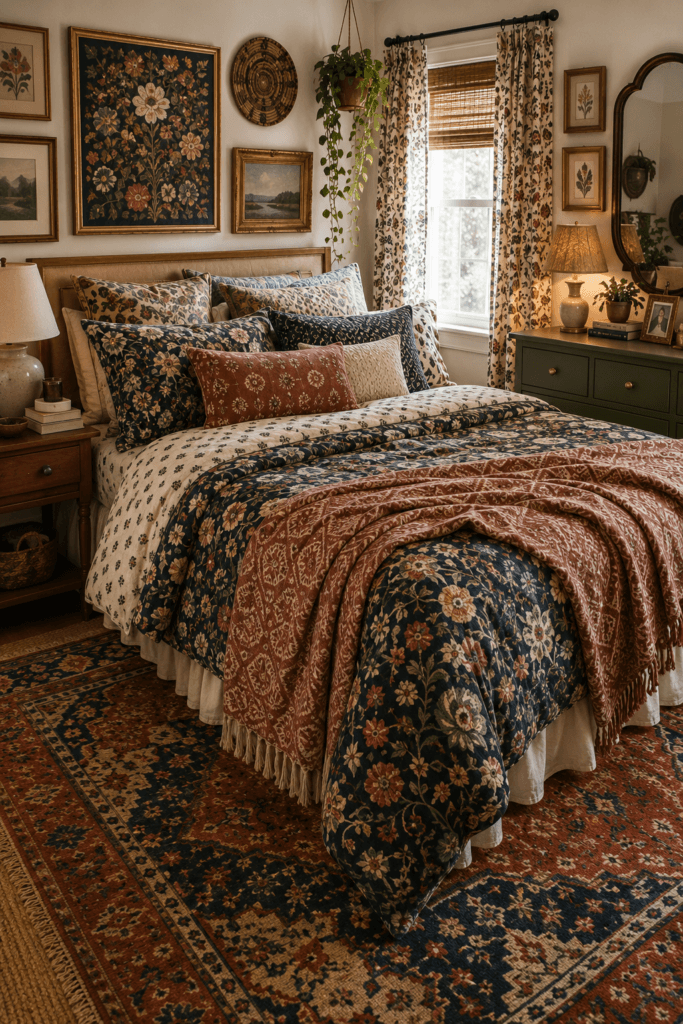
Patterned bedding.
Patterned pillows.
Patterned curtains.
A patterned rug.
Patterned artwork.
A patterned throw.
Each one may be lovely on its own.
Together, they can start shouting over each other.
This is one of those things I notice a lot in rooms that almost feel right.
The pieces are pretty.
The colors may even work.
But the room still feels busy.
Imagine a bedroom with a floral duvet, striped pillows, a geometric rug, and bold curtains.
Now imagine replacing the patterned pillows with solid textured ones.
The room does not become boring.
It becomes easier to look at.
Your eye finally has somewhere to land.
Why this works against you:
Patterns naturally draw attention. When too many patterns appear at the same time, your eyes keep moving from one thing to the next without settling.
Try this:
Choose one main pattern in the room.
Maybe it is the bedding.
Maybe it is the rug.
Maybe it is the curtains.
Let that be the focal point, then keep the surrounding pieces quieter.
Texture can add depth without creating visual noise.
Linen.
Wood.
Woven baskets.
Soft knits.
Velvet.
These details can make a room feel rich without making it feel crowded.
In my experience, a calm bedroom does not need to be plain.
It just needs a little restraint.
6. Harsh Overhead Lighting
Lighting changes everything.
A bedroom can be beautifully styled and still feel uncomfortable if the lighting is wrong.
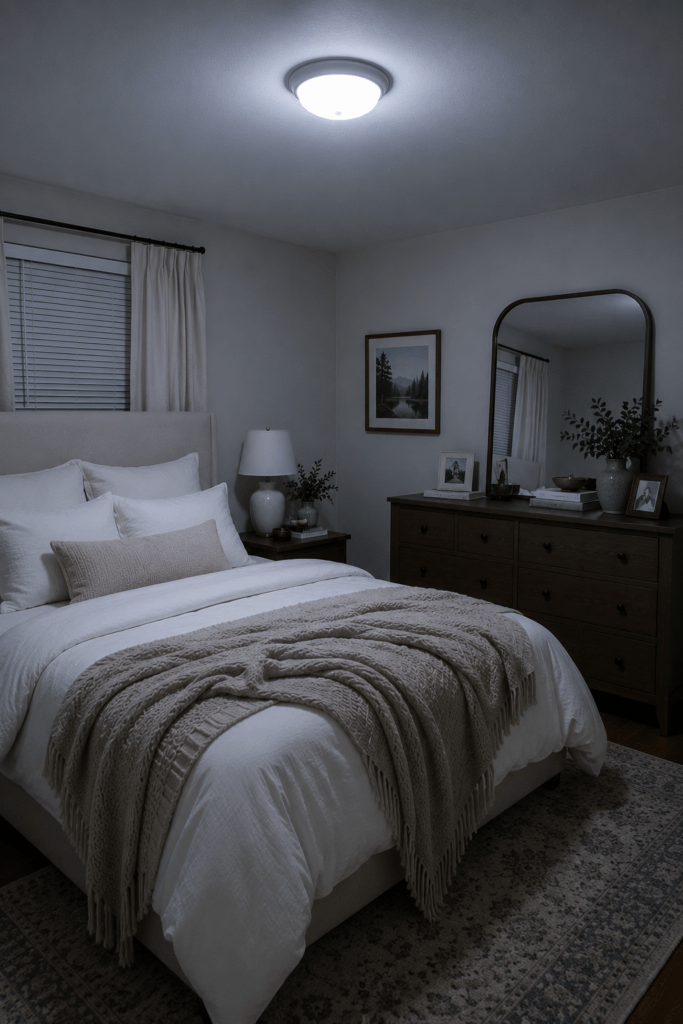
The most common problem is relying only on one bright overhead light.
Technically, it lights the room.
But it does not always make the room feel good.
Harsh ceiling lighting can make a bedroom feel flat, cold, and exposed.
It highlights every object.
It creates strong shadows.
It makes small clutter feel more noticeable.
I used to underestimate lighting completely.
I thought decor was the main thing that made a bedroom feel cozy.
Then I started noticing that the same room could feel completely different depending on the light.
Warm bedside lamps.
Soft corner lighting.
A gentle glow instead of one bright ceiling light.
Suddenly the room felt calmer without changing the furniture at all.
Imagine coming into your bedroom at night after a long day.
One version has a bright ceiling light that makes everything feel sharp.
The other has a warm lamp beside the bed and a softer glow in the corner.
The room itself has not changed.
But your body reacts differently.
Why this works against you:
Bright overhead light can make the room feel more alert and active. Softer, warmer lighting naturally signals that the day is winding down. It helps the bedroom feel like a place to rest, not just another functional room.
Try this:
For one evening, do not turn on the ceiling light.
Use only lamps or softer lighting.
Notice how the room feels.
This is one of the simplest changes, but it can make the bedroom feel instantly more expensive and relaxed.
7. No Visual Breathing Room
This may be the biggest one.
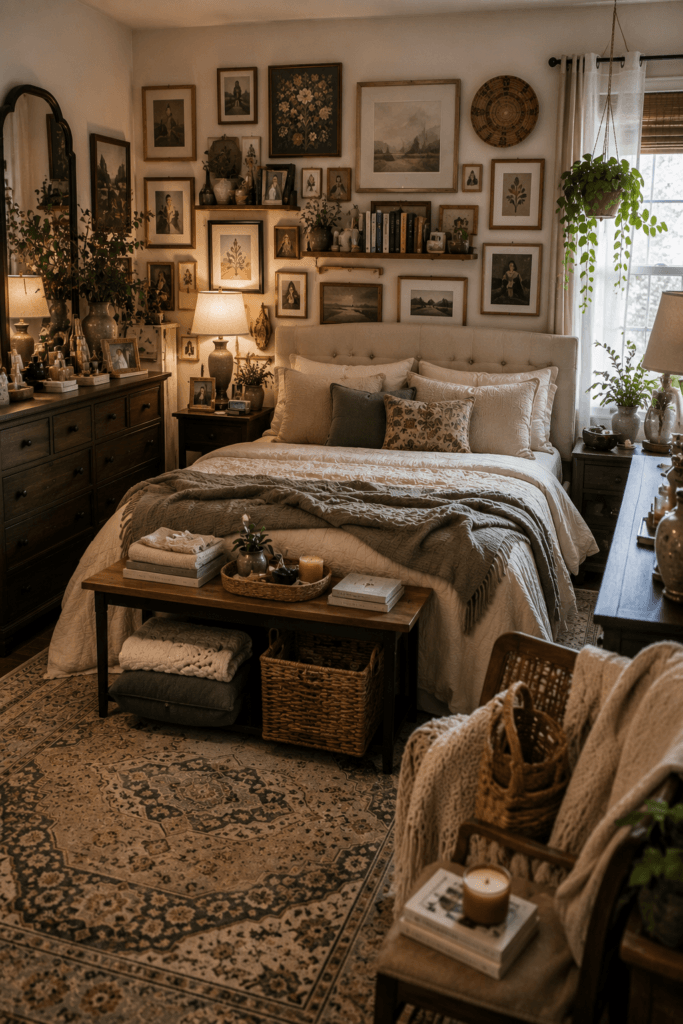
A room can have beautiful furniture, pretty colors, and nice decor, but if every inch is filled, it can still feel cluttered.
Every wall has something on it.
Every shelf is full.
Every corner has a basket, chair, plant, or table.
Every surface is styled.
Nothing is wrong individually.
There is just no pause.
No empty space.
No quiet moment.
I used to feel like an empty corner meant something was missing.
Now I usually see it as relief.
Not every space needs to be filled.
Sometimes the room looks more finished when it is allowed to breathe.
Imagine a dresser with objects across the entire top.
Now imagine removing a third of them and leaving one side almost empty.
At first, it might feel unfinished.
Then, after a moment, the whole dresser starts to look more intentional.
The emptiness becomes part of the design.
Why this works:
Visual breathing room gives your eyes a place to rest. It makes the pieces you keep feel more important. It also makes the room feel calmer without requiring you to change the whole space.
Try this:
Choose one area and intentionally leave it emptier than usual.
One shelf.
One corner.
One wall.
One side of the dresser.
Do not rush to fill it.
Let the space stay quiet for a few days.
You may realize that the room did not need another item.
It needed a pause.
A Quick Bedroom Reset Checklist
If your bedroom feels cluttered even when it is clean, start with one small reset.
You do not need to do all of these at once.
Pick one and see how the room feels.
- Remove one small decorative item from every surface.
- Clear your nightstand completely, then only put back the essentials.
- Hide a few visible items from open storage.
- Create more space around one piece of furniture.
- Choose one main pattern and simplify the rest.
- Use warm lamps instead of harsh overhead lighting.
- Leave one area intentionally empty.
- Step back and notice where your eyes naturally land first.
- Remove anything that makes that first view feel busy.
Small changes often create a bigger shift than people expect.
Especially in a bedroom.
Because the bedroom is not just another room.
It is where the day begins and ends.
Final Thoughts
If your bedroom feels cluttered, it does not automatically mean you are messy.
It does not mean you need a bigger room.
It does not mean you need more storage.
And it definitely does not mean you need to start over.
Sometimes the issue is much softer than that.
Too many small things asking for attention.
Too much visible storage.
Furniture that feels a little too heavy.
A nightstand that collects the whole day.
Patterns that compete.
Lighting that feels too harsh.
Spaces that never get a chance to breathe.
The encouraging part is that these are all fixable.
Not with a dramatic makeover.
Not with a full weekend of decluttering.
Just with small, intentional choices.
A calmer bedroom is often less about adding more and more about editing what is already there.
Give your eyes somewhere to rest.
Give your favorite pieces room to stand out.
Give the room a little quiet.
You might be much closer to the peaceful, cozy bedroom you want than you think.