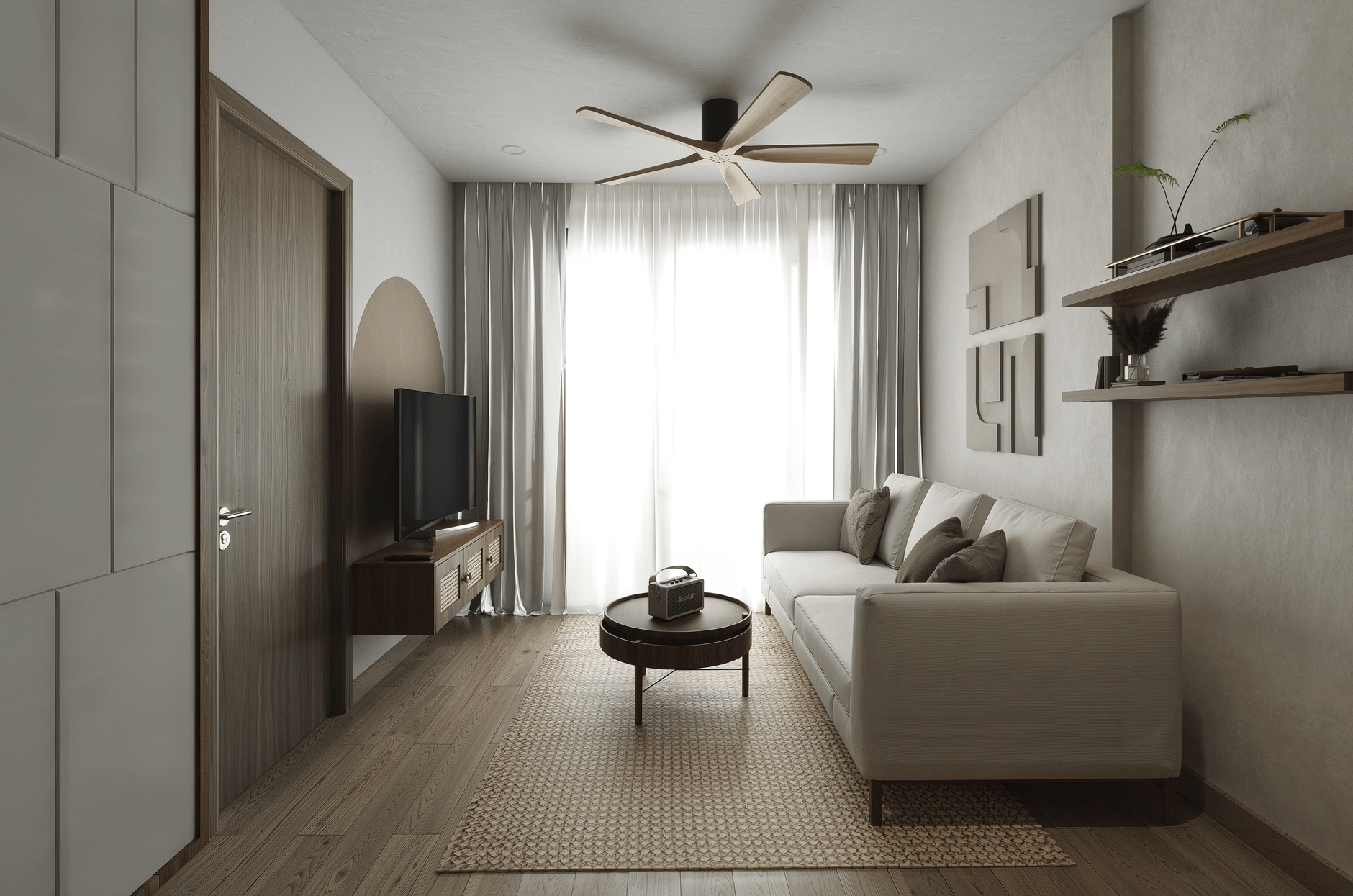
Sometimes a small living room feels exhausting before the day even starts.
You walk in carrying coffee, laundry, your laptop, or groceries.
You step around the coffee table.
The chair blocks the walkway.
The room is technically clean, but your brain still feels busy inside it.
That is what many people misunderstand about small living room design.
The stress rarely comes from the square footage itself.
It comes from friction.
Too many visual interruptions.
Too many objects competing for attention.
Too little breathing room between furniture pieces.
A calm small living room is not about minimalism for aesthetics.
It is about creating a layout that quietly supports your daily life.
One that feels easier to move through.
Easier to process.
Easier to relax inside.
These small living room layout ideas are designed to help your space feel open, intentional, and visually lighter without making it feel empty.
Start With the Walkway, Not the Furniture
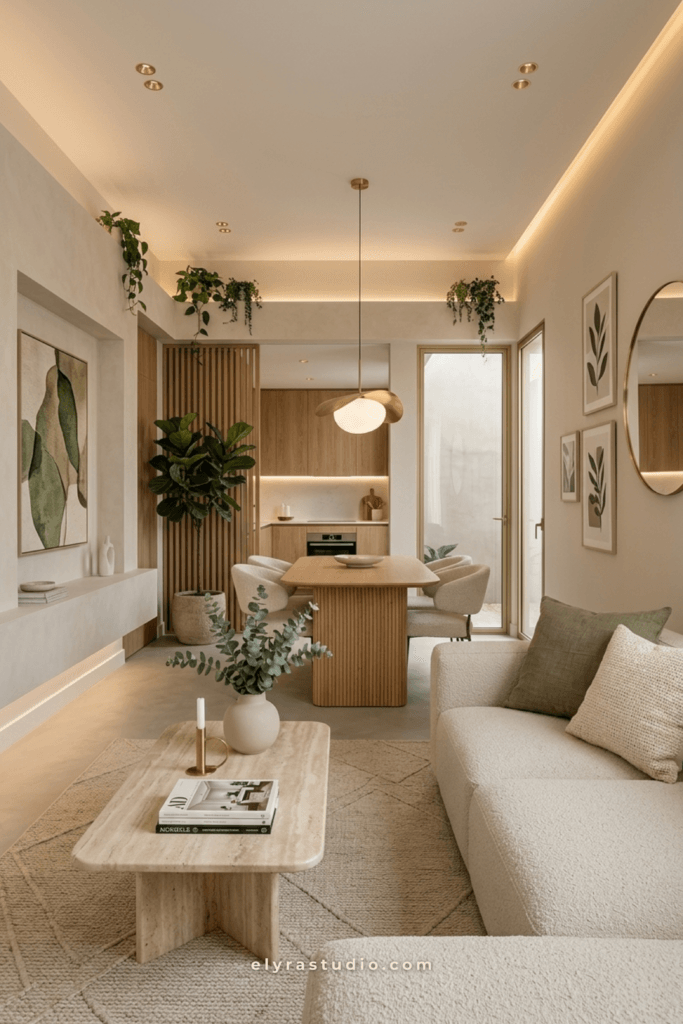
One of the biggest small living room layout mistakes happens before the room is even finished.
Most people place the furniture first and think about movement later.
But your body notices the layout before your eyes fully process the decor.
If the room forces you to squeeze around corners, avoid table edges, or constantly shift direction while walking, your nervous system quietly reads the space as stressful.
This is why narrow layouts often feel mentally heavier.
The room becomes an obstacle course instead of a resting place.
In interior psychology, tight movement zones increase subtle environmental tension because your brain keeps scanning for physical obstacles.
That means the room never fully feels calm.
The better approach is to design the walkway first.
Before placing decor.
Before styling shelves.
Before adding extra chairs.
Look at the natural movement path through the room.
From the entrance to the sofa.
From the sofa to the window.
From the kitchen to the living area.
That path should stay visually open and physically comfortable.
For a small living room layout that feels easy to use, leave at least 60–70 cm (24–28 inches) between furniture pieces whenever possible.
Less than that usually creates friction.
More than that immediately feels calmer.
Designer Insight — Elyra Studio
If a room feels crowded, do not look at the decor first.
Look at the movement path.
A clear walkway creates calm faster than almost any decorative change.
| Avoid | Choose Instead |
|---|---|
| Furniture blocking movement | Clear natural pathways |
| Oversized coffee tables | Compact rounded tables |
| Tight squeezed layouts | 60–70 cm walking space |
| Multiple small obstacles | Fewer intentional pieces |
Pinnable Tip: The 60 cm walkway rule is one of the biggest secrets behind calm small living rooms — Elyra Studio tip.
Use One Main Seating Zone in Your Small Living Room Layout
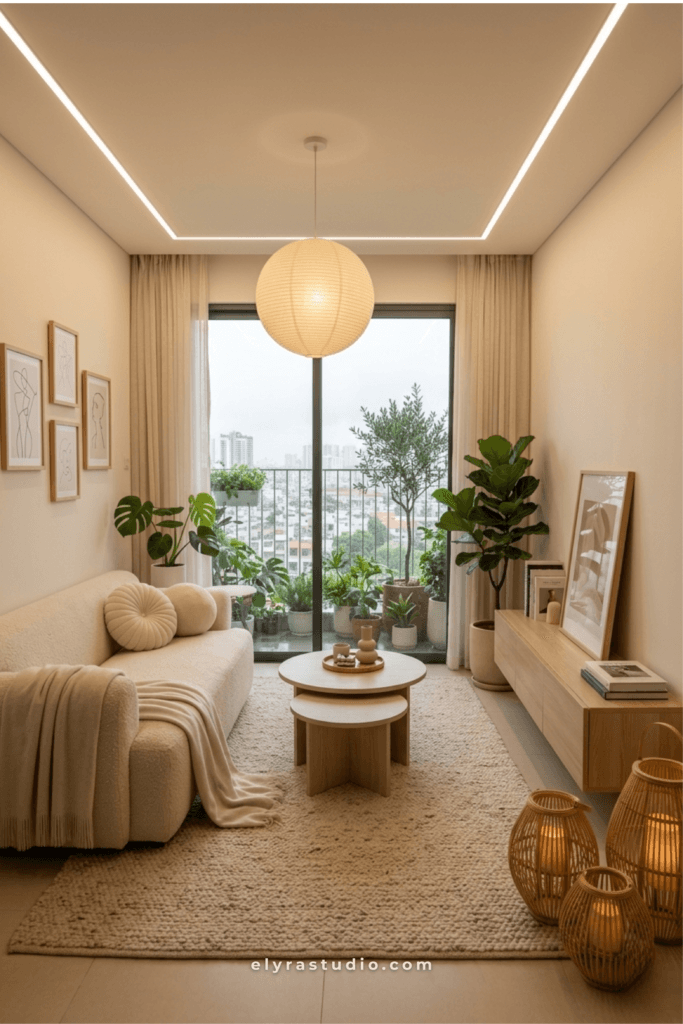
A small living room starts feeling visually chaotic when the furniture acts like separate islands.
A chair near the window.
A stool in another corner.
A tiny table beside another tiny table.
The eye keeps jumping around the room trying to understand the layout.
That constant visual processing creates fatigue.
Especially in small apartments where the living room already handles multiple functions.
The shift is creating one clear seating zone.
Not many disconnected micro-zones.
This works because the brain relaxes when spatial information becomes easier to read.
A connected seating area feels calmer than scattered furniture, even when the room contains the exact same amount of objects.
In most successful small living room layout ideas, the furniture visually belongs together.
The rug anchors the zone.
The sofa faces inward.
The coffee table supports the center.
The chair feels connected instead of floating.
The room suddenly feels intentional.
Not crowded.
Quick application:
Use one rug large enough for at least the front legs of the seating furniture to touch it.
This visually merges the pieces into one calmer structure.
Designer Insight — Elyra Studio
Small spaces feel larger when the eye understands the room quickly.
One connected seating zone creates less visual noise than several disconnected mini-zones.
| Avoid | Choose Instead |
|---|---|
| Random floating furniture | One connected seating area |
| Several tiny rugs | One grounding rug |
| Too many accent chairs | One secondary chair maximum |
| Visual fragmentation | Clear focal grouping |
Pinnable Tip: One calm seating zone almost always feels bigger than multiple tiny “functional” corners.
Choose Lower Furniture to Make the Room Feel Bigger
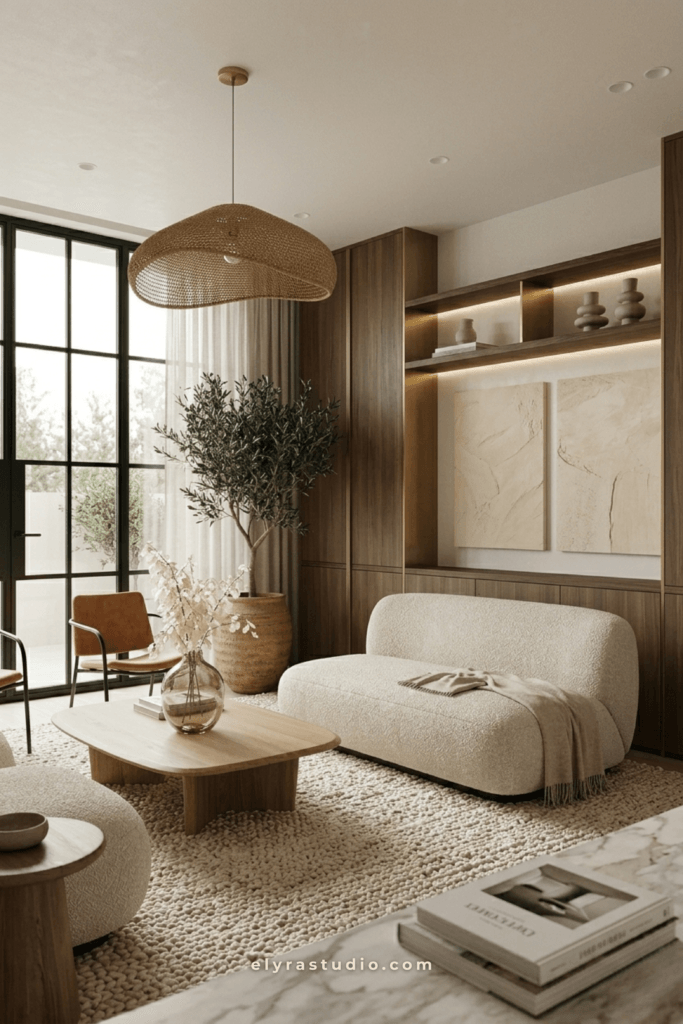
Furniture height changes how spacious a room feels more than most people realize.
Tall bulky furniture visually cuts the room into smaller sections.
Your eye keeps stopping instead of flowing naturally across the space.
This is why low furniture works so well in calm Japandi-inspired interiors.
Lower sofas.
Lower consoles.
Floating cabinets.
Slim coffee tables.
They create visual breathing room above them.
The ceiling suddenly feels higher.
The walls feel less compressed.
The room feels quieter.
This effect becomes even stronger in small apartment living rooms where natural light already has limited space to travel.
Quick application:
If your room feels heavy, identify the visually tallest furniture piece first.
Often one oversized cabinet or thick media unit dominates the entire layout.
Replacing just one bulky piece can completely shift the feeling of the room.
Designer Insight — Elyra Studio
Low furniture creates visual silence above the layout.
That empty upper space is what makes a room feel breathable.
| Avoid | Choose Instead |
|---|---|
| Tall bulky cabinets | Floating or lower storage |
| Heavy dark furniture | Light wood and rounded edges |
| Chunky coffee tables | Slim low-profile tables |
| High visual weight | Open upper wall space |
Pinnable Tip: Small living rooms feel taller when the furniture sits lower and lighter.
Let the Window Area Stay Light and Open
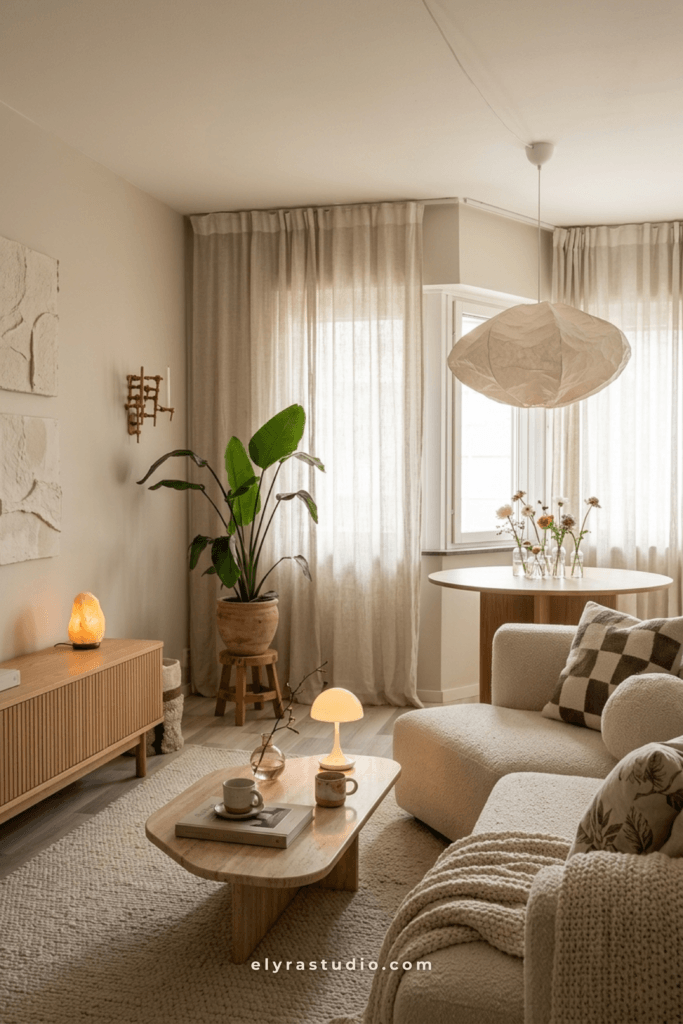
Natural light is one of the strongest tools in small living room design.
But many layouts accidentally block it.
Heavy curtains.
Tall furniture.
Dark storage pieces.
Too many plants grouped around the window.
The result is a room that feels visually crowded before daylight can soften it.
A calmer small living room layout treats the window as negative space.
Not another storage zone.
Light needs room to move through the space.
This is why soft linen curtains work beautifully in small living rooms.
They diffuse the light instead of blocking it completely.
The room feels softer without exposing every detail in the space.
Compared to heavy velvet or blackout curtains, linen creates far less visual heaviness.
Quick application:
Hang curtains higher and wider than the actual window frame.
This visually stretches the wall height and makes the window feel larger.
Keep furniture lower near the window whenever possible.
Designer Insight — Elyra Studio
Windows are not only light sources.
In a small living room layout, they function as visual breathing space.
Pinnable Tip: Linen curtains soften light without visually shrinking the room.
Small Living Room Color and Texture Ideas That Feel Calm
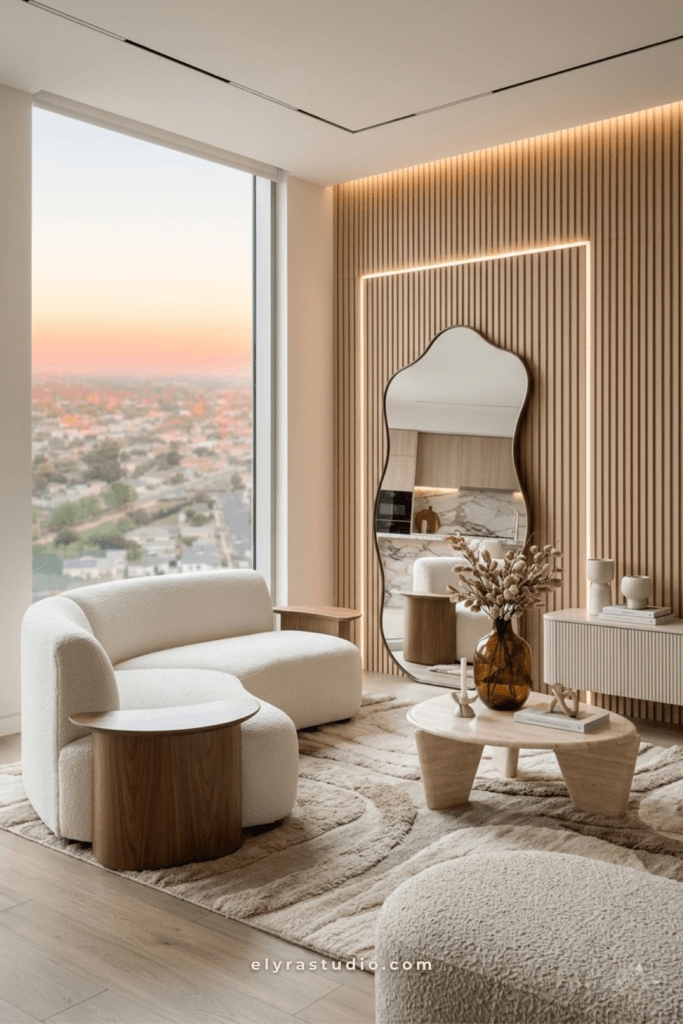
A small living room does not need strong contrast or many colors to feel interesting.
In fact, too many visual shifts often make a compact room feel mentally noisy.
That is why calm Japandi-inspired spaces rely more on texture than color variety.
Soft linen curtains.
Bouclé seating.
Raw wood grain.
Matte ceramics.
Natural woven textures.
Stone surfaces with subtle movement.
These materials create depth without overwhelming the eye.
Your brain still experiences richness and variation, but in a quieter way.
This matters because the eye processes texture as information too.
If the colors stay soft and connected, layered textures can replace the need for excessive decor or strong accent colors.
That is often what creates the “expensive but calm” feeling in small living room layouts.
The room feels warm and tactile instead of visually crowded.
Quick application:
Instead of adding more decorative objects, layer 2–3 natural textures across the room.
A linen curtain.
A woven rug.
A textured ceramic vase.
A bouclé chair.
The space immediately feels softer and more intentional without adding visual clutter.
Designer Insight — Elyra Studio
Luxury in a calm home rarely comes from bold decoration.
It usually comes from quiet texture variation layered inside a restrained palette.
Pinnable Tip: Calm small living rooms feel richer through texture, not more color — Elyra Studio tip.
Use Vertical Storage Without Creating Visual Clutter
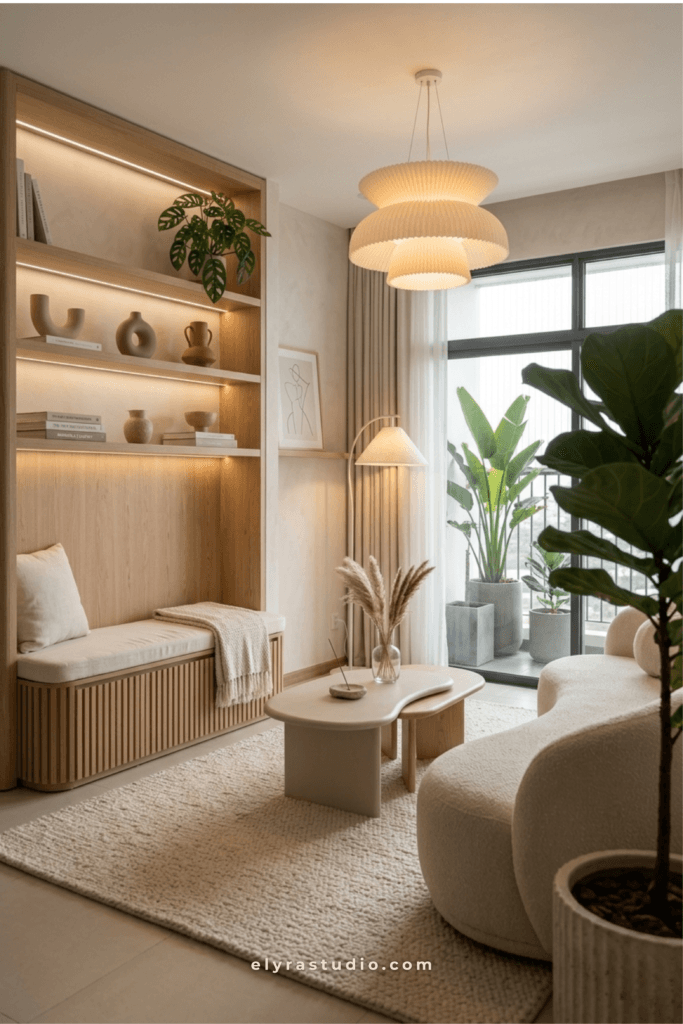
Small living room storage ideas often fail because the storage becomes the clutter.
Open shelves packed with tiny objects create constant visual stimulation.
Your eye never gets to rest.
The better solution is balanced vertical storage.
Not empty shelves.
Not overloaded shelves.
Balanced shelves.
The most calming shelf styling usually follows three principles:
- More empty space
- Fewer visible objects
- Larger grouped items instead of many tiny pieces
This works because the brain processes grouped objects faster than scattered ones.
Quick application:
If your shelves feel busy, remove 30% of the visible objects first.
Then group remaining items by tone or material.
The room will instantly feel calmer.
Designer Insight — Elyra Studio
Open shelving should create rhythm.
Not visual inventory.
Pinnable Tip: Shelves feel calmer when they hold fewer, larger objects instead of many tiny pieces.
Layer the Lighting Instead of Using One Ceiling Light
One overhead ceiling light is one of the fastest ways to flatten a small living room.
It removes depth.
It creates harsh shadows.
And at night, it often makes the room feel colder and more clinical.
A calmer layout uses layered lighting.
Ambient light.
Task light.
Soft accent light.
This creates dimension and softness.
The room suddenly feels warmer without adding more decor.
Even a small table lamp can visually soften an entire corner.
Quick application:
Use at least 2–3 light sources in the living room.
A ceiling light plus a floor lamp plus one smaller table lamp already changes the emotional feeling of the space dramatically.
Designer Insight — Elyra Studio
Lighting changes emotional temperature faster than furniture does.
Warm layered light makes a room feel safer, softer, and calmer.
Pinnable Tip: Small living rooms rarely need more decor — they usually need softer lighting layers.
Seasonal Small Living Room Refresh Ideas Without Adding Clutter
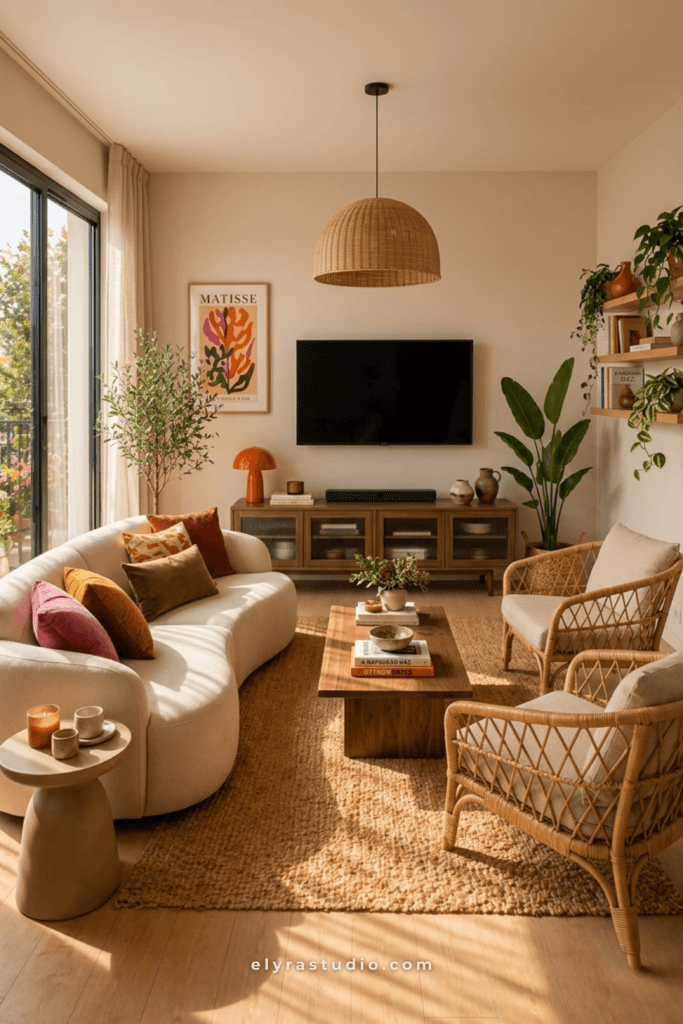
A calm living room should be able to shift with the seasons without needing a complete redesign every few months.
The layout stays stable.
The system stays calm.
Only the softness changes slightly.
That is the difference between seasonal layering and seasonal clutter.
In summer, a small living room usually feels lighter with breathable textures.
Linen curtains.
Lighter throws.
Airier ceramics.
Fewer visible layers.
In colder months, the room can feel warmer simply by introducing one heavier texture.
A wool throw.
A warmer-toned lamp glow.
A deeper woven textile.
But the furniture layout itself remains quiet and functional.
This prevents the room from constantly feeling visually reset or overloaded.
The goal is not decorating for every season.
The goal is helping the home support your emotional rhythm throughout the year.
Quick application:
Choose one seasonal layer only.
Not ten.
One richer blanket in winter.
One lighter textile in summer.
One softer lighting adjustment in autumn.
The room keeps its calm structure while still feeling alive and responsive.
Designer Insight — Elyra Studio
A peaceful home should evolve quietly with the seasons.
Not demand a full visual reset every few months.
Pinnable Tip: Seasonal living room updates should change the feeling of the room — not fill the room with more decor.
Small Living Room Audit Checklist
Save this section for later.
Sometimes the fastest way to improve a small living room layout is simply identifying where friction already exists.
- Is there at least 60–70 cm of walking space?
- Does the room have one clear focal point?
- Do the furniture pieces feel visually connected?
- Does natural light stay relatively unobstructed?
- Are the shelves visually overloaded?
- Does the coffee table feel too large?
- Does the room have layered lighting?
- Is there one corner that feels unnecessarily crowded?
- Do the colors feel calm and connected?
- Can the eye move easily across the room?
If several answers are “no,” the room probably does not need more decor.
It needs less friction.
Designer Question
Look around your living room right now.
What is the very first thing your eye notices when you walk in?
If the answer is clutter, visual heaviness, or too many competing objects, that is where the layout needs to become quieter first.
FAQ — Small Living Room Layout Ideas
How do I arrange a small living room with only one sofa?
Use the sofa as the main anchor and keep the rest of the layout visually light. A single chair, compact coffee table, and one soft rug are usually enough. The goal is openness, not filling every corner.
Can dark colors work in a small living room?
Yes — if they are used softly and intentionally. Warm earthy tones, muted olive, deep taupe, or walnut wood can make a room feel cozy instead of cramped. The key is avoiding harsh contrast and balancing darker tones with light, breathable areas.
What shape coffee table works best in a small living room?
Rounded or oval coffee tables usually work best because they soften movement paths and reduce visual heaviness. Sharp corners tend to make compact layouts feel tighter.
Should every wall in a small living room have decor?
No. Empty space is part of the design. Leaving some walls visually quiet helps the room feel calmer and more spacious.
How many plants should a small living room have?
Usually fewer than people think. One large plant often creates more calm than many tiny scattered plants because it reduces visual fragmentation.
A Design Philosophy That Does Not Exhaust You
Your home is not a showroom.
It is a system that supports your nervous system every single day.
A calm living room layout is not only about aesthetics.
It changes how the room functions during real life.
How easily you move through the space.
How quickly your brain can relax.
How naturally your evening routine slows down.
When the layout reduces friction instead of creating it, the room quietly supports rest.
That is what makes a space feel truly functional.
Not perfection.
Not trend-based styling.
Just a calmer environment that works gently in the background while life happens inside it.
Final Thought
A small living room feels open when the space becomes easier to understand.
Easier to move through.
Easier to process.
Easier to relax inside.
That does not come from adding more.
It comes from removing friction.
A clearer walkway.
A calmer focal point.
Lower visual weight.
Better light.
Softer transitions.
That is what makes a room finally breathe.
Not perfection.
Just a quieter system working gently in the background.