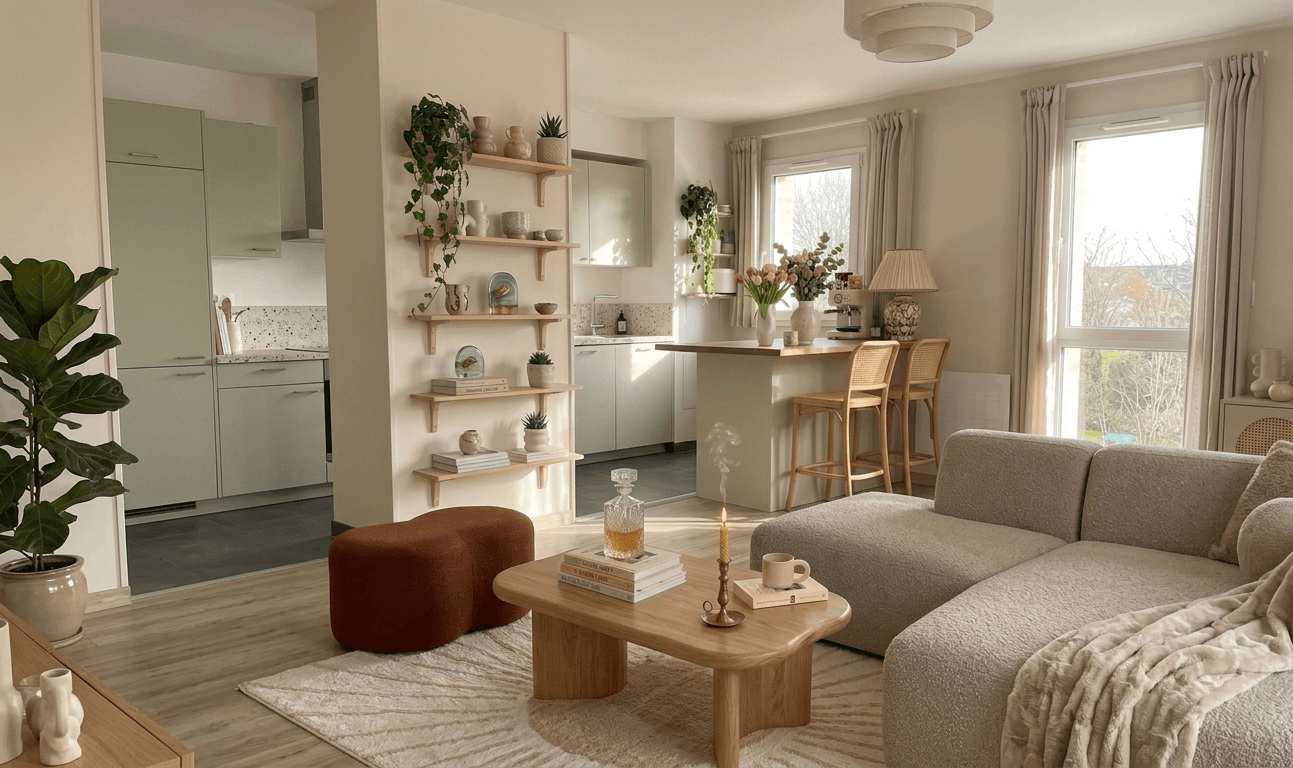
You know that moment when your apartment is technically clean… but it still feels busy?
Nothing is truly messy.
But somehow the room still feels crowded, visually loud, and harder to relax in.
Most people think an expensive-looking apartment comes from better furniture, more decor, or a bigger budget.
But expensive spaces rarely feel expensive because they are full.
They feel expensive because they feel calm.
The real difference is usually visual noise.
Too many small objects. Too many competing shapes. Too many things asking for attention at the same time.
A small apartment does not need more decoration.
It needs less friction.
These small apartment ideas are designed to help your space feel lighter, calmer, warmer, and more intentional — without turning your home into a showroom or forcing you to buy everything again.
1. Small Apartment Ideas That Reduce Visual Noise
The problem: Too many small decorative pieces spread across every visible surface.
A small apartment can feel visually heavy long before it is actually full.
This usually happens when every shelf, table, and corner holds multiple small items competing for attention.
Candles. Frames. Tiny decor objects. Small trays. Random extras.
Individually, none of them are wrong.
Together, they create visual tension.
The expensive-looking shift: Use fewer, larger visual moments instead of many tiny ones.
One sculptural vase feels calmer than six small accessories.
One large coffee table book feels quieter than several scattered objects.
One strong ceramic lamp creates more impact than multiple tiny decor pieces.
This works because the eye processes the room faster. There is less to decode.
The room can finally breathe.
Quick application: Remove three small objects from the first surface you see when entering the room.
2. Why Large Pieces Often Look More Expensive Than Small Ones
The problem: Small apartments are often filled with too many tiny furniture pieces.
People assume smaller furniture automatically makes a room feel bigger.
But multiple tiny pieces can actually create more visual clutter.
More legs. More edges. More interruptions.
The expensive-looking shift: Use fewer pieces with calmer shapes and stronger presence.
A larger rug. One substantial coffee table. A clean-lined sofa. One large mirror instead of several tiny frames.
This creates visual silence.
The room feels more intentional because the eye moves through the space smoothly instead of stopping constantly.
Quick application: Look for the busiest corner in the room. Remove one unnecessary side table, stool, basket, or accent piece.
3. How to Make a Small Apartment Feel Like a Boutique Hotel
The problem: Many apartments feel temporary instead of restful.
The lighting is harsh. The bedding feels disconnected. The curtains look too thin. Every functional item stays visible all the time.
The space works, but it does not feel comforting.
The expensive-looking shift: Think like a boutique hotel.
Hotels feel luxurious because they reduce decision fatigue.
The palette feels calm. The lighting feels soft. The textures feel layered. Surfaces stay visually quiet.
You can create the same feeling at home without changing everything.
Warm lighting.
Long curtains.
Soft bedding.
Consistent tones.
One tray to organize everyday clutter.
And subtle symmetry.
Two matching pillows. Two bedside lamps. Balanced nightstands. Repeated shapes.
The human brain naturally connects symmetry with order, calm, and luxury.
This works because the room starts supporting your nervous system instead of overstimulating it.
Quick application: Replace one cold white bulb with a warm light bulb tonight. The room will instantly feel softer.
4. Small Space Decor Ideas That Feel Calm Instead of Crowded
The problem: Every corner tries to be “interesting.”
A gallery wall. Open shelving. Decorative baskets. Plants. Pillows. Candles. Books. Patterns. Mirrors.
The apartment ends up visually noisy because nothing has room to stand out.
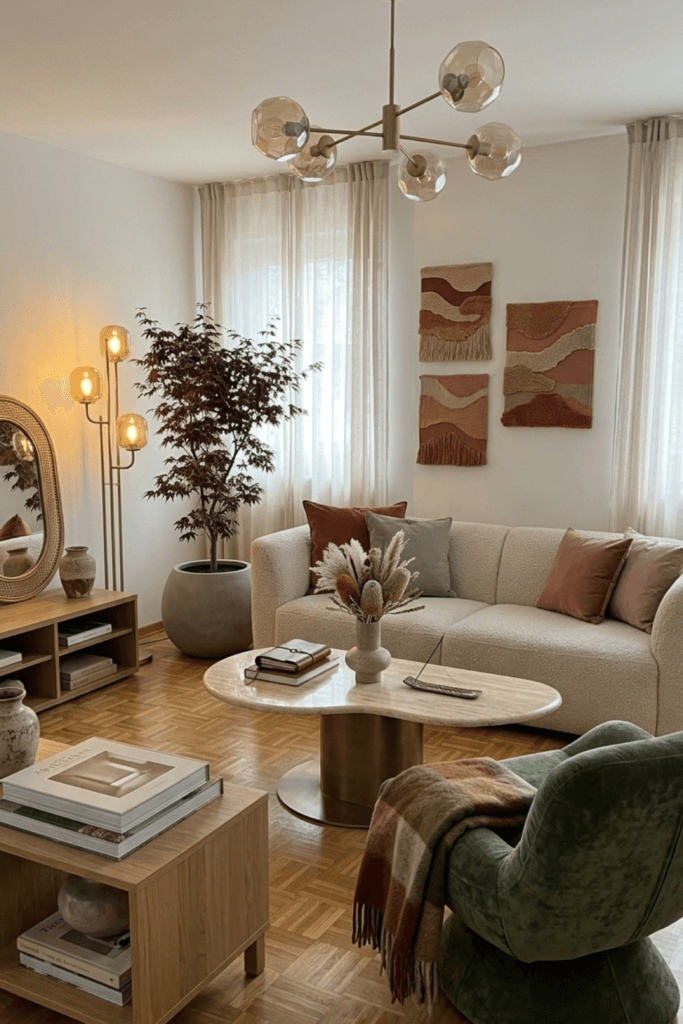
The expensive-looking shift: Let one focal point lead the room.
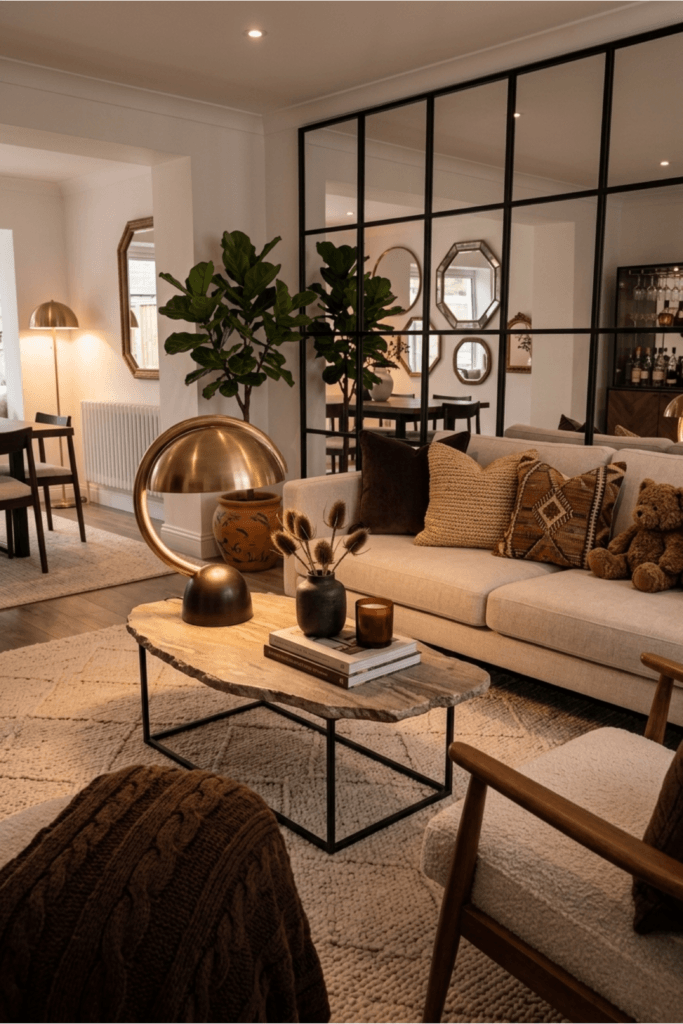
A large mirror.
A textured artwork.
A beautiful lamp.
A sculptural chair.
Everything else should support that focal point instead of competing with it.
This creates hierarchy.
The room feels calmer because your eye knows where to land first.
Quick application: Stand at the doorway and identify the first thing your eye notices. Simplify the objects around it.
5. Texture Makes a Room Feel Expensive Faster Than Decor
The problem: Many people try to make a room feel finished by adding more objects.
But more objects often create more clutter.
The expensive-looking shift: Use texture instead of excess decoration.
Warm wood.
Linen curtains.
Ceramic pieces.
Soft rugs.
Brushed brass.
Woven textures.
Boucle fabric.
Stone surfaces.
Texture adds warmth without creating visual overload.
That is why expensive spaces often feel layered but never chaotic.
Quick application: If a corner feels flat, add one soft texture before adding more decor.
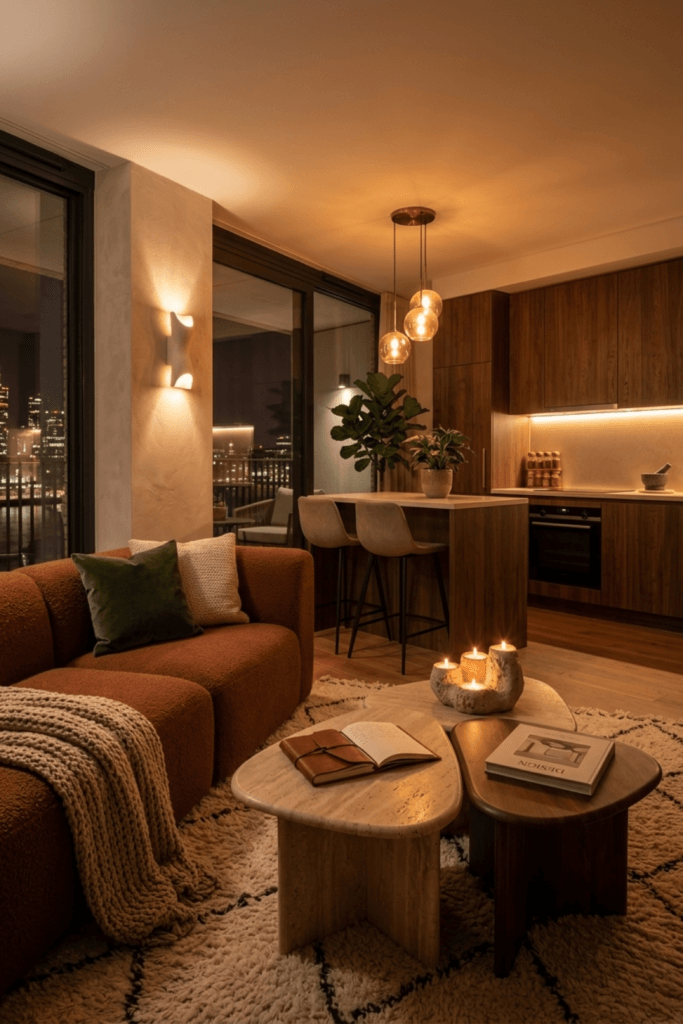
6. The “Invisible Clutter” That Makes Apartments Feel Cheaper
The problem: Everyday objects stay visible because they have no quiet place to land.
Chargers. Remotes. Papers. Skincare. Keys. Bags. Loose cables.
These small things quietly create stress because the eye keeps processing unfinished information.
The expensive-looking shift: Create hidden systems for everyday friction.
A tray.
A drawer.
A cabinet.
A basket.
A box.
The goal is not perfection.
The goal is reducing visual interruption.
Visible cables are one of the fastest ways to make a space feel visually cheaper.
A hanging black TV cable is like a wrinkled shirt under an expensive blazer.
Even beautiful rooms lose their calm feeling when wires visually cut through the space.
Quick application: Hide visible cables first. Few things make a room feel calmer faster.
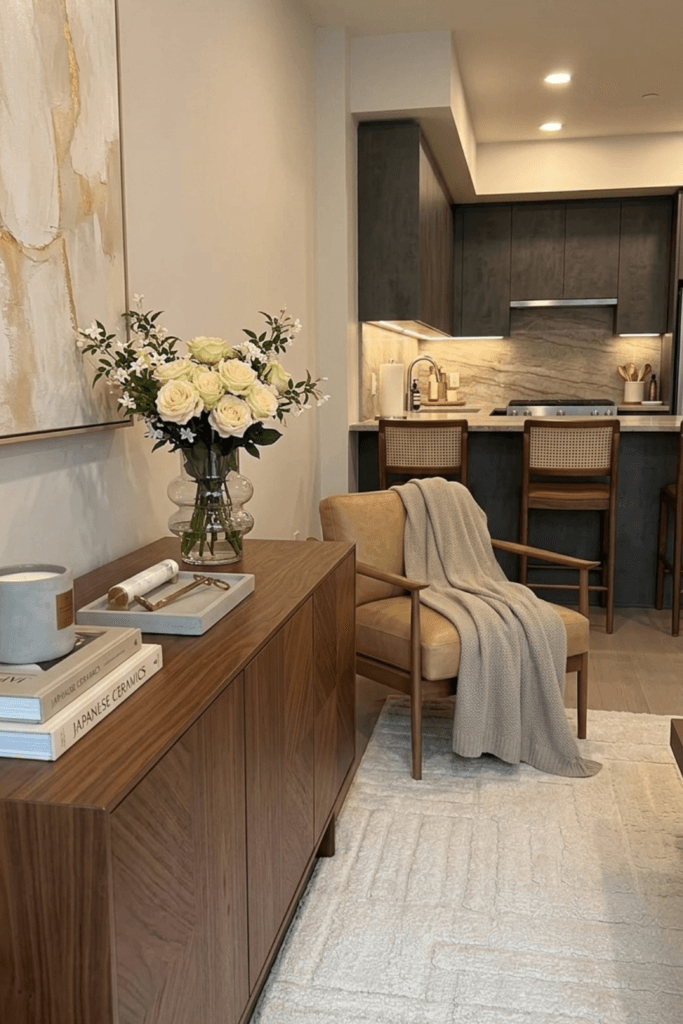
7. Calm Color Palettes Make Small Apartments Feel Bigger
The problem: Too many disconnected colors break visual flow.
The room starts feeling fragmented instead of cohesive.
The expensive-looking shift: Repeat a few connected tones throughout the apartment.
Cream.
Warm wood.
Soft beige.
Muted olive.
Warm brown.
A touch of black or brass.
This does not make the apartment boring.
It makes it feel edited.
The eye moves more smoothly through the space because the palette feels intentional.
Quick application: Choose three tones already present in the room and repeat them through textiles, art, wood, or lighting.
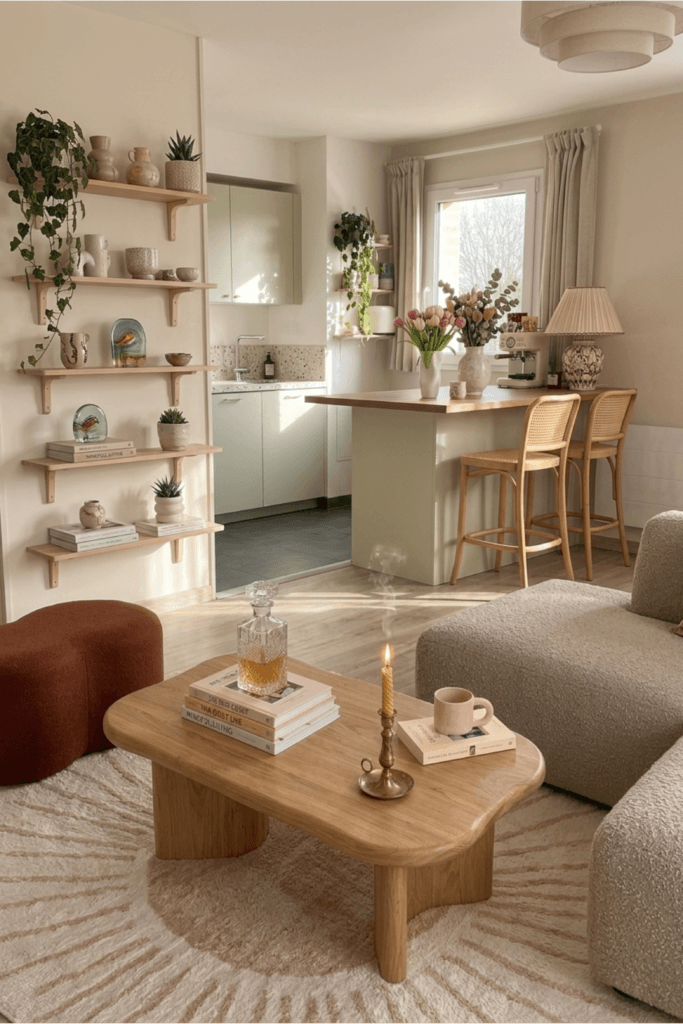
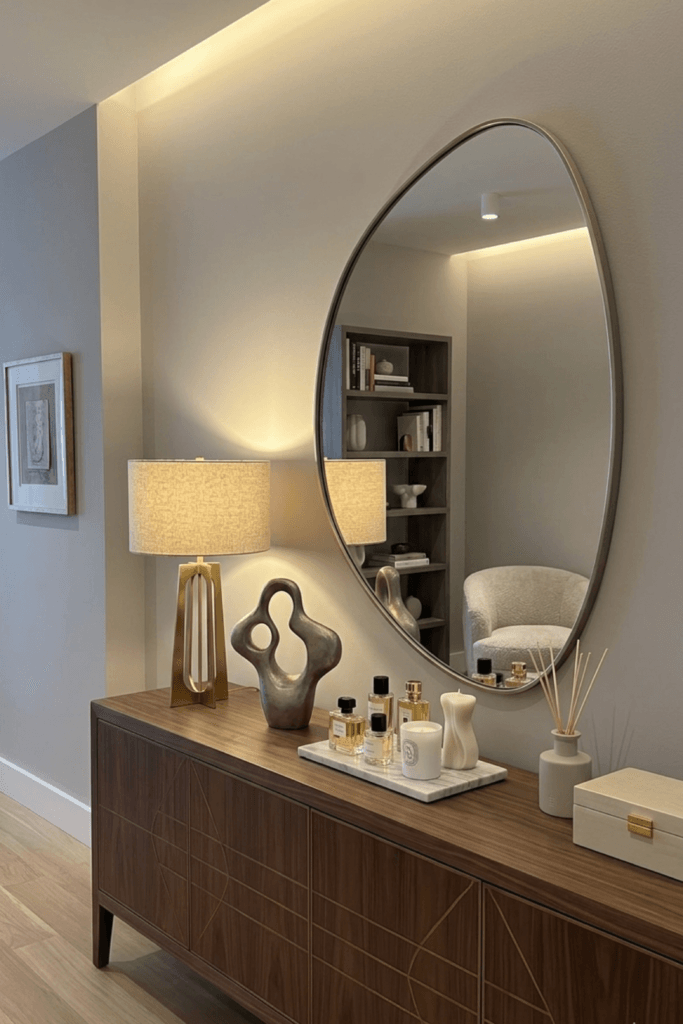
8. Mirrors Work Best When They Reflect Calm
The problem: Mirrors are often treated like filler decor.
But mirrors amplify whatever they reflect.
If they reflect clutter, the room feels even busier.
The expensive-looking shift: Position mirrors where they reflect light, openness, or softness.
Near a window.
Across from a lamp.
Behind a calm console setup.
This creates depth and brightness without adding more objects to the room.
Quick application: Before hanging a mirror, check what it reflects while standing in the doorway.
9. The 60/40 Rule of Surfaces
The problem: Many people feel the need to fill every empty wall, shelf, or corner.
But constant fullness creates tension.
The expensive-looking shift: Leave part of the room intentionally empty.
The 60/40 Rule: Try to keep at least 40% of visible surfaces visually clear.
This is the “empty pixel” in interior design.
It is where the eye gets to rest.
A quiet section of wall.
One calmer shelf.
A coffee table that is not overloaded.
Space around furniture.
This breathing room is often what makes a home feel expensive.
Not more styling.
More visual calm.
Quick application: Leave one visible surface at least 40% empty.
“Free Luxury” — The Zero-Dollar Shift
You do not always need to buy something new to make a room feel more elevated.
Sometimes the fastest transformation is simply removing friction.
- Hide visible cables
- Remove duplicate decor objects
- Clear one countertop completely
- Put small daily clutter into one tray or box
- Remove clothes from visible chairs
- Edit overloaded shelves
- Use one warm light source at night instead of full overhead lighting
Decluttering is not about emptiness.
It is about making the room easier to process.
Quick Win: Make Your Apartment Feel More Expensive Tonight
- Remove 3 objects from your coffee table
- Switch one cold bulb to warm lighting
- Hide visible cables
- Choose one focal point in the room
- Clear one surface completely
- Repeat one wood tone throughout the room
- Fold blankets instead of draping multiple layers everywhere
- Move one oversized plant into an empty corner
- Leave one wall or shelf calmer than feels “normal”
Expensive-looking apartments rarely feel full.
They feel intentional.
Final Thought
A small apartment rarely feels stressful because it is small.
It feels stressful because the space keeps asking your brain to process too much at once.
When visual noise is reduced, the room changes immediately.
The apartment feels lighter.
Calmer.
Easier to use.
More expensive.
Not because everything is designer.
But because the room finally has a quiet system working in the background.