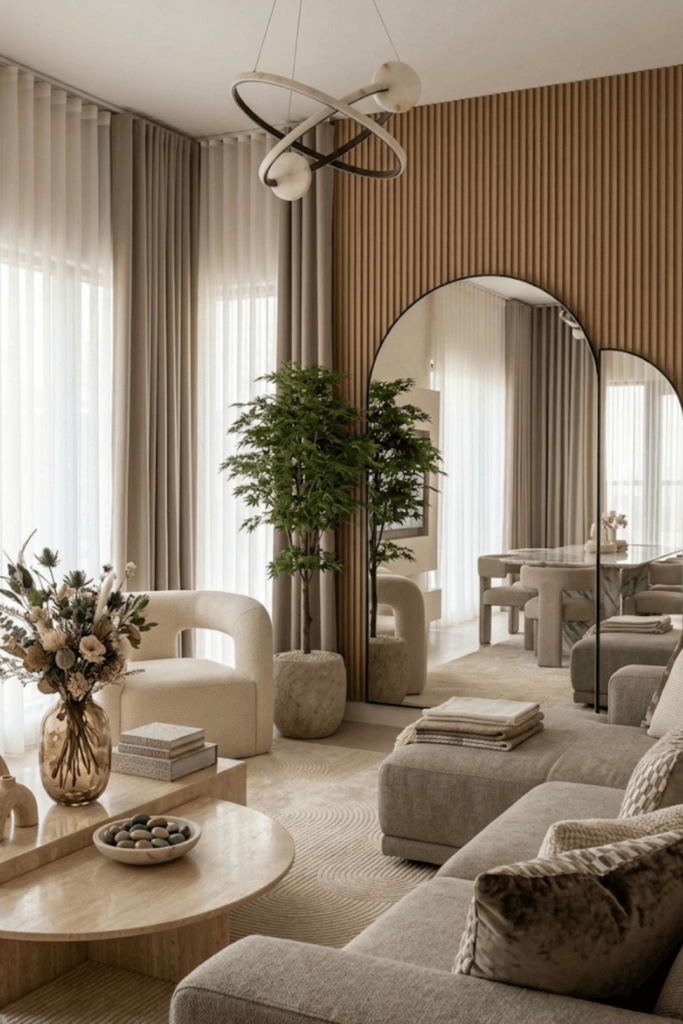
A cozy living room is not a style.
It is a psychological shift.
All day, your brain processes noise — notifications, screens, decisions, movement, pressure. Visual clutter, bright lights, sharp contrasts. Constant input.
Your living room should do the opposite.
It should reduce visual noise and quietly signal something your brain rarely hears during the day:
You can slow down now.
Cozy is not about adding more.
It is about removing friction — and replacing it with softness, warmth, and sensory calm.
I. Light Psychology — Where Calm Begins
A cozy atmosphere starts where harsh light ends.
The moment a room is lit only by a ceiling fixture, it becomes functional — efficient, but emotionally flat.
Layered Light Creates Emotional Safety
Instead of one dominant light, create a soft constellation of light sources.
Imagine:
A floor lamp casting a warm, diffused glow beside a chair.
A small lamp gently illuminating a wooden surface.
A subtle light catching the edge of a textured fabric.
This creates depth, shadow, and rhythm — the kind your eyes don’t have to fight.
Warm Light Is Not a Trend — It’s Biology
- 2700K → soft, golden, evening glow
- 2000–2400K → deep, candle-like warmth
Cool light keeps you alert.
Warm light tells your body it’s safe to slow down.
The Living Light Effect
Nothing feels as calming as movement.
A candle flame flickers, shifts, breathes. It introduces subtle motion into a still space.
And beyond the light — there is scent.
The quiet note of cedarwood, the soft sweetness of vanilla, or the grounding depth of sandalwood adds an invisible layer of comfort.
💡 Quick Win (5 minutes)
Turn off the ceiling light tonight.
Use only warm, low-level lighting.
Notice how your body reacts — not just the room.
🧠 Pro Tip — The 3-Point Lighting Rule
Use at least 3 light sources at different heights.
This creates a soft, immersive atmosphere instead of flat brightness.
II. Tactile Comfort — Designing What You Can Feel Before Touching
Cozy is a sensory experience.
You should be able to see softness before you even sit down.
Texture Is What Makes a Room Feel Alive
Picture this:
A heavy, loosely folded wool throw draped over the arm of a sofa.
A slightly wrinkled linen cushion with a cool, natural feel.
A soft, nubby boucle pillow catching the light in tiny variations.
These are not just objects.
They are signals — telling your body: this is a place to rest.
The Power of Visual Weight
A thick, heavy-textured blanket does something subtle but powerful.
It grounds the space.
It makes the room feel stable, anchored — like it can hold you.
Rugs That Quiet the Space
A rug does more than define space.
It absorbs sound.
Softens movement.
Creates a quieter, more contained environment.
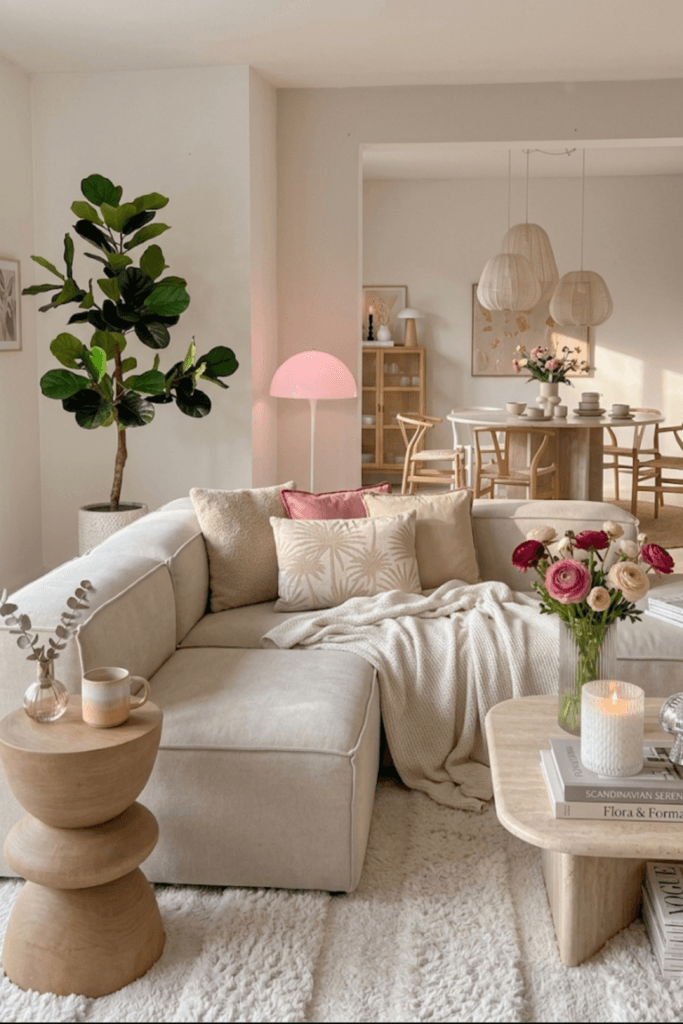
🧠 Pro Tip — The Rug Rule
Your rug should be large enough so that at least the front legs of your furniture sit on it.
Too small → visual fragmentation
Correct size → calm, unified space
💡 Quick Win
Add one tactile layer today:
- a heavy knit throw
- a velvet or linen pillow
- a soft rug underfoot
Even one change can shift the room from flat to inviting.
III. Natural Balance — Creating Visual Silence
A cozy room feels calm because nothing competes.
This is what we call visual silence.
Materials That Absorb, Not Reflect
Natural materials don’t shout.
They soften.
Wood with subtle grain.
Matte ceramic.
Woven fibers with irregular texture.
Linen that moves gently with light.
They create a harmonious, grounded atmosphere without effort.
Color That Lets the Mind Rest
Instead of contrast, think cohesion.
- warm whites
- earthy beige
- muted greens
- soft browns
- desaturated tones
These colors don’t demand attention — they allow it to settle.
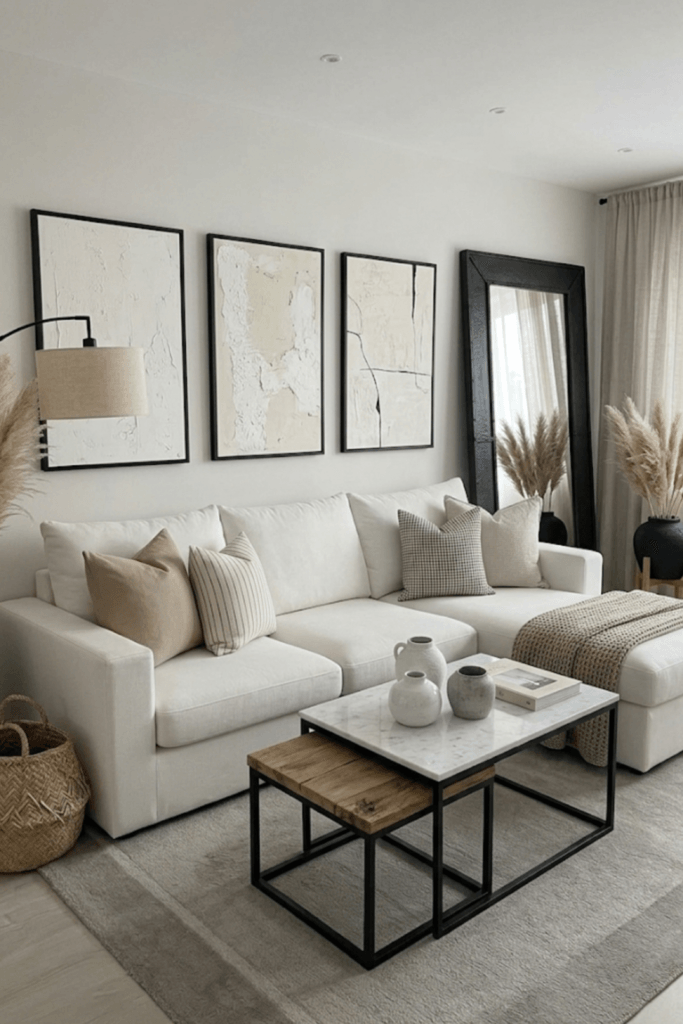
🧠 Pro Tip — The Rule of 3 (Color Edition)
Repeat one tone at least 3 times across the room.
This creates subconscious harmony without looking staged.
Plants: Softness Without Noise
A single plant can transform a corner.
Its organic shape breaks rigid lines.
Its presence introduces life — quietly.
💡 Visual Trick — Height Illusion
Hang curtains closer to the ceiling, not just above the window.
This creates:
- taller proportions
- more air
- a calmer, more open feeling
IV. Living in the Space — Where Function Becomes Feeling
A cozy room is not perfect.
It is used.
And that is exactly why it feels good.
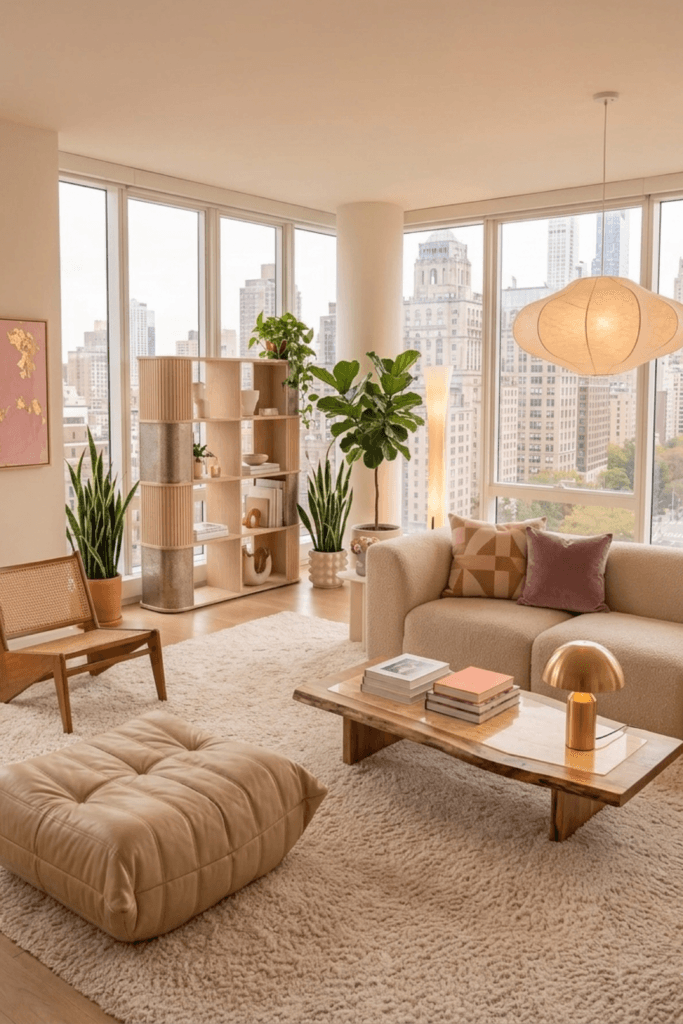
The Coffee Table as a Moment, Not Decoration
Instead of clutter, create a small scene.
A wooden tray.
A book you’ve opened more than once.
A candle waiting for evening.
A simple ceramic vase.
It should feel like a pause — not a display.
🧠 Pro Tip — The Rule of 3 (Styling)
Group objects in threes for natural balance:
candle + book + vase
→ complete, calm, intentional
Storage That Softens, Not Hides
Clutter disrupts calm.
But sterile storage removes warmth.
Use:
- woven baskets
- soft fabric containers
- wooden trays
They organize while adding texture.
💡 Quick Win
Place a basket next to your sofa.
Let it hold:
- blankets
- books
- everyday items
→ instant visual calm without effort
The “Lived-In” Factor — Why Imperfection Feels Better
A perfectly styled room can feel distant.
A slightly lived-in room feels human.
A casually draped (but high-quality) blanket.
A book left open.
A magazine set aside.
This is not mess.
This is evidence of life.
And that is what makes a space feel like a refuge — not a showroom.
Personal Objects as Emotional Anchors
Choose fewer, but better.
A framed memory.
A meaningful object.
A favorite book.
These don’t decorate the room.
They connect you to it.
Seasonal Shift — Adapting Without Redesigning
Cozy is flexible.
It shifts with the seasons without needing a full reset.
Winter → Deep & Enclosed
- heavy textures
- layered fabrics
- warmer, dimmer light
- deeper tones
Summer → Light & Breathable
- linen, cotton
- fewer layers
- brighter neutrals
- more open surfaces
Same space. Different feeling.
Final Thought
A cozy living room is not created by design alone.
It is created by permission.
Permission to slow down.
Permission to soften the space.
Permission to live in it.
And slowly — through light, texture, and quiet intention —
the room becomes something more than functional.
It becomes a place where your mind can finally rest.
Your Turn
What is the one small change you will make tonight?
Will you soften the light?
Add a texture?
Clear visual noise?
Or simply sit down — and let the room work for you?