Disclosure: This post may contain affiliate links, which means I may earn a small commission at no extra cost to you.
A small bedroom rarely feels overwhelming simply because it lacks square footage.
More often than not, the real problem is quieter than that.
Too many things are competing for your attention at the same time.
The chair slowly disappearing under clothes.
The shoes gathering near the closet.
The overflowing drawer that never fully closes.
The handbags stacked wherever they fit.
The extra bedding with nowhere to go.
Nothing is technically dirty.
But the room still feels visually heavy.
That is what clutter often becomes in a small bedroom.
Not a cleaning problem.
Not a lack of effort.
Just too many categories without a quiet system to hold them.
The goal is not to fit more things into the room.
The goal is to reduce the amount of visual information your brain has to process every day.
Your bedroom is supposed to feel like a mental reset.
A softer place.
A slower place.
But when every surface contains unfinished visual noise, your brain never fully relaxes.
This is why some bedrooms feel exhausting even when they are technically organized.
The problem is not always physical clutter.
Sometimes it is cognitive clutter.
Too many visible categories.
Too many textures.
Too many small interruptions pulling your attention in different directions.
That constant low-level processing creates what designers often call cognitive load.
Your brain quietly tracks every unfinished visual detail in the room.
And small bedrooms amplify this effect because there is less breathing room between objects.
The best small bedroom storage ideas are not about adding bulky furniture or filling every empty corner.
They are about reducing friction.
Creating softer systems.
Using hidden space more intentionally.
Helping the room feel lighter instead of fuller.
The Art of Visual Silence in a Small Bedroom
One of the biggest misconceptions about organization is thinking a room only feels calm when it is almost empty.
That is not actually true.
A room can contain many practical things and still feel peaceful.
The difference is visual silence.
Visual silence happens when the eye is not constantly interrupted.
When categories stay grouped together.
When storage blends into the room instead of competing with it.
When textures feel soft instead of harsh.
When the room stops asking your brain to process dozens of unrelated details at once.
This is why Japandi and quiet luxury interiors often feel emotionally calming.
Not because they own less.
But because everything feels intentional.
The materials work together.
The storage feels integrated.
The room has fewer visual interruptions.
This is also why bulky plastic storage often backfires in small bedrooms.
It solves one problem while creating another.
The room becomes technically organized, but visually harder.
The goal is softer containment.
Linen textures.
Warm wood tones.
Muted fabric organizers.
Bamboo.
Matte finishes.
Storage that works quietly in the background instead of dominating the space.
1. Use vertical closet storage instead of stacking everything horizontally
Closets become stressful surprisingly fast in small bedrooms.
Usually because everything spreads sideways.
Jeans stacked on sweaters.
Shoes sliding across the floor.
Towels squeezed into random gaps.
Eventually the closet becomes visually exhausting to even open.
And once the closet stops functioning properly, the overflow slowly starts spreading into the room itself.
The better shift is not necessarily buying more furniture.
It is creating better vertical structure inside the storage you already have.
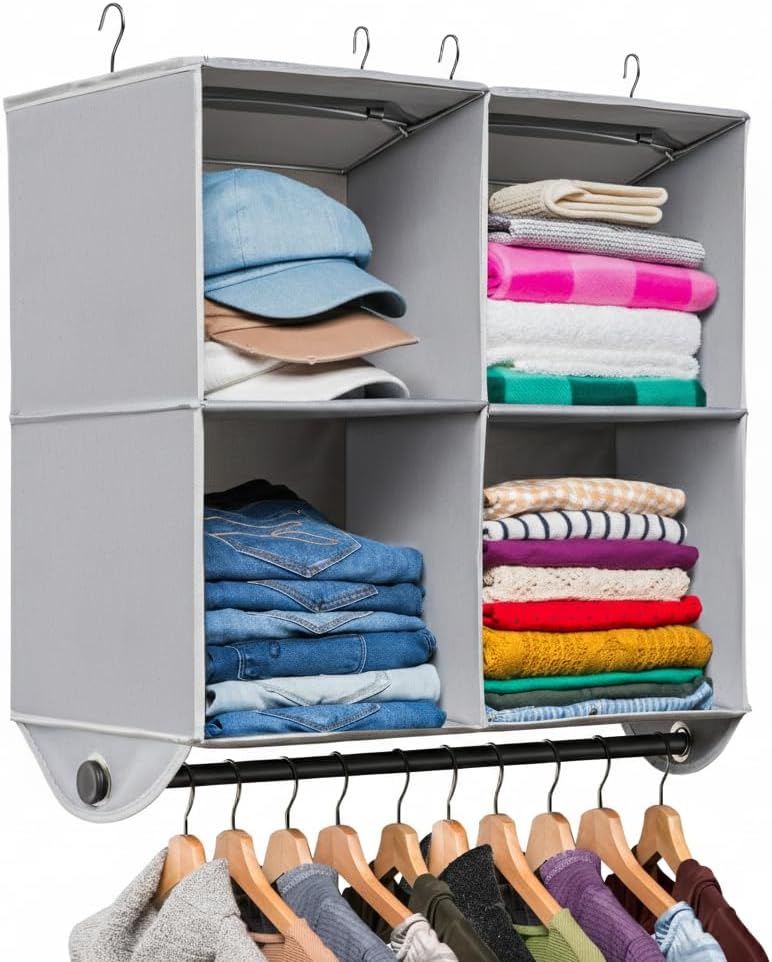
Hanging closet organizers work beautifully because they divide one chaotic open space into smaller visual zones.
Each category gets a boundary.
Sweaters stay together.
Folded clothes stop collapsing into each other.
Shoes finally have their own section.
This reduces friction because the system becomes easier to maintain every day.
And visually, the closet immediately feels calmer.
For a softer minimal look, fabric organizers in warm beige, oatmeal, or muted gray tend to blend into the background much better than shiny synthetic materials.
2. Stop asking the closet to hold every season at once
One hidden reason small bedrooms feel heavy is because the closet is carrying too much at the same time.
Winter sweaters during summer.
Extra bedding year-round.
Guest blankets mixed with everyday clothes.
When storage becomes overcrowded, even simple routines start feeling frustrating.
You move five things trying to reach one thing.
You forget what you own.
The room starts feeling smaller than it actually is.
The better shift is separating everyday life from occasional storage.
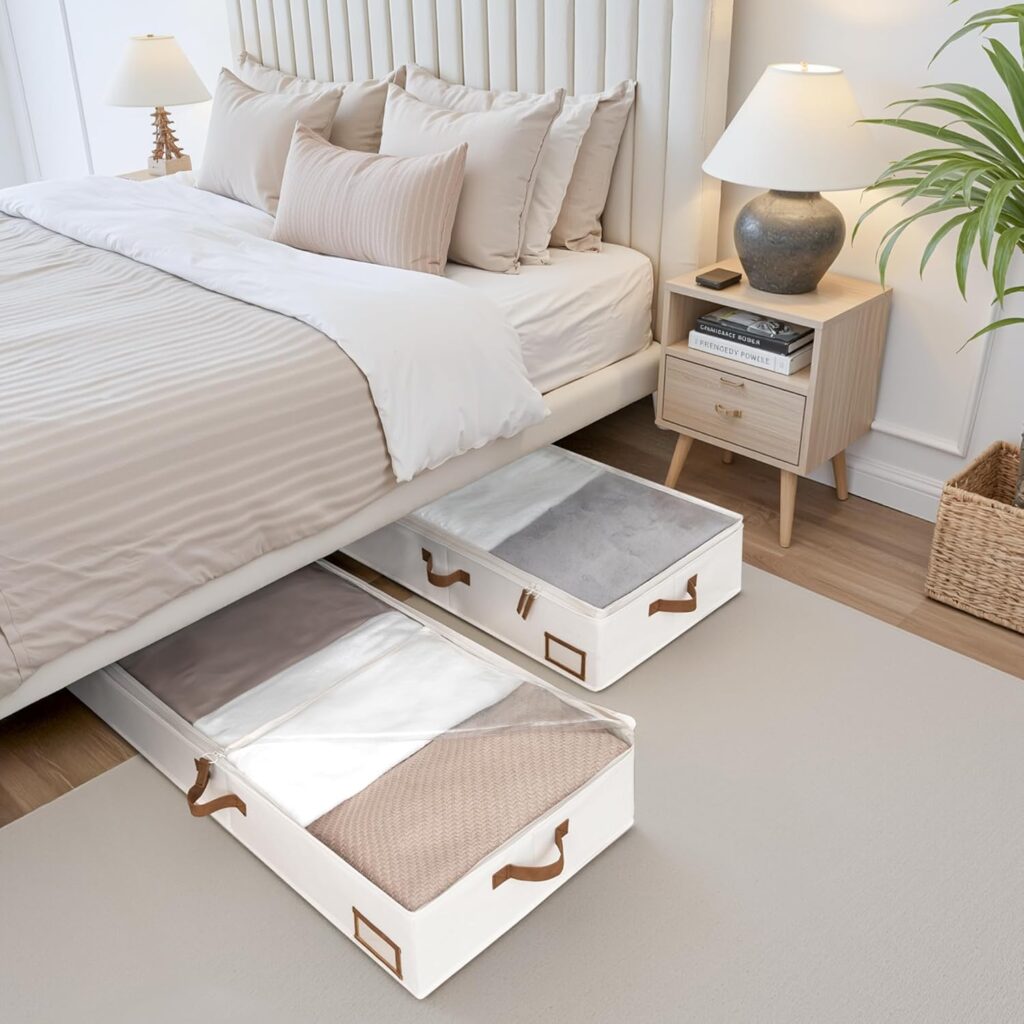
Under-bed storage works beautifully for this because it uses hidden space instead of visible space.
That distinction matters in small bedrooms.
Visible storage affects the emotional atmosphere of the room.
Hidden storage protects it.
Soft fabric under-bed bins work especially well because they visually disappear. Unlike bulky plastic containers, they feel quieter and softer inside the room.
Use them for:
- seasonal clothing
- extra bedding
- winter sweaters
- guest linens
- backup pillows
3. Replace open piles with softer closed storage
Open storage creates visual fatigue faster than most people realize.
Even neatly folded piles still create interruption.
Your eyes continue scanning:
- different colors
- different textures
- uneven edges
- stack heights
- small inconsistencies
This is why some bedrooms still feel mentally busy even when they are technically organized.
The brain never fully gets to rest.
Closed or semi-hidden storage helps because it simplifies what the eye sees.
Instead of processing dozens of separate objects, the room reads as calmer unified shapes.
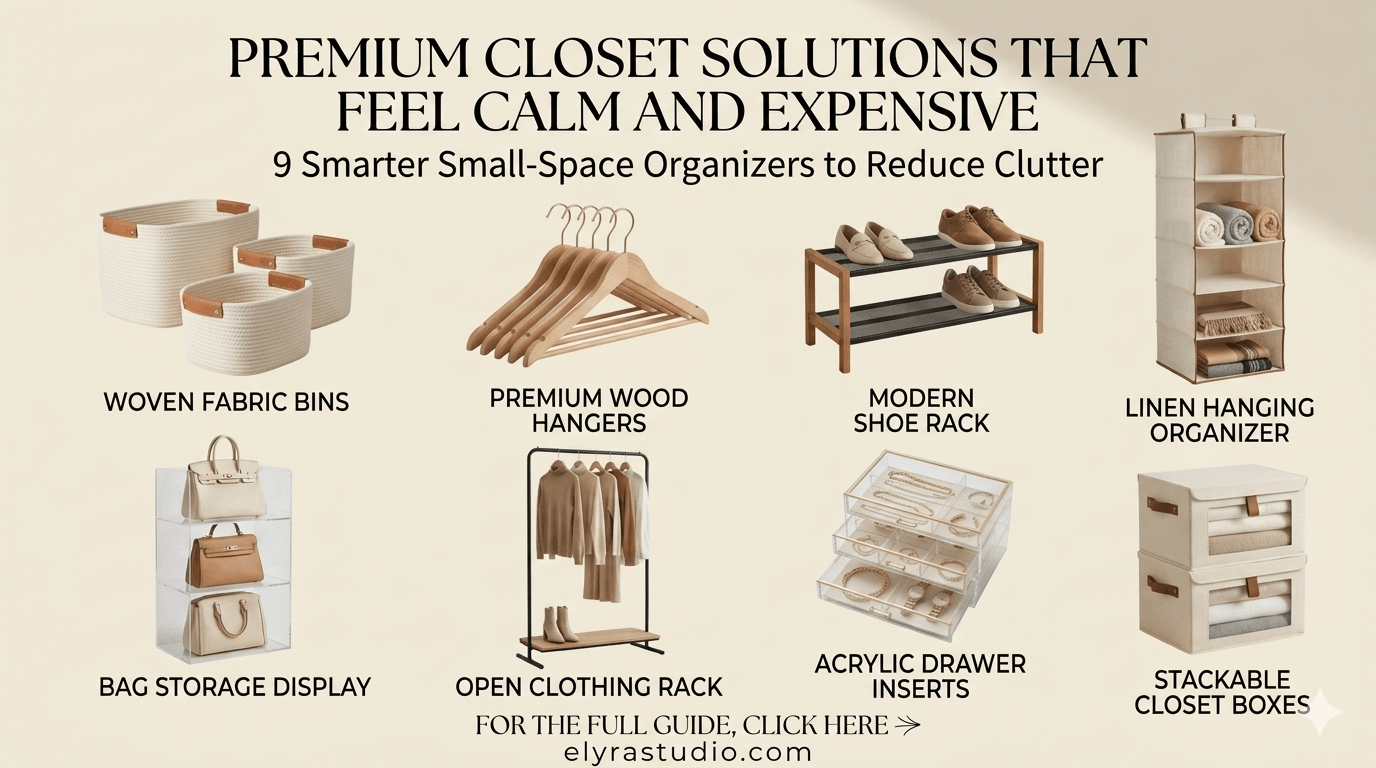
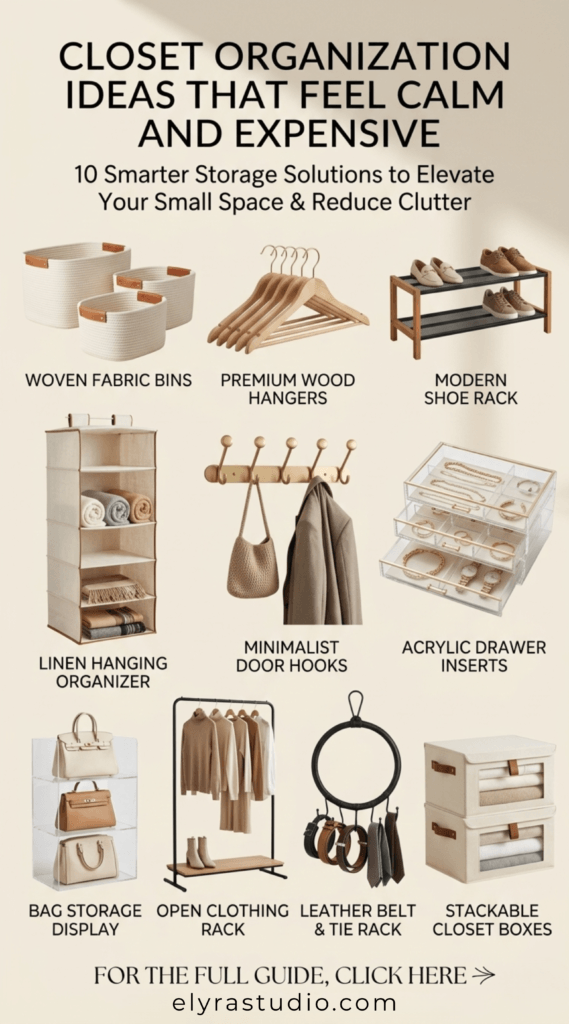
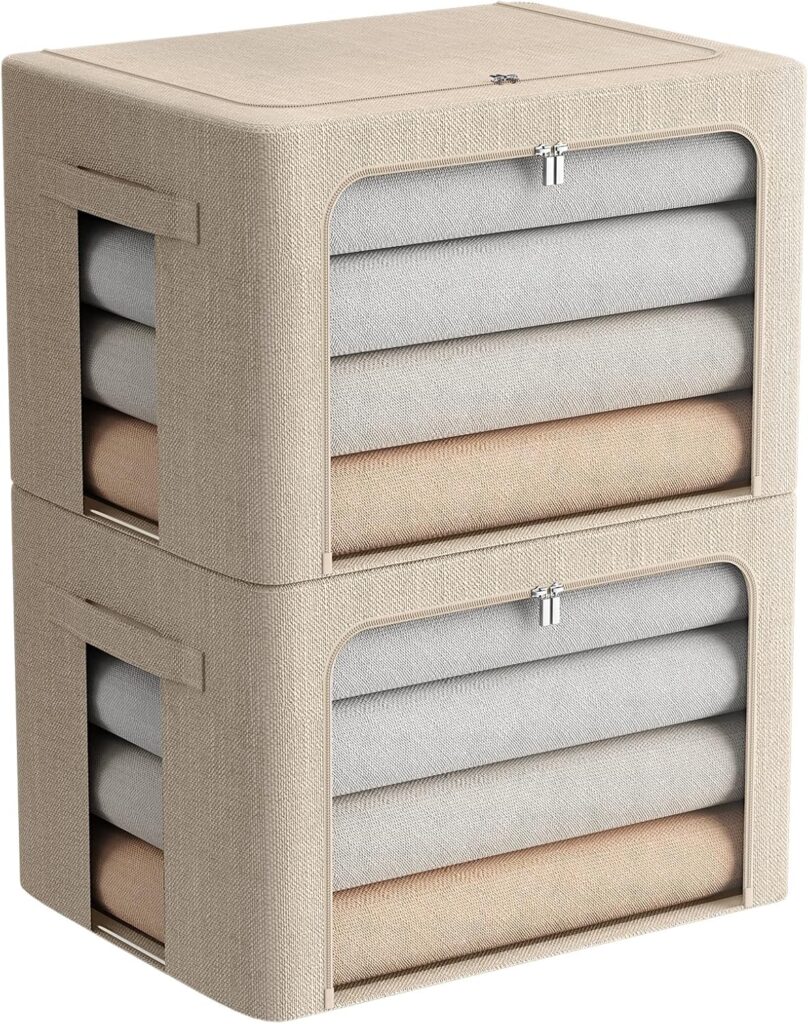
Fabric storage bins with woven or linen-style textures work especially well because they feel softer and more intentional than glossy plastic containers.
Clear-window storage bins are useful because they still allow visibility without exposing the entire category visually.
This works beautifully for:
- loungewear
- workout clothes
- seasonal accessories
- extra linens
- backup towels
4. Keep shoes contained in one calm visual zone
Shoes create more visual heaviness than most people notice.
Not because they are large.
Because they interrupt the floor.
And floor visibility changes everything in a small bedroom.
The more uninterrupted floor space you can see, the larger and calmer the room feels.
Even a few scattered shoes quietly break that sense of openness.
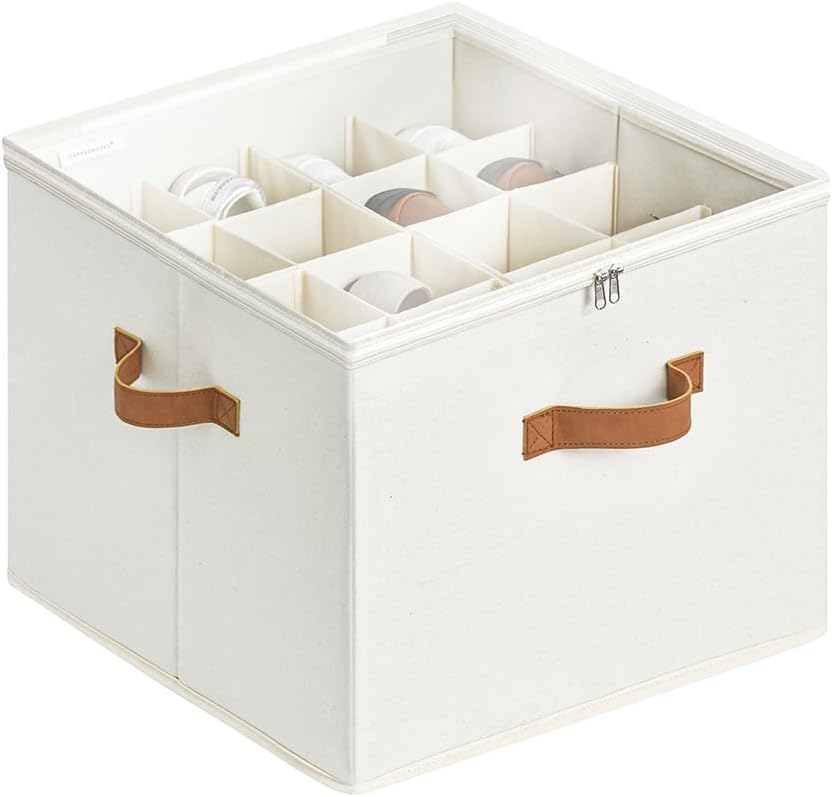
A covered shoe organizer helps because it removes visual fragmentation.
Instead of seeing every pair individually, the room reads as cleaner and simpler.
Adjustable organizers are especially useful because real-life shoe collections are rarely uniform.
Sneakers, sandals, flats, and ankle boots all require different spacing.
And when the system adapts properly, it becomes easier to maintain long term.
For a quieter visual effect, choose organizers in neutral fabric tones or matte finishes rather than heavy black plastic.
5. Use slimmer hanging systems for soft clothing categories
Leggings, scarves, jeans, and soft pants often become hidden clutter categories.
Not because you own too many.
Because traditional hanging systems waste horizontal space very quickly.
Multiple hangers spread outward.
Stacks collapse.
Drawers overflow.
The better shift is vertical grouping.
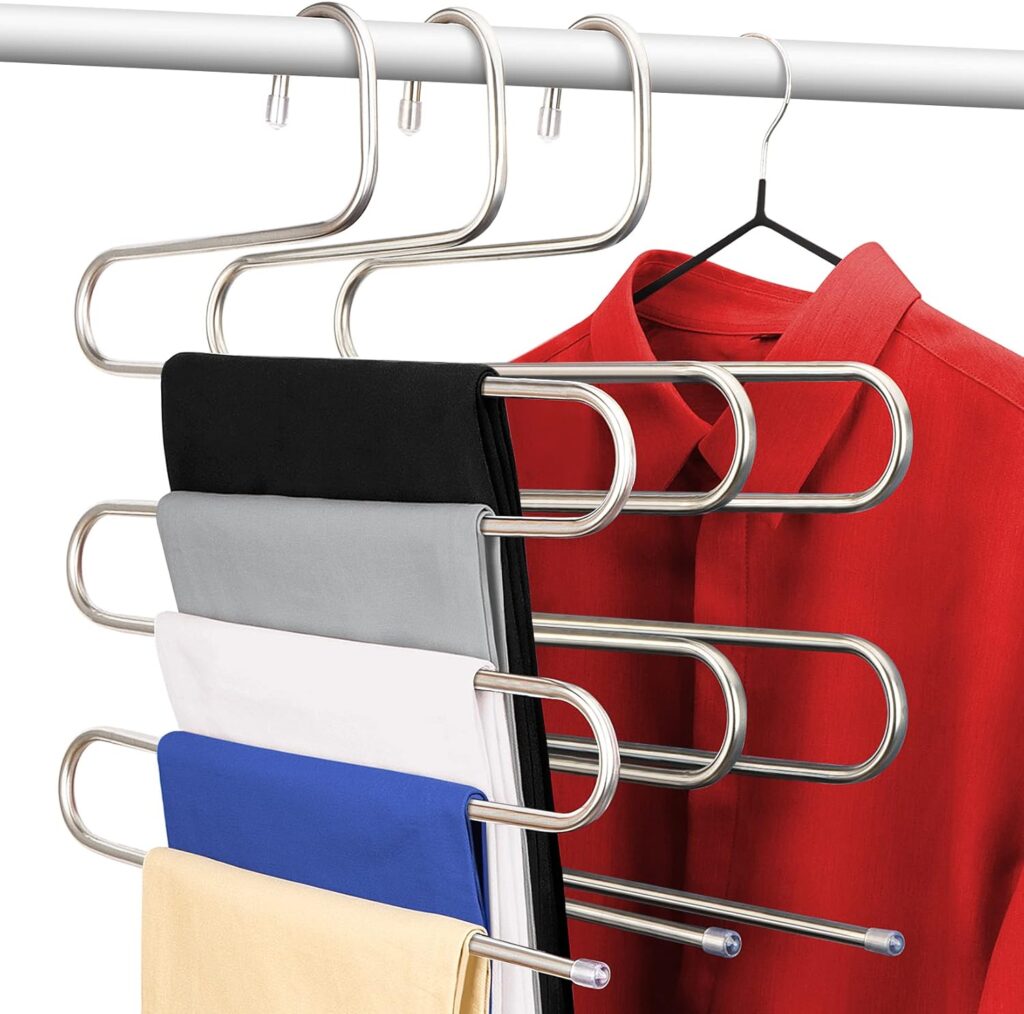
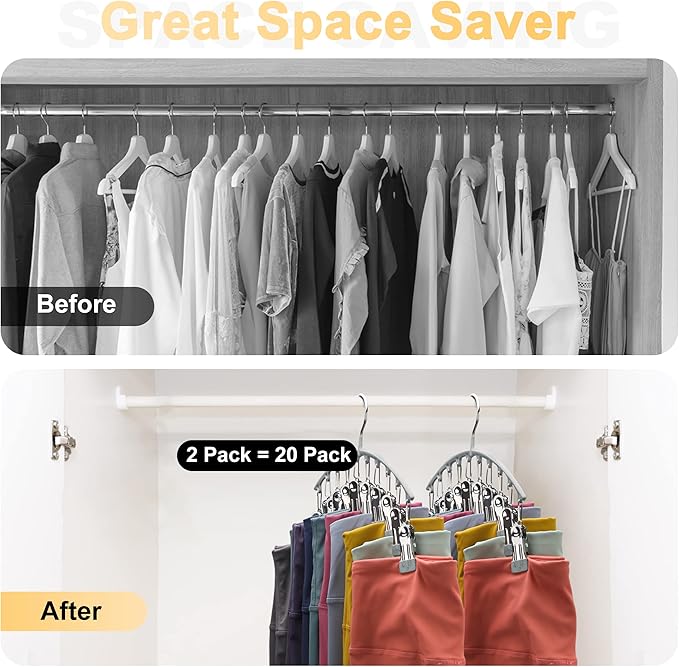
S-type hanging organizers help compress similar categories into one narrow section instead of allowing them to spread across the entire closet rod.
This immediately makes the closet feel lighter.
And emotionally, the room becomes easier to reset because categories stay contained naturally.
Clip-style organizers also work beautifully for leggings or workout clothing that constantly disappears into drawers.
Instead of becoming invisible clutter, everything stays visible but organized.
6. Give handbags a permanent home instead of temporary resting spots
Handbags quietly create chaos in small bedrooms because they rarely have a real storage system.
They migrate constantly.
From chair.
To shelf.
To floor.
To doorknob.
Eventually the room starts collecting random visual weight everywhere.
The solution is not hiding bags completely.
It is creating containment.
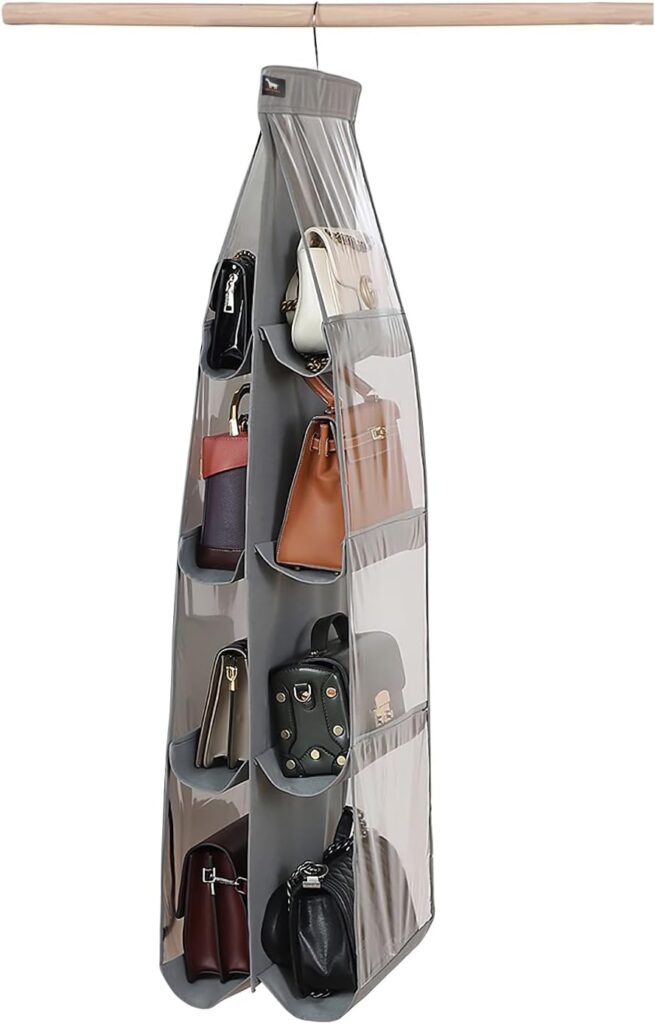
A vertical hanging purse organizer helps because it uses hidden closet space instead of visible room space. Bags stay separated, easier to access, and visually quieter.
This matters in small bedrooms where open shelving can quickly start feeling overcrowded.
Soft neutral organizers work especially well because they blend into closet interiors instead of competing for attention.
7. Organize small accessories vertically instead of letting them spread everywhere
Belts.
Ties.
Scarves.
Small accessories create a surprising amount of friction because they rarely stay contained naturally.
They slide off shelves.
Tangle together.
Disappear into drawers.
End up hanging from random hooks.
Over time, those tiny interruptions slowly create visual stress throughout the room.
This is why category-specific storage matters.
Not because the room needs perfection.
But because the brain relaxes when categories feel resolved.
A rotating belt and tie organizer stores multiple accessories vertically in one compact footprint. Instead of spreading outward, everything stays grouped together in one quiet system.
This also makes mornings easier because accessories become faster to scan and reach.
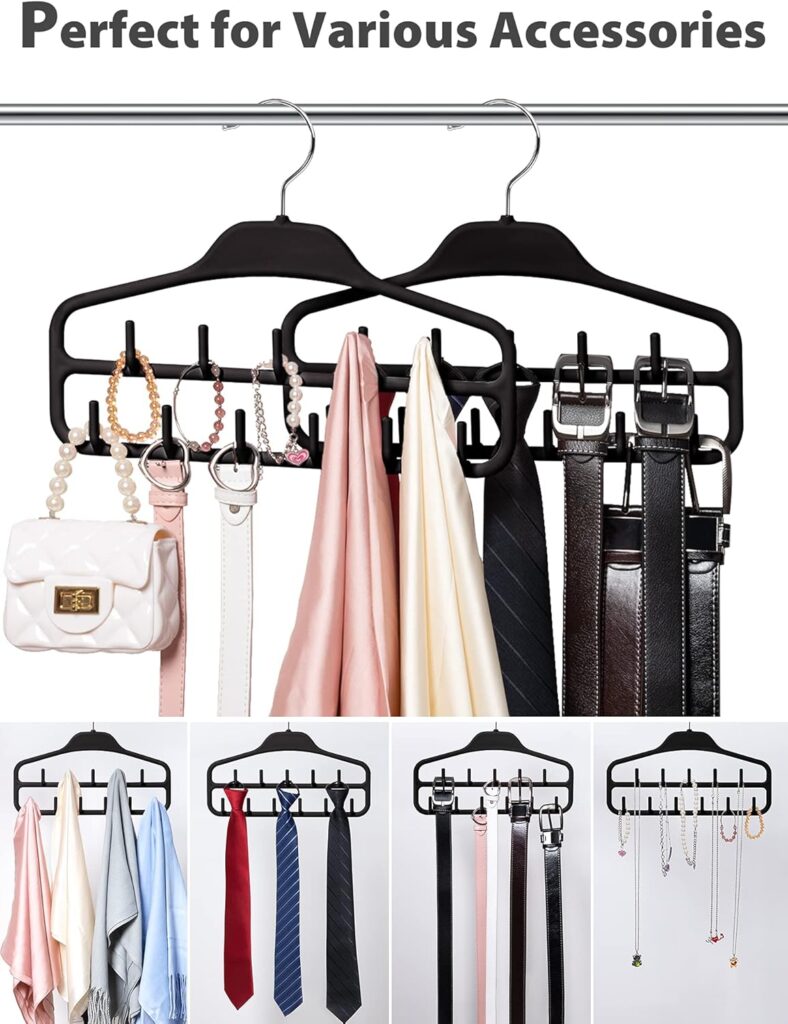
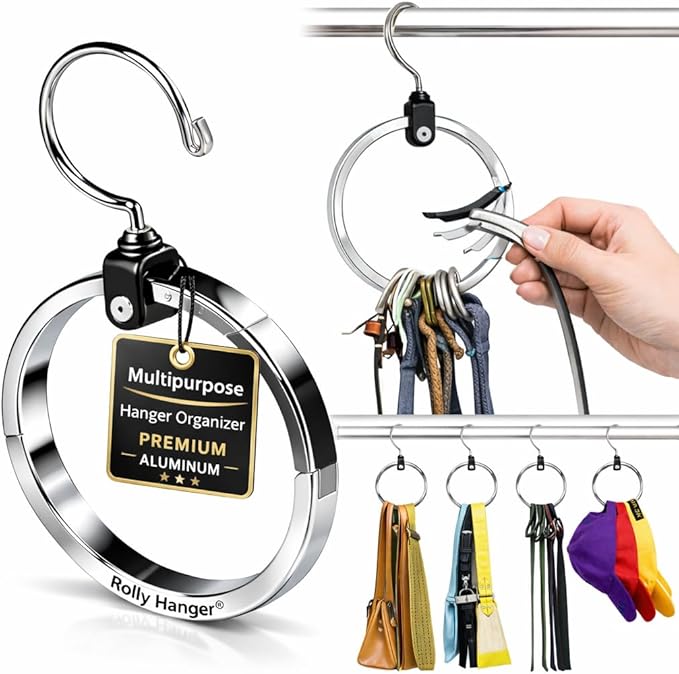
For larger accessory collections, rotating organizers can also work beautifully for hats, handbags, scarves, or other categories that tend to create overflow.
8. Reduce invisible drawer chaos
Sometimes clutter is hidden.
But your brain still feels it.
You open a drawer looking for socks and suddenly everything is mixed together.
Bras collapsing sideways.
Scarves tangled underneath underwear.
Small categories without boundaries.
That kind of friction quietly drains energy every morning.
The solution is not making drawers look perfect.
It is reducing decision fatigue.
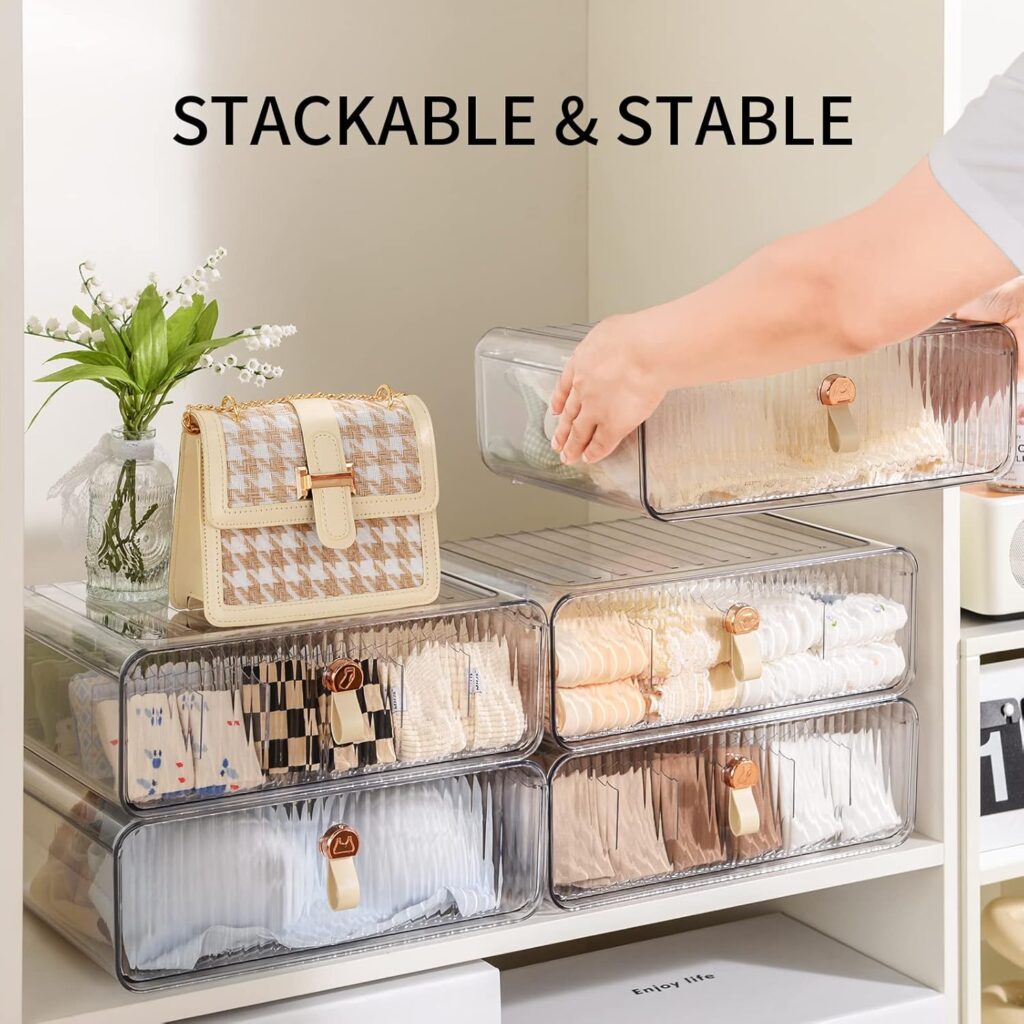
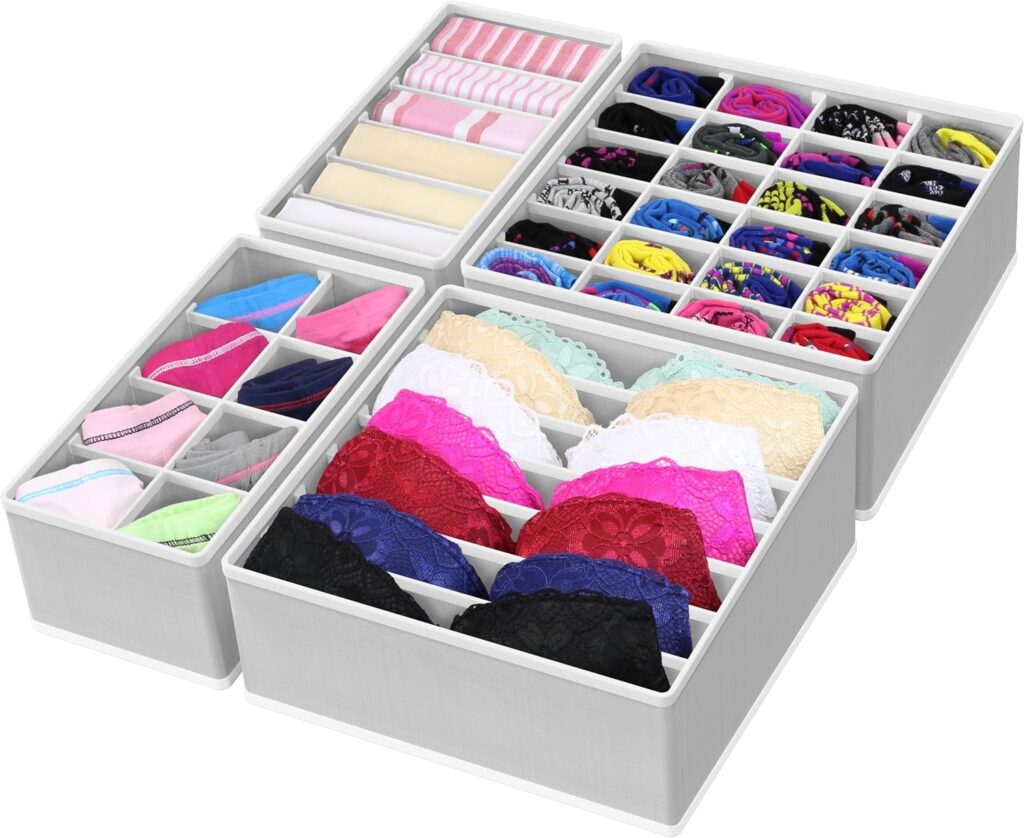
Drawer organizers help because they create calmer mental processing. Your brain stops searching through chaos and starts recognizing clear categories instead.
Acrylic drawer organizers work especially well because they feel visually light while still maintaining structure.
That transparency matters in smaller spaces.
Heavy opaque organizers can sometimes make drawers feel crowded even internally, while acrylic keeps things feeling cleaner and more breathable.
These systems work beautifully for:
- underwear
- socks
- bras
- ties
- scarves
- small accessories
9. The “Not Dirty, Not Clean” transition zone
Every small bedroom has one dangerous clothing category.
The clothes that are not dirty enough for laundry but not fresh enough to return to the closet.
This is exactly how “The Chair” happens.
The clothing chair is rarely laziness.
It is usually a missing transition system.
Without a designated in-between zone, clothing naturally starts collecting wherever there is available surface space.
And visually, that single pile can dominate the emotional atmosphere of the room.
The solution is creating one intentional landing zone instead of many accidental ones.
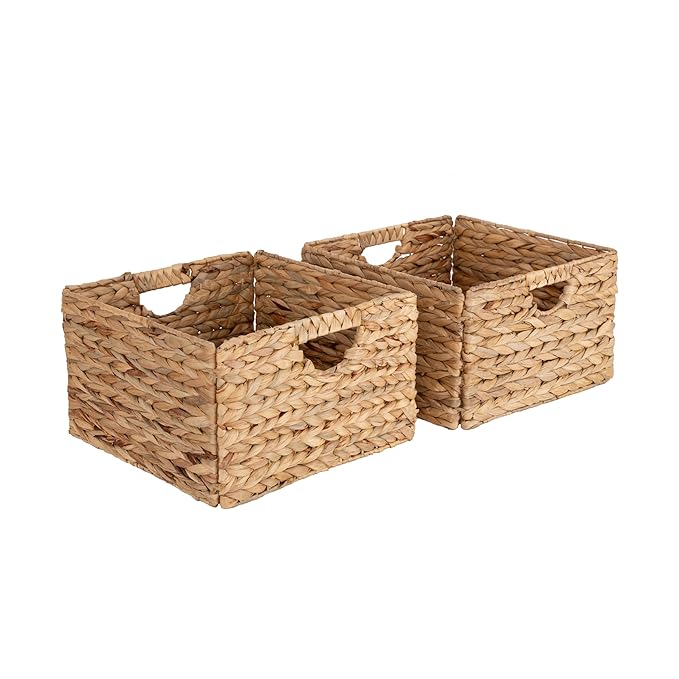
A woven laundry basket works beautifully here because soft textures feel warmer and calmer than harsh plastic hampers.
Material choice matters in small spaces.
Industrial plastic tends to feel visually cold and busy, while woven textures soften the room naturally.
You can also dedicate one narrow hanging section inside the closet specifically for “wear again” clothing.
The key is containment.
Not perfection.
10. The minimalist bedside table strategy
The bedside table is often the smallest surface in the room.
But emotionally, it may be the loudest.
Phone chargers.
Water bottles.
Jewelry.
Receipts.
Skincare.
Random small objects with nowhere else to go.
Because this surface sits directly beside the bed, your brain processes this clutter at the exact moment it is supposed to relax.
This is why bedside visual noise feels especially exhausting.
The solution is not making the space empty.
It is reducing categories.
Minimalist bedside styling works best when only true nightly essentials remain visible.
Usually:
- a lamp
- one book
- a small tray
- water
- perhaps one calming decorative object
Everything else should either disappear into a drawer or leave the bedside zone completely.
Small trays also help because they visually group objects together, reducing fragmentation.
The eye reads one intentional shape instead of many separate interruptions.
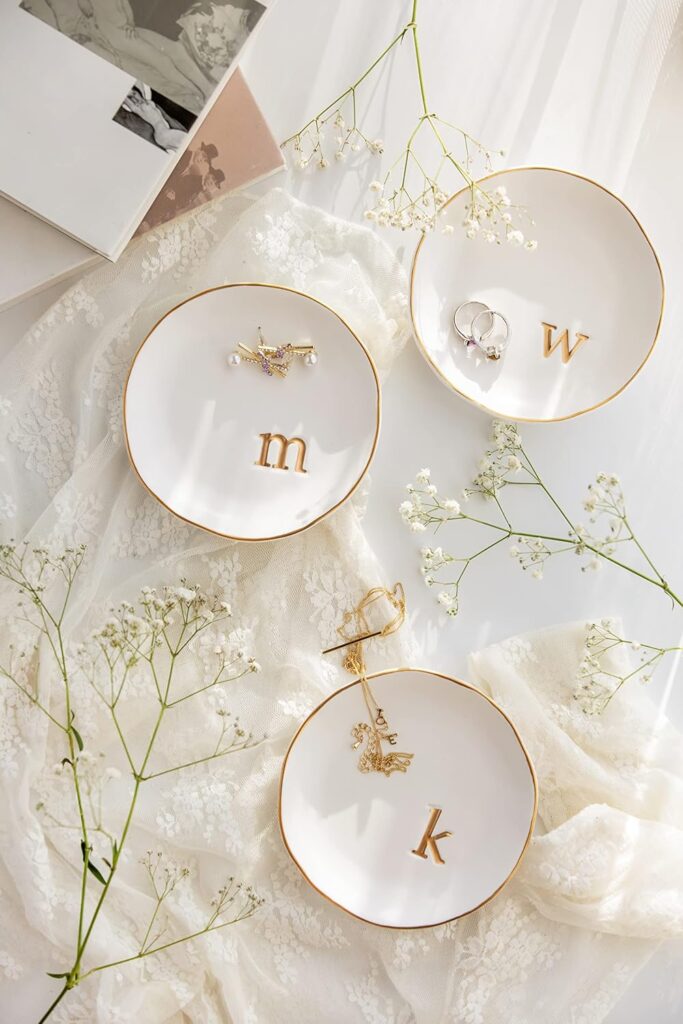
Small catchall trays can also help reduce bedside clutter without making the nightstand feel visually heavy. Instead of leaving jewelry, hair ties, watches, or small everyday objects scattered across the surface, everything stays contained in one calm visual zone.
The Golden Rule of Small Bedrooms: Protect Your Floor Space
If there is one principle that changes a small bedroom immediately, it is this:
Protect the visual openness of the floor.
Your floor acts like breathing room for the entire space.
Once too many objects interrupt it, the room begins feeling visually compressed.
That is why bulky storage furniture often backfires in smaller bedrooms.
It technically adds storage.
But visually, it removes openness.
| Storage Challenge | The Bulky Approach | The Quiet System |
|---|---|---|
| Out-of-season clothing | Extra wardrobes and bulky bins | Soft under-bed storage |
| Shoes | Open floor shoe racks | Covered organizers |
| Handbags | Stacked shelves and hooks | Vertical hanging organizers |
| Leggings and denim | Deep folded piles | Vertical hanging systems |
| Drawer organization | Loose mixed categories | Acrylic drawer dividers |
Quick Win: Remove one visually loud category first
If your bedroom feels crowded, do not try to reorganize everything at once.
Start with the single category creating the most visual noise.
Usually it is:
- shoes
- bags
- laundry
- overflow accessories
- nightstand clutter
- open clothing piles
Create a quieter system for that one category first.
Then pause.
Because calm rooms are usually built gradually.
Not through one overwhelming organization day.
But through many small reductions in friction over time.
Final Thoughts
A peaceful bedroom rarely comes from owning less overnight.
Usually, it comes from creating softer and more intentional systems for what already exists.
The best small bedroom storage ideas are not the ones that scream for attention.
They are the quiet ones.
The systems that disappear into the background.
The drawer that finally opens easily.
The closet that stops overflowing.
The floor that feels visible again.
The bedside table that allows your brain to rest at night.
That is what visual silence actually feels like.
Not emptiness.
Just less for the brain to process.
Less friction.
Less visual interruption.
A room that finally allows you to exhale a little when you walk into it.