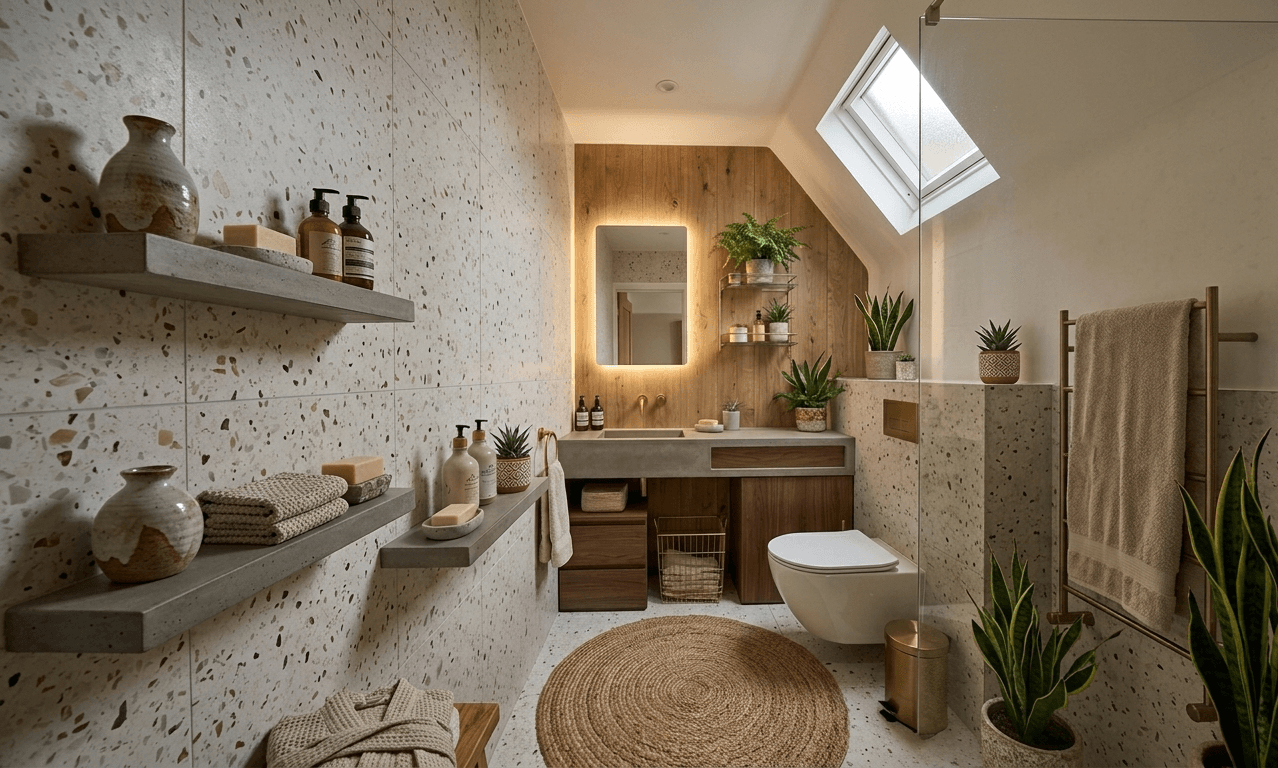
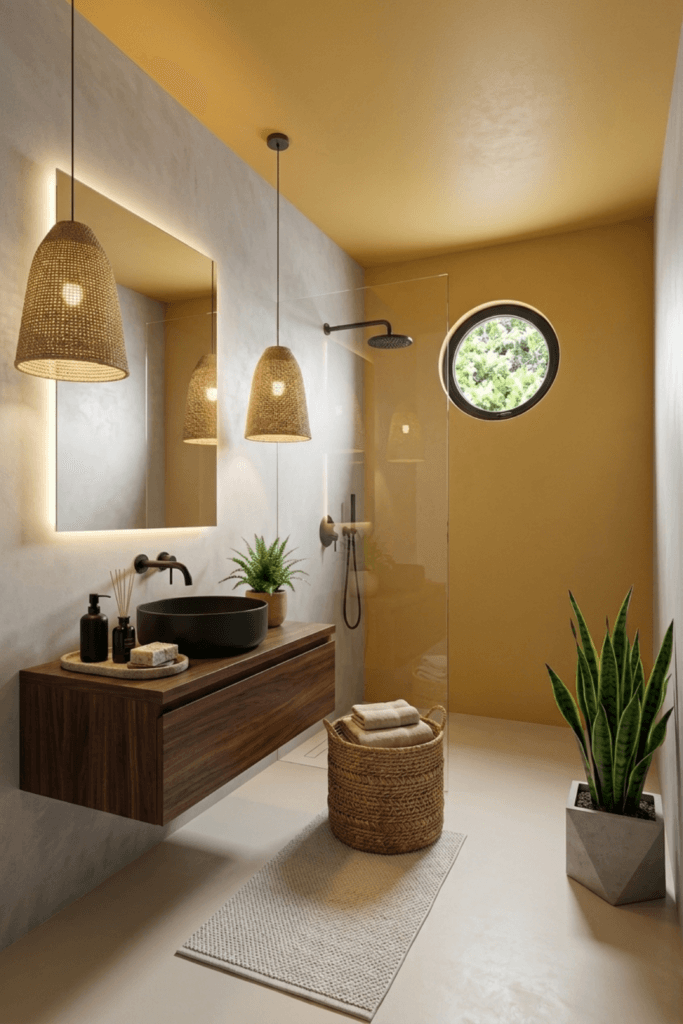
A tiny bathroom does not need to feel cramped, cold, or purely functional.
Most small bathrooms feel stressful because there is too much to process at once. Bottles on every surface. Harsh lighting. Mixed materials. Towels with no clear place to land.
A room can be small and still feel calm, but it needs a quiet system.
The spa feeling does not come from adding more decor.
It comes from removing visual noise, softening the light, and giving every visible detail a reason to be there.
These tiny bathroom ideas are designed to help a small space feel lighter, warmer, and easier to use every day.
1. Start With Visual Silence, Not More Decor
A tiny bathroom can become visually loud very quickly.
Even when the room is clean, too many small objects can make it feel busy. Skincare bottles, towels, trays, plants, candles, and storage baskets all compete for attention if they are scattered across the room.
The first shift is simple:
Before adding anything spa-like, remove one visible category.
That might mean moving backup products out of sight, clearing the edge of the sink, or reducing the number of bottles in the shower.
This works because the eye needs resting places. When every surface is filled, the room feels smaller than it really is. When one area is left quiet, the bathroom begins to breathe.
Quick application:
- Keep only daily-use products visible.
- Group similar items together instead of spreading them around.
- Leave at least one surface almost empty.
A spa-like bathroom is not empty.
It is edited.
2. The “Label Noise” Effect in Small Bathrooms
One of the fastest ways to make a tiny bathroom feel calmer is to look at the packaging.
A bathroom can be spotless and still feel busy because every bottle has a different color, label, logo, and shape. Your eye reads each one as a separate object. That creates visual noise, even when nothing is technically messy.
The shift is not to hide everything you use.
The shift is to make the things you use look visually quieter.
Simple glass, amber, white, or matte ceramic dispensers can make daily products feel more unified. A matching set is not about looking fancy. It reduces how much information the eye has to process.
This works especially well in tiny bathrooms because there is less visual space available. The fewer interruptions you create, the calmer the room feels.
Quick application:
- Decant hand soap, lotion, or shampoo into simple dispensers.
- Choose one finish: amber glass, white ceramic, clear glass, or matte black.
- Keep backup products inside a drawer, basket, or cabinet.
This is a small change, but it can make the bathroom feel more expensive almost immediately.
3. Why Warm Lighting Makes a Bathroom Feel Calmer
Lighting changes the entire mood of a small bathroom.
Bright overhead lighting can make a tiny room feel flat and clinical. It shows everything at once, which often increases visual noise.
A calmer approach is to use soft, layered light.
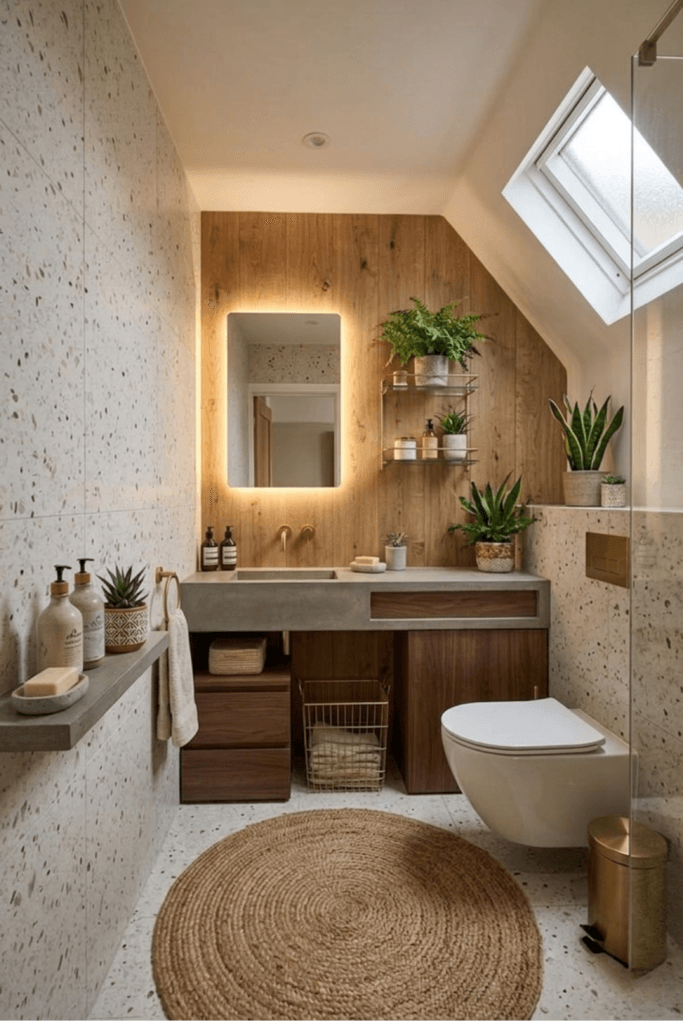
Backlit mirrors, wall lighting, warm bulbs, or a small glow near a shelf can make the bathroom feel less harsh. The space still functions, but it feels gentler.
This works because soft light creates depth. Instead of seeing one small box, the eye notices layers: the mirror, the wall texture, the vanity, the shower area, the plants, the towels.
Quick application:
- Use warm white light instead of cold white light.
- Add light around the mirror when possible.
- Avoid relying only on one ceiling fixture.
In a tiny bathroom, light is not just practical.
It is one of the easiest ways to create calm.
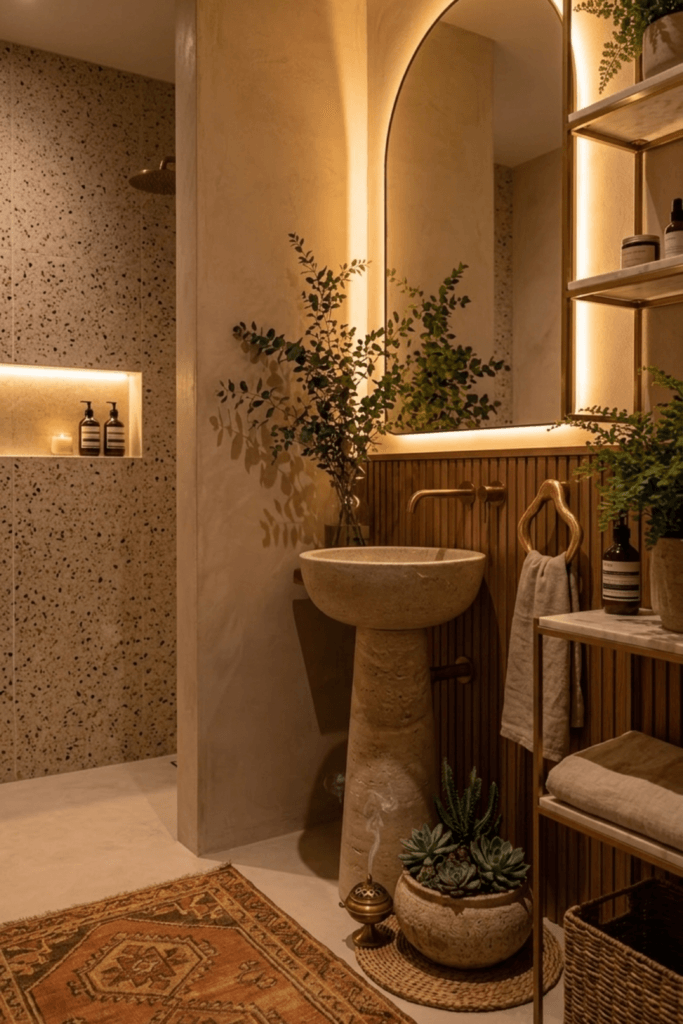
4. Choose Natural Materials for a Spa Bathroom Feeling
A small bathroom can feel cold when every surface is hard, shiny, or flat.
Tile, glass, metal, and mirrors are useful, but together they can feel sharp. Natural textures help soften that feeling.
Wood, stone, woven baskets, linen towels, clay pots, and simple greenery all add warmth without making the room feel decorated.
The key is not to use every texture at once.
Choose two or three natural materials and repeat them quietly. For example, a wood vanity, a woven basket, and one green plant can do more than ten small accessories.
This works because repetition creates order. The room feels intentional instead of collected randomly.
Quick application:
- Repeat one wood tone if possible.
- Use one woven item for softness and storage.
- Add greenery only where it has breathing room.
The goal is warmth, not clutter.
5. The Tactile Layer That Makes a Bathroom Feel Softer
A spa bathroom is not only something you see.
It is something you feel.
In a tiny bathroom, texture matters because there is not much room for extra pieces. The right textile can soften the whole room without taking up visual space.
A heavier cotton towel, a simple textured bath mat, or a soft linen shower curtain can make cold tile feel less sharp. These pieces add comfort, but they also create a calmer visual rhythm.
The shift is to choose fewer textiles, but better-looking ones.
Instead of five mismatched towels, use two or three in the same color family. Instead of a high-contrast bath mat, choose one that blends into the floor or repeats the room’s natural tones.
This works because texture adds softness without adding clutter.
Quick application:
- Use towels in one calm color family.
- Choose a bath mat with texture instead of a loud pattern.
- Let textiles soften hard tile, glass, and metal finishes.
Small bathrooms feel more spa-like when the practical pieces also create softness.
6. Make Bathroom Storage Feel Built Into the Room
Tiny bathrooms often feel messy because storage is treated as an afterthought.
Open baskets, shelves, trays, hooks, and drawers can all help, but only when they reduce friction. If storage adds more objects to look at, it can make the room feel even smaller.
The shift is to make storage feel like part of the bathroom’s structure.
A floating vanity keeps the floor visually open. A recessed shelf keeps shower products from spreading across the floor. A small basket gives towels a home without adding a bulky cabinet.
This works because good storage removes decision-making. You do not have to think about where things go.
The system works quietly in the background.
Quick application:
- Use closed storage for backup products.
- Use open storage only for beautiful daily-use items.
- Keep towels, toilet paper, and skincare in separate zones.
A tiny bathroom feels calmer when every category has a place.
7. The “Floating” Strategy for a Lighter Bathroom
The floor has a big effect on how small a bathroom feels.
When the floor is crowded with bins, hampers, stools, and loose items, the room feels smaller immediately. Even useful pieces can create friction if they interrupt movement.
A spa-like tiny bathroom usually has a cleaner floor line.
This does not mean the room has to be bare.
It means the floor should feel easy to read.
A wall-mounted vanity, glass shower screen, slim basket, or simple bath mat can help the eye move through the space without stopping every few inches.
The more visible floor you keep, the lighter the room feels.
Quick application:
- Choose one floor basket, not several.
- Keep the bath mat simple and low-contrast.
- Avoid placing small decor directly on the floor unless it has purpose.
8. Don’t Be Afraid of Empty Space
Many people try to make a bathroom feel finished by filling every shelf, corner, or surface.
But spa-inspired spaces usually feel luxurious because they leave room to breathe.
An empty shelf is not wasted space.
It is visual silence.
In small bathrooms especially, negative space helps the eye relax. When every area is filled, the room feels mentally heavy. When one section stays intentionally quiet, the whole bathroom feels calmer.
This is one of the biggest differences between cluttered spaces and high-end interiors.
Luxury often looks quieter, not fuller.
Quick application:
- Leave part of a shelf intentionally empty.
- Use one larger object instead of several tiny ones.
- Let some surfaces stay completely clear.
9. Use Plants Carefully in a Tiny Bathroom
Plants can make a small bathroom feel fresh and spa-like, but they can also make it feel crowded if there are too many.
The best approach is to use greenery as softness, not filler.
One larger plant can often feel calmer than several tiny pots. A trailing plant on a high shelf can draw the eye upward. A simple fern near the sink can soften hard materials without taking over the room.
This works because greenery adds life and movement.
But it still needs space around it.
Quick application:
- Use one main plant as a focal point.
- Place smaller plants only where surfaces are not already busy.
- Choose simple planters in natural tones.
Plants should help the bathroom feel softer, not fuller.
10. The Monochrome Secret Behind Calm Spa Bathrooms
Spa bathrooms do not have to be white.
Warm beige, soft clay, muted green, light stone, creamy white, and natural wood can all create a calm bathroom palette.
The important part is visual continuity.
In a tiny bathroom, sharp color changes can make the room feel broken into pieces. When the wall, towels, storage, and accessories stay within the same soft color family, the eye moves more easily through the space.
This is why monochrome layering works so well in small bathrooms.
It does not mean everything has to match perfectly.
It means the tones should feel related.
Some calming combinations that work beautifully in spa-style bathrooms:
- Sage & Sand
- Oatmeal & Soft Stone
- Warm Clay & Walnut
- Cream & Natural Oak
This works because the eye does not stop at every edge.
Less contrast creates a smoother, calmer room.
Quick application:
- Choose one warm base color.
- Layer two or three related shades instead of adding strong contrast.
- Use darker details only as small anchors.
The bathroom can still have personality.
It just needs a calmer rhythm.
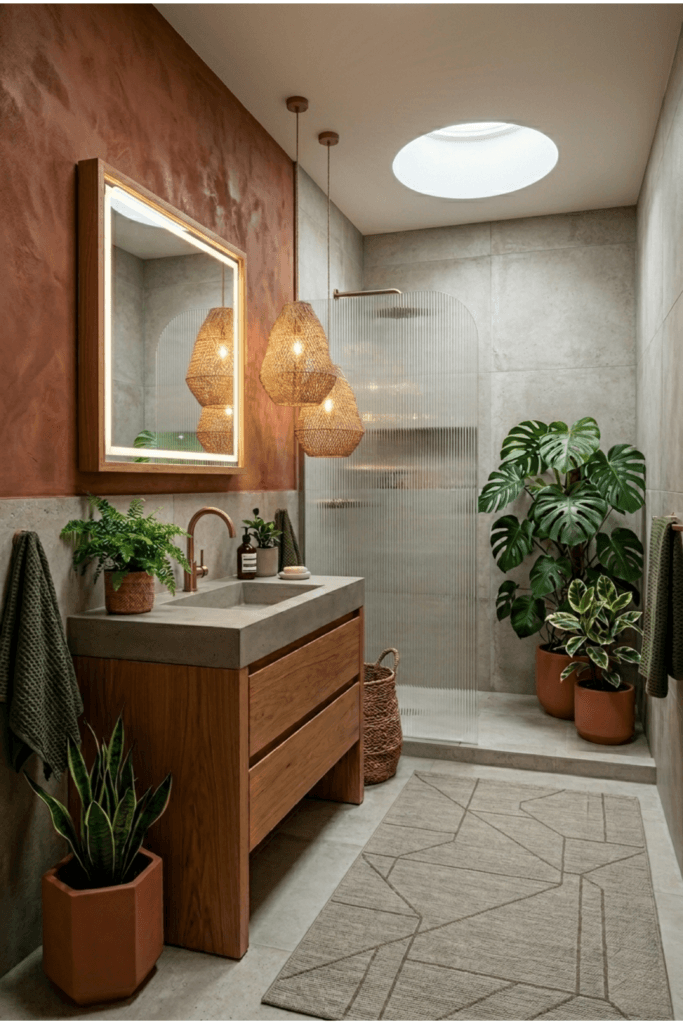
In vs. Out: Tiny Bathroom Spa Ideas
| Out | In |
|---|---|
| Too many small decorations | One calm focal point |
| Cold overhead lighting only | Warm, layered lighting |
| Mismatched product packaging | Simple, unified dispensers |
| Crowded floor space | Floating storage and open floor lines |
| High-contrast clutter | Soft monochrome layering |
| Random baskets and trays | Storage zones with a clear purpose |
The 3-Minute Spa Reset
A calm bathroom is easier to maintain when the routine is small.
You do not need a full cleaning session every night.
You need a tiny reset that brings the room back to visual silence.
Before you turn off the light, take three minutes to remove the small things that make the room feel busy.
The 3-minute reset:
- Put toothpaste, skincare, and hair products back into their home.
- Wipe the sink area if it visually catches light.
- Straighten the towel.
- Return bottles to one tray, shelf, or shower niche.
- Leave one surface completely clear.
This little ritual changes how the room feels the next morning.
You do not wake up to visual noise.
You wake up to a space that already feels settled.
Quick Win: The Tiny Bathroom Spa Reset
If your bathroom feels crowded, do this before buying anything new:
- Remove all backup products from visible surfaces.
- Decant the products you use every day into simple dispensers.
- Choose one tray, basket, or shelf for daily-use items.
- Leave one surface completely quiet.
- Switch to warmer lighting if the room feels harsh.
- Use one natural texture to soften the space.
- Keep towels in one calm color family.
The fastest way to make a tiny bathroom feel like a spa is not to add more.
It is to make the room easier to understand.
Final Thought
A tiny bathroom does not need a full renovation to feel calmer.
It needs less visual noise, softer lighting, better storage, and a few natural textures that work together.
When the room has a quiet system, the size becomes less important.
The bathroom feels lighter.
The routine feels easier.
And the space can finally feel like a small pause in the day, instead of another place that asks for your attention.
Try the 3-minute reset tonight and notice how the room feels tomorrow morning.