
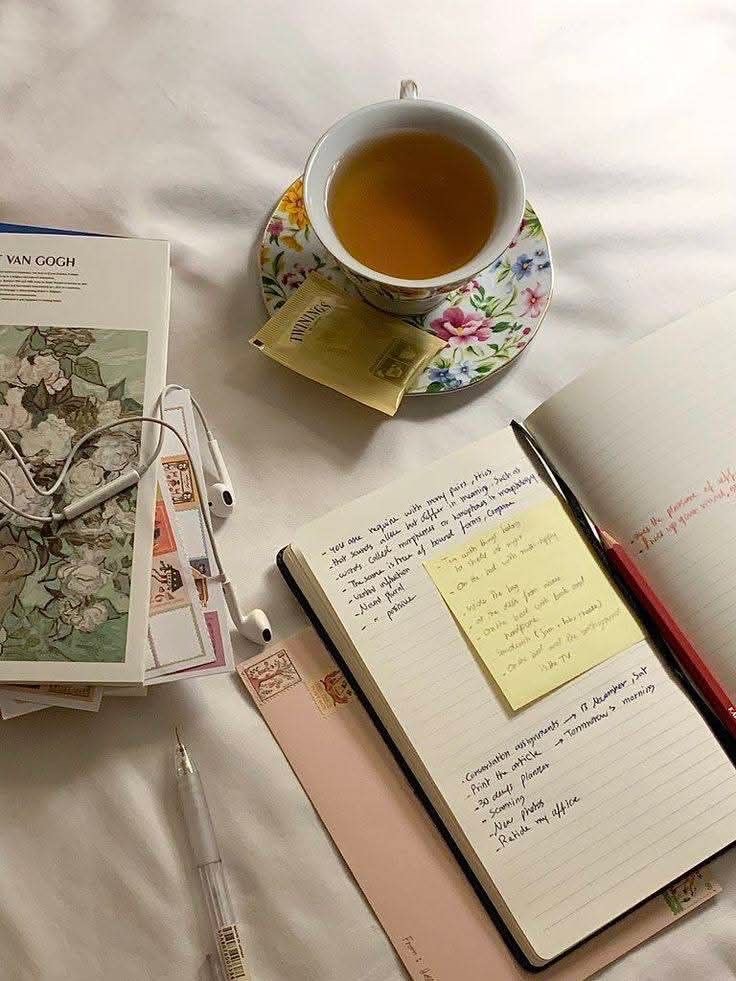
Peace isn’t something I find at midnight. It’s something I make on purpose — lamp on, phone away, pen moving slowly across a page.
Quick note: This post includes affiliate links to a few small tools I personally use and love. If you choose to buy through them, it supports my work at no extra cost to you. Thank you for being here. 🌿
Some nights my mind feels like a browser with twenty open tabs. I’m tired, yet awake; tempted to scroll, yet craving quiet. What finally helped wasn’t another rule or a perfect night routine for anxiety — it was a small, human ritual: fifteen unhurried minutes of writing before bed. Think of it as digital detox before sleep and slow living in a notebook.
A gentle 15-minute rhythm I return to most nights
I start by turning on a single warm lamp — the kind that makes the room whisper. I put my phone out of reach and open one notebook. No performance. No essays. Just a page that can hold the day.
First, I empty.
I let fragments spill out: sentences that never finished, worries that repeated, a tenderness I didn’t name. Bullets if I’m anxious, full lines if I can. It’s less “dear diary” and more clearing the mental inbox, a quick release that steadies my breathing.
Then, I sort with kindness.
I circle what matters, dot tiny tasks I’ll handle tomorrow, draw an arrow through anything that can wait, and put a small “≠” next to the pieces that aren’t truly mine to carry. This isn’t productivity; it’s boundaries on paper. It’s how I decide what follows me into sleep — and what doesn’t.
Finally, I close on purpose.
I write one line that lets my nervous system power down: “Enough for today; I’ll carry only what’s mine.” Notebook shut. Lamp lower. Body softer. That single sentence does more for my sleep ritual than a dozen hacks.
If you like specifics: I use a smooth pen set and an undated Evening Journal. I chose them because they glide and don’t fight me — small tools that make the practice inviting.
Prompts when your brain won’t slow down
On restless evenings, I borrow one of these healing journaling prompts and limit myself to a single page:
- Right now I notice… (list five sensory details; it anchors you in the room).
- What did my body ask for today? Where did I ignore it?
- Which story looped? What 10% might also be true from another angle?
- What can safely wait until morning?
You’re not solving. You’re listening. The solving can happen in daylight.
Make it stick (without perfection)
Rituals hold better when the room helps. I keep the lamp warm, the notebook visible, the phone asleep outside the bedroom. Replacing fifteen minutes of scrolling with fifteen minutes of ink is my simplest digital detox before bed — a habit that feels kind instead of strict.
On Sundays, I add a one-page check-in — a soft Sunday reset checklist:
- one line on what worked,
- one on what drained me,
- one thing I refuse to carry into next week,
- and a tiny plan for my last hour at night (lamp, tea, page).
That’s slow living in practice: small, honest, repeatable.
If tonight hurts
You don’t need the perfect speech that makes it all make sense. Sit with what aches; give it a place to live outside your body. Breathe. Write one line. When you’re ready to go deeper, you’ll find the reflection called Sit With What Hurts — Fixing Can Wait in the same healing series soon.